


Google’s latest promotion halves the price of its Google One AI Pro annual plan — but only for new subscribers. The limited-time offer has ignited a wave of frustration among long‑time customers who see it as yet another example of a “loyalty tax” in tech.
The backlash underscores a familiar tension: companies chase growth by dangling steep discounts to newcomers while paying customers fund the model at full price. In a cloud world where switching is painful, existing users feel boxed in and overlooked.
- What Google Is Offering With Its New AI Pro Discount
- Why Loyal Users Are Upset With New-Customer-Only Deals
- The Loyalty Tax Across Tech, From Media to Cloud
- What Google Could Do Now to Reward Loyal Subscribers
- Practical Steps for Users Considering Their Options
- Bottom Line: The Promotion’s Message Matters Most
What Google Is Offering With Its New AI Pro Discount
The deal targets the AI Pro tier of Google One, the company’s subscription that bundles expanded cloud storage with advanced generative AI tools and premium features. For new users, the annual plan is advertised at 50% off, a compelling entry point for those curious about AI‑assisted productivity and media tools.
The catch is clear: the discount explicitly excludes existing subscribers. That decision, more than the price itself, is what many users are reacting to. The sentiment isn’t “the plan is too expensive,” so much as “why are loyal customers paying more than newcomers for the same service?”
Why Loyal Users Are Upset With New-Customer-Only Deals
Cloud services are sticky by design. Once your Gmail nears capacity and your photo library spans years, shifting to a new provider means exporting massive archives, re‑indexing memories, and re‑training workflows. Even with tools like Google Takeout, the friction is real.
Regulators have warned about this dynamic for years. Analyses by the UK Competition and Markets Authority and the OECD have shown that high switching costs can dampen competition and reduce consumer power in digital markets. When switching feels impractical, a new‑user‑only discount can land as a snub to those who supported the platform all along.
There’s also recent history. Users still remember when unlimited free backup in Google Photos ended and paid storage became the norm. Whether or not that shift was justified, it hardened perceptions that introductory generosity is often temporary — and that loyal users ultimately foot the bill.
The Loyalty Tax Across Tech, From Media to Cloud
Google isn’t alone. Streaming platforms frequently roll out teaser rates for sign‑ups, even as long‑time subscribers see steady increases. Financial services extend higher promotional savings rates to new customers while existing clients earn less. Telecoms and news publishers follow similar playbooks.
That strategy persists because it works. Research attributed to Bain & Company has long suggested that acquiring a new customer can cost several times more than retaining an existing one, yet growth‑stage incentives push firms to privilege acquisition over loyalty. The result is a widespread sense that existing customers subsidize headline discounts.
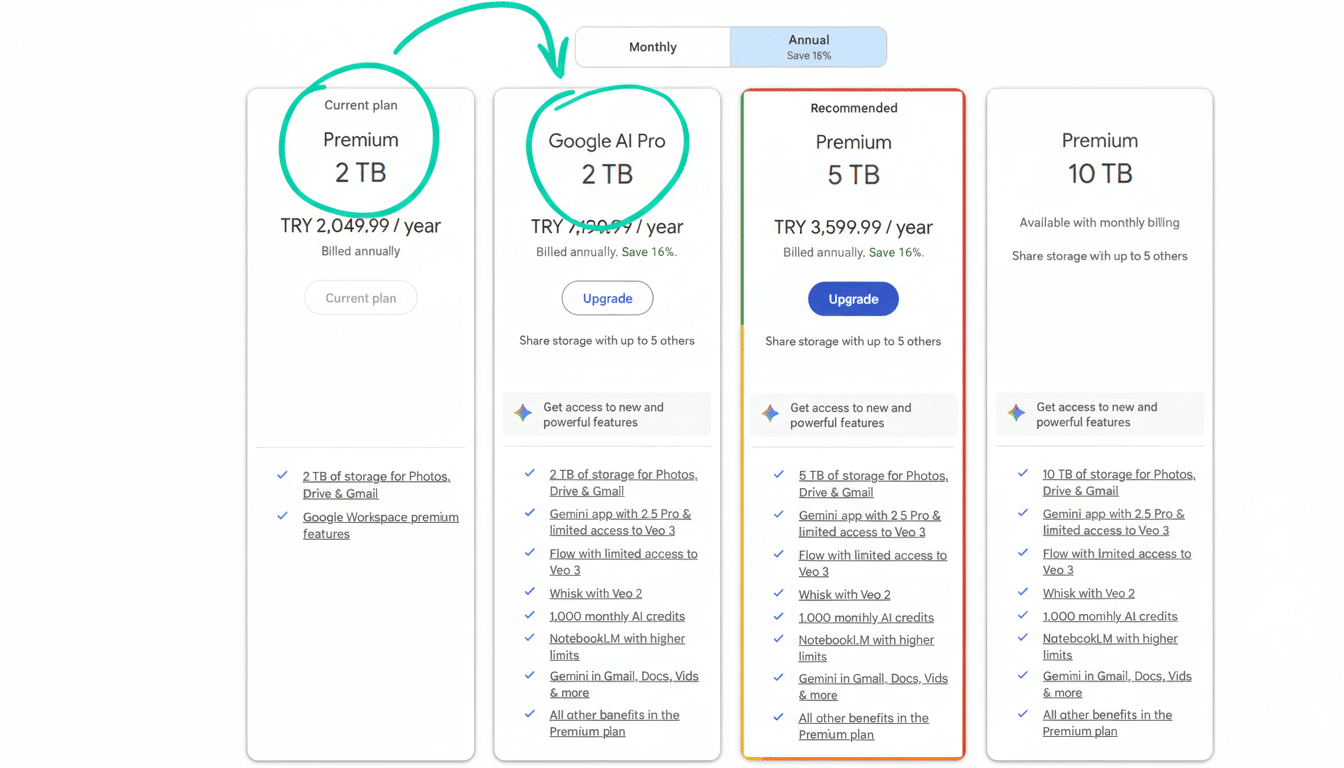
Regional price disparities add fuel. The same digital plan can cost dramatically different amounts across markets, reflecting local purchasing power and competition. While common in global pricing, the optics feel unfair when the service is identical and the data sits in the same cloud.
What Google Could Do Now to Reward Loyal Subscribers
There are straightforward ways to defuse the backlash without abandoning growth goals. Examples include:
- Matching credits for current subscribers who renew annually during the promo window.
- Tiered loyalty perks such as extra storage, occasional AI feature unlocks, or priority support.
- Prorated discounts for users who recently upgraded, preventing early adopters from feeling penalized.
These are not radical ideas; they mirror customer‑centric programs in travel and retail, where status and rewards reduce churn and foster goodwill. McKinsey and other consultancies have repeatedly found that thoughtful retention strategies deliver durable margins without costly acquisition churn.
Practical Steps for Users Considering Their Options
If the offer stings, consider an audit of your cloud footprint. Trim redundant backups, archive large media libraries locally or to cold storage, and ensure you’re not paying for overlapping services across devices and family plans.
Evaluate alternatives such as Microsoft OneDrive, Dropbox, and iCloud, keeping in mind that promo pricing can mirror the same new‑user bias. The European Commission’s push for data portability under the Digital Markets Act is nudging platforms to make exits easier, but for now, switching still requires planning and bandwidth.
If you intend to stay, look for soft‑dollar value: bundled features you actually use, family sharing that consolidates costs, or periodic storage boosts. Sometimes the best negotiation is simply timing your renewal to a window when loyalty credits appear — and letting the company know, politely but clearly, that retention perks influence your decision.
Bottom Line: The Promotion’s Message Matters Most
The 50% Google One AI Pro promotion is compelling on its face, but restricting it to new customers amplified a long‑running sore point in subscription tech. It’s not just about price; it’s about signaling that loyalty matters.
Google can acquire new users without alienating the ones who built its subscription base. A modest set of loyalty benefits would go a long way toward restoring trust — and might prove more cost‑effective than the next splashy sign‑up discount.
