


Google Maps is quietly preparing a long-requested privacy control for its crowd-sourced navigation features. An app teardown of version 26.04.01 reveals work on a new option that will let users delete all incident reports they’ve contributed, addressing one of the most persistent complaints about real-time reporting on the platform.
What the App Teardown Reveals About the New Control
Strings found in the latest Maps build point to a control likely living under Settings > Location & Privacy. Choosing it would remove the link between your account and all of your live contributions, covering categories such as incidents, road conditions, transit notes, and trip issues. The reports themselves will still expire on Google’s usual schedule, but your profile won’t be tied to them in the interim.
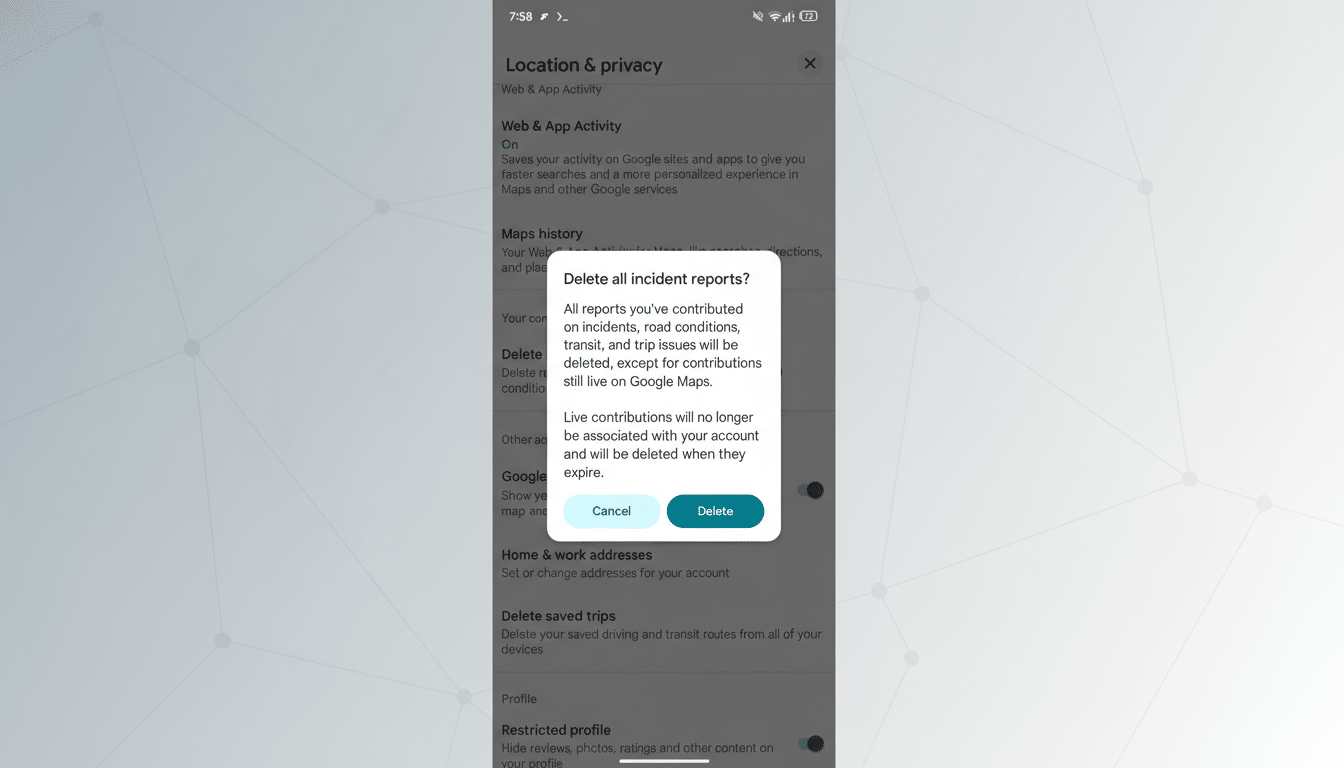
There’s no sign of selective deletion yet. The feature appears to be an all-or-nothing switch, not a granular picker to retract a specific report or purge activity from a recent window. And as with many Google app changes discovered in code, this isn’t live for most users and could roll out via a server-side flag once it’s ready.
Why It Matters for Privacy and Reporting Accuracy
Crowd-sourced reports are core to modern navigation. Google has said people contribute more than 20 million updates daily to Maps, a volume that fuels faster reroutes and better ETAs. But until now, users had limited control after tapping “Report,” and accidental or outdated alerts could remain connected to their profile until they expired.
Giving people a way to cut the tie between their account and past incident reports is both a privacy win and a quality-of-data safeguard. Many reports originate from a moving car, sometimes via a passenger but often in a hurry. Mistaps happen. If users can quickly remove association, they’re less likely to hesitate when sharing useful information the next time. That aligns with broader consumer expectations; a Pew Research Center study found that 79% of Americans are concerned about how companies use their personal data.
It also helps trust in the system. Erroneous crash or speed trap flags can ripple through routing and driver behavior until enough confirmations or dismissals roll in. A deletion option won’t erase the report instantly, but it reduces persistent attribution to an individual account, a subtle incentive for more responsible reporting.
How the Toggle May Work and What It Will Actually Do
Based on the language in the app, activating the setting will remove your identity from live contributions immediately and let the items age out as designed. Think of it as a privacy-first disassociation rather than a hard delete of the underlying map event. If you reported a stalled vehicle that cleared minutes later, your account won’t sit attached to that callout until the system learns it’s gone.
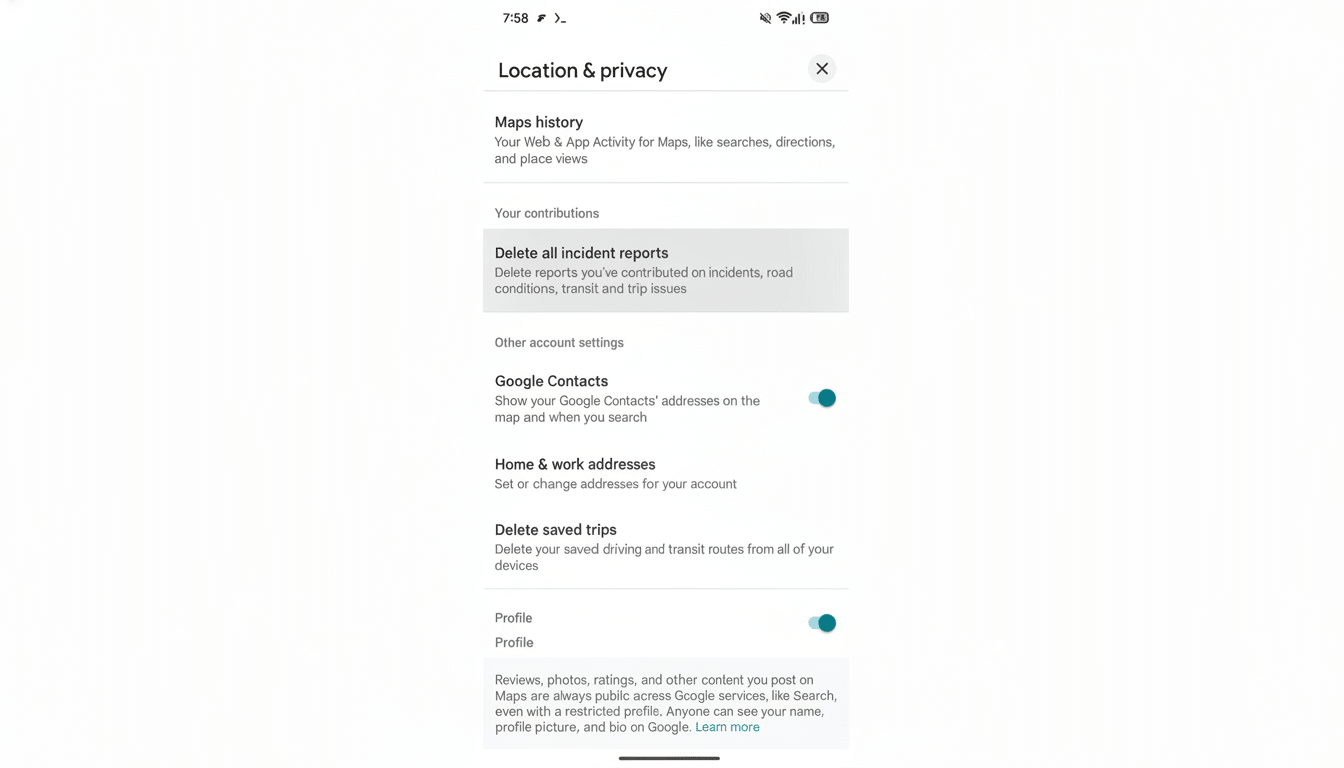
The missing piece is granularity. Power users will want options such as “remove last hour” or item-level deletion with a confirmation step. That would better cover misfires, prank reports from borrowed devices, or situations where a user second-guesses a hazard after conditions change. If Google follows its usual pattern, it may ship the global control first, then iterate toward finer settings.
Contribute Tab Gets a Polish with Cleaner Profile UI
The teardown also hints at subtle interface tweaks in the Contribute tab, including a more unified color scheme and a cleaner profile header. Notably, the bio input box appears hidden for users who already have a bio; it reappears only if you haven’t added one. The intent seems to be decluttering without reducing access—tapping Edit profile still brings up the same options.
While cosmetic, these changes matter. Small UX refinements can reduce friction for frequent mappers who add photos, reviews, and updates. Streamlined prompts often boost contribution rates, which in turn improves the timeliness of incident data for everyone else on the road.
When to Expect the Rollout and How It May Arrive to Users
There’s no official rollout date, and features found in code sometimes evolve before launch. Google frequently stages new capabilities to limited groups, flips them on via server-side updates, and expands from there. Given the focus on Location & Privacy, it wouldn’t be surprising to see the control surface first to beta users before a wider release.
If it lands as described, the deletion tool will close a longstanding gap in Maps’ community reporting. It gives contributors greater agency, addresses “incident regret” without dampening participation, and nudges Google’s most popular navigation app toward stronger user-controlled privacy—an area increasingly under the spotlight from regulators and consumers alike.
