


Google is at long last updating its core smart home lineup, with three new Nest cameras and a Google Home Speaker that borrow heavily from Gemini, the company’s generative AI platform. The hardware is an obvious upgrade to imaging and audio, but the larger story is how Gemini for Home weaves intelligence across both old and new devices.
Sharper Nest Cams With Wider Views And Fewer Blind Spots
Both Nest Cam models let you view footage on a big screen and use SuperSight to zoom for image and video enlargements, along with facial recognition. The indoor camera jumps from 1080p to 2K, and like the previous generation it operates over 5 GHz Wi‑Fi.
- Sharper Nest Cams With Wider Views And Fewer Blind Spots
- Nest Doorbell Adds Smarter Square Frame And Taller Coverage
- New AI Features Powered By Gemini Bring Context And Control
- Google Home’s New Speaker Is Smart About Stereos
- Budget Smart Home Options Grow By Way Of Walmart’s onn
- Pricing And Availability For New Nest Cams And Speaker
- Why This Smart Home Refresh Matters For Everyday Use
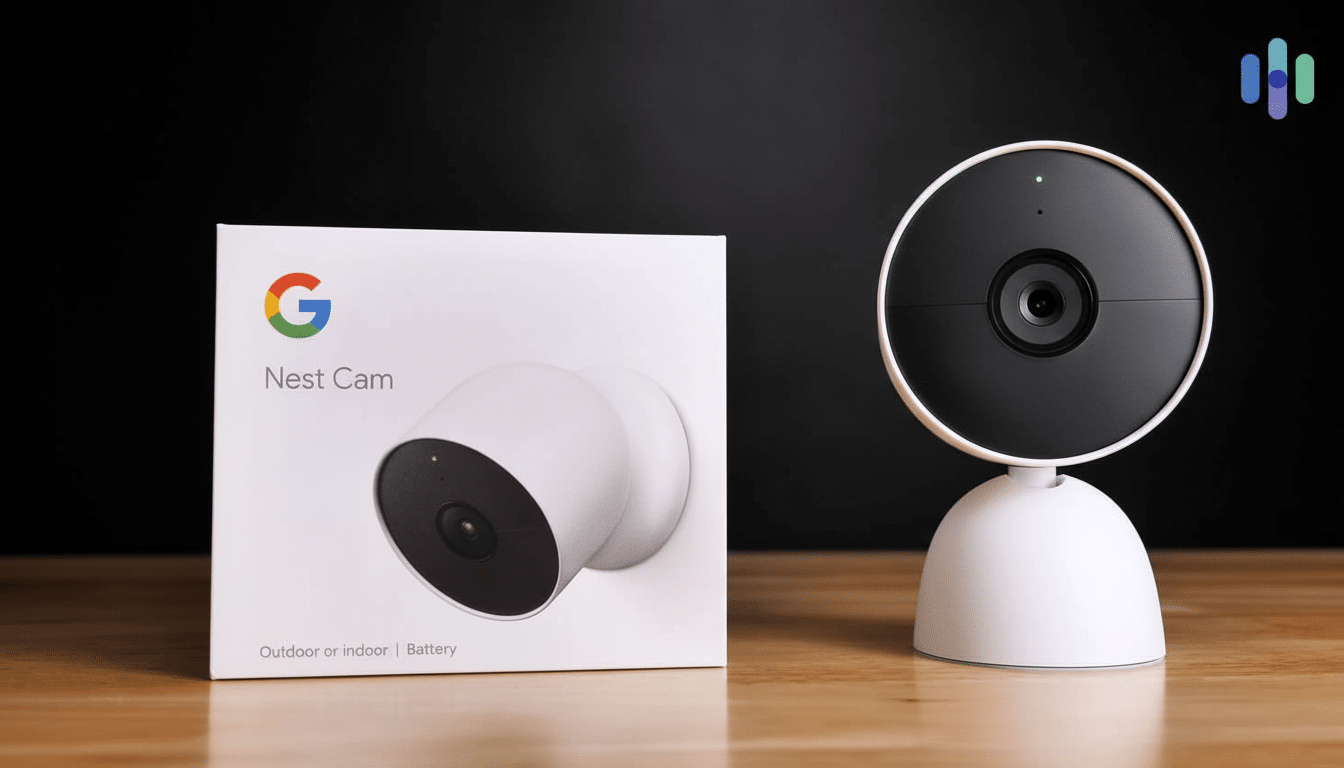
The lenses go wide to 152 degrees, against 135 indoor and 130 outdoor on the previous model, eliminating blind spots near doorways and driveways.
Low‑light performance is also improved significantly. Google claims the night vision sensitivity increases by 120%, giving you color footage for longer before the camera switches to infrared — important for recognizing a jacket color or license plate accent rather than a washed‑out monochrome blob.
Nest Doorbell Adds Smarter Square Frame And Taller Coverage
The third‑gen Nest Doorbell has a rare 2,048‑by‑2,048 resolution (which Google incorrectly calls 2K), offset by a wide 166‑degree field of view. The combination prioritizes top‑to‑bottom coverage — “we wanted you to be able to see faces and packages in one shot instead of making a trade‑off.” That’s a big step up from the previous model’s 960‑by‑1,280 video and 145‑degree lens.
Like the new Cams, the doorbell gets improved night sensitivity that extends usable color to dusky and under‑porch lighting. In doorbell footage, color has the greatest utility — better for identifying people and vehicles and lowering false alerts that provide half‑answers (and often turn into notification fatigue).
New AI Features Powered By Gemini Bring Context And Control
Gemini for Home is the connective tissue across Google’s ecosystem and one that the company says will eventually reach virtually everything from Nest and Google made since the 2015 Nest Cam. In the refresh, Gemini supports capabilities such as richer event comprehension and more conversational voice and text interactions, which means if asked for “all significant events you missed,” users won’t receive a mountain of clips but rather a concise summary.
Critical to note is that this isn’t just about raw detection; it’s about context. Expect more intelligent discrimination between routine motion and purposeful activity, improved person and package recognition, and automation hooks that allow those insights to drive routines. Parks Associates research has repeatedly found delivery monitoring to be one of the top use cases for video doorbells, and this is the sort of AI lift that prevents people from only using their product once (at installation).
Google Home’s New Speaker Is Smart About Stereos
The new $99.99 Google Home Speaker takes over for the Nest Audio and uses a driver that fires vertically instead of horizontally to sound consistent no matter where you are in the room. The coolest trick: pair two units with a Google TV streamer for easy, stereo TV audio, bypassing the multi‑menu dance usually required of living‑room speaker arrangements. With other ecosystems also juicing speaker or TV pairing as a value add, Google is now checking that box with a lot less friction.
The speaker isn’t coming right away — Google is teasing a spring release — so the company likely wants to have the infrastructure for Gemini for Home in place before the hardware ships. Importantly, there are no new smart displays in this round, suggesting that Google is focusing its ambient AI approach on the screens and speakers you already own, rather than introducing another display form factor.
Budget Smart Home Options Grow By Way Of Walmart’s onn
Google also opened the door for third‑party gear, with Walmart’s onn brand introducing two wired models: the onn Indoor Cam at $22.96 and the onn Video Doorbell at $48.96. They max out at 1080p, but with a $5‑a‑month Google Home Premium subscription, they draw from the same Gemini for Home toolbox as Nest’s roster — spreading AI features to homes that emphasize cost sensitivity over top resolution.
Walmart’s onn 4K Pro media streamer, for example, already ships with Google TV running hands‑free Google Assistant, and according to Google that experience will be updated to switch over to hands‑free Gemini. That continuity is key: smart homes stick when voice, TV, and cameras work as one instead of operating in independent islands.
Pricing And Availability For New Nest Cams And Speaker
Here’s how the lineup is priced:
- Nest Cam Indoor (refreshed): $99.99
- Nest Cam Outdoor (refreshed): $149.99
- Nest Doorbell (third‑gen): $179.99
- Google Home Speaker: $99.99, arriving in spring
These cameras are shipping now, according to Google. The value calculus for most households will be how often you use Gemini’s summaries and automations versus basic motion alerts.
Why This Smart Home Refresh Matters For Everyday Use
Higher resolution is no longer just about what moves the market; intelligence does. With 2K sensors and wider lenses paired with Gemini’s human‑centric event understanding, Google is tackling two of the largest consumer pain points in smart homes: missed moments and noisy notifications. The stereo pairing for Google TV is a sign of a more focused living‑room strategy going forward, while the onn partnership is evidence that Gemini for Home isn’t gated behind premium hardware.
If you’re thinking about an upgrade, check your Wi‑Fi coverage and your upload bandwidth — 2K streams require more than 1080p — and consider the places where AI summaries could save you time. This refresh marks something of an AI‑first move for the smart home, where hardware is finally starting to meet software that will shape what the experience looks like.
