


If your Google Home app suddenly insists that your lights are offline, you’re not imagining things. A wave of user reports says bulbs, light groups, and switches are appearing unavailable inside the app even though they still have power and, in many cases, work through their original manufacturer apps. Google has acknowledged the problem and says a fix is underway.
The glitch is frustrating for households that rely on Google Home to manage daily lighting scenes and routines. Because it’s a backend issue, there’s little end users can do to permanently resolve it on their own while Google rolls out a server-side remedy.
- What users are seeing across Google Home devices
- Google confirms a backend issue causing offline states
- What you can do right now while Google fixes it
- Why this Google Home lighting glitch matters now
- How to tell when it’s fixed in the Google Home app
- The bigger picture for smart home platforms and trust
What users are seeing across Google Home devices
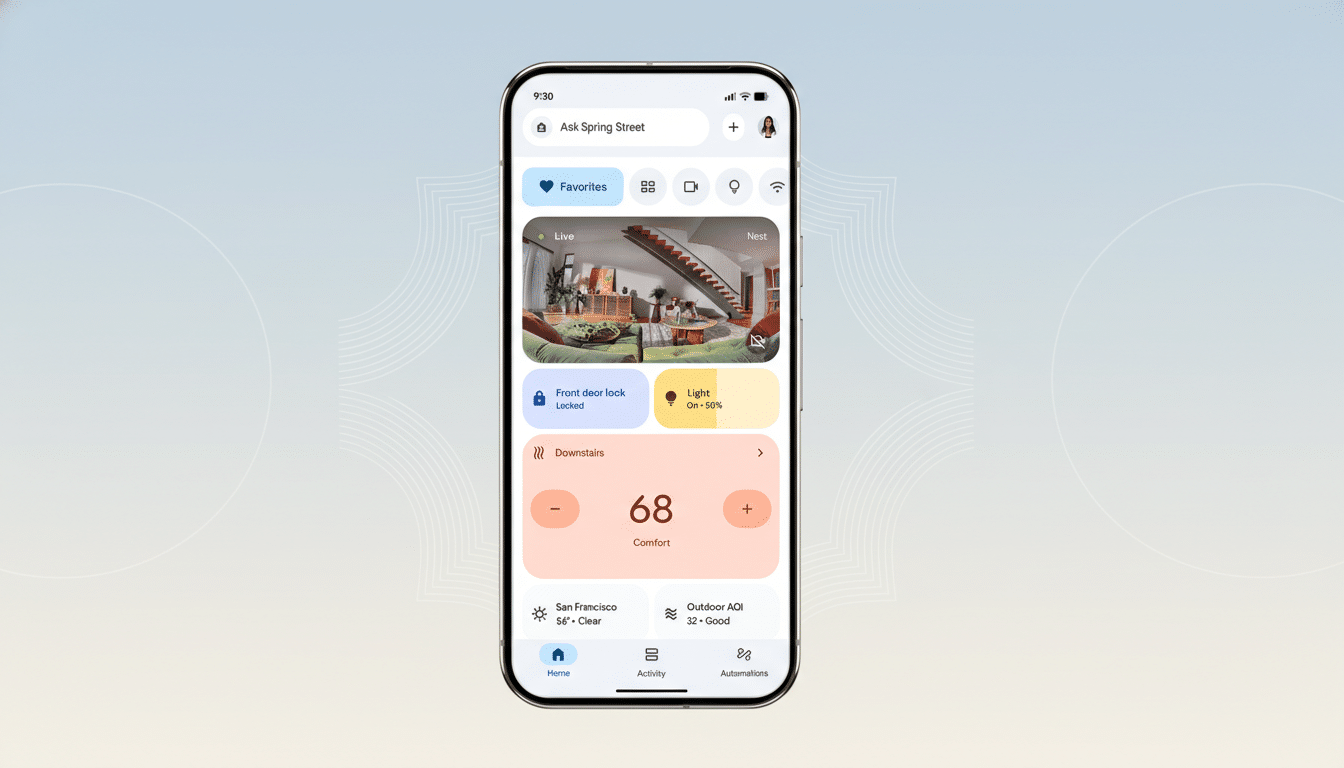
Reports shared across Reddit’s smart home communities and the Google Nest Community describe a consistent pattern: lights, light groups, smart switches, outlets, and power modules suddenly show as offline in Google Home. The behavior spans multiple brands and integrations, suggesting the problem sits with Google’s device state service rather than any single manufacturer.
Adding to the confusion, other device types—especially cameras and speakers—often appear normal, so the outage looks selective rather than a full platform failure. Restarting the app, rebooting phones, or removing and re-adding devices doesn’t reliably help. Some users also report broken automations that depend on lighting states, with a few noting that air purifiers and certain speakers occasionally flip to offline status too.
The symptoms line up with a state-synchronization issue: devices may still be reachable through their native clouds or hubs, but Google Home’s cloud registry is mislabeling availability, breaking scenes and routines that rely on accurate online/offline signals.
Google confirms a backend issue causing offline states
Google representatives have confirmed in community replies that the problem is on the backend and not something users can patch locally. While no ETA has been shared, the company indicates a fix is in progress—likely a server-side rollout that won’t require an app update on Android or iOS.
That tracks with how Google Home manages device state: the platform aggregates status from partner clouds and local hubs, then renders availability in the app and to Google Assistant. When the aggregation layer hiccups, devices can appear offline even though they’re functioning elsewhere.
What you can do right now while Google fixes it
- Control devices through their native apps (for example, brand-specific lighting apps) or via physical switches and dimmers. In most cases, these paths continue to work because the devices themselves aren’t actually offline.
- Avoid drastic steps like factory resets, re-linking accounts, or deleting homes. These rarely fix a backend outage and can create hours of unnecessary setup work once the service recovers.
- If voice commands are still effective in your home, keep using them; if they fail, rely on vendor apps and manual controls until Google’s fix propagates. Expect some routines and presence-based automations to misfire while device states are inaccurate.
Why this Google Home lighting glitch matters now
Lighting is the backbone of many smart homes—often the first device category people automate and the one used dozens of times a day. When a platform misreports availability, it undermines trust and can throw off schedules, safety lighting, and bedtime routines.
Analyst firms frequently rank lighting among the most-used smart-home functions, so outages that target this category are especially visible. Even short-lived state errors ripple across scenes, multi-room groups, and energy-saving automations.
How to tell when it’s fixed in the Google Home app
Open the Google Home app and refresh the Devices view. If affected lights and switches regain their normal status and respond consistently to commands, the fix has reached your account. Test a few routines that previously failed and verify that state changes now propagate instantly.
Because this is a server-side rollout, recovery may appear gradually. Community threads on Reddit and the Google Nest Community are good barometers for when broad restoration occurs.
The bigger picture for smart home platforms and trust
State accuracy is as important as connectivity. Whether a device runs locally, via a hub, or through a partner cloud, a platform like Google Home needs a reliable device graph to keep automations predictable. When that graph is wrong, even perfectly healthy bulbs look broken to users and to routines.
Industry efforts such as Matter aim to boost local control and interoperability, but most households still blend local and cloud paths. That makes resilient state sync and clear communication essential. For now, the good news is simple: Google has identified the issue and a fix is incoming—so hold off on drastic troubleshooting and let the patch roll in.
