


Google plans to invest at least €13 billion, or about $15.1 billion, in artificial-intelligence and digital infrastructure in Finland during 2027 and 2028, coupling a major data-center expansion with a 22-year agreement to buy nuclear power from utility Fortum. The company describes the planned spending as its largest single investment in Europe.
The announcement puts a concrete capital figure behind the rising electricity demands of AI computing. Google said the program will include data centers, electricity-grid improvements, clean-energy projects and battery projects. Separately, the Fortum agreement gives Google the option to purchase up to 50% of the output from one nuclear plant; Reuters reporting identified the facility as Fortum’s Loviisa plant.
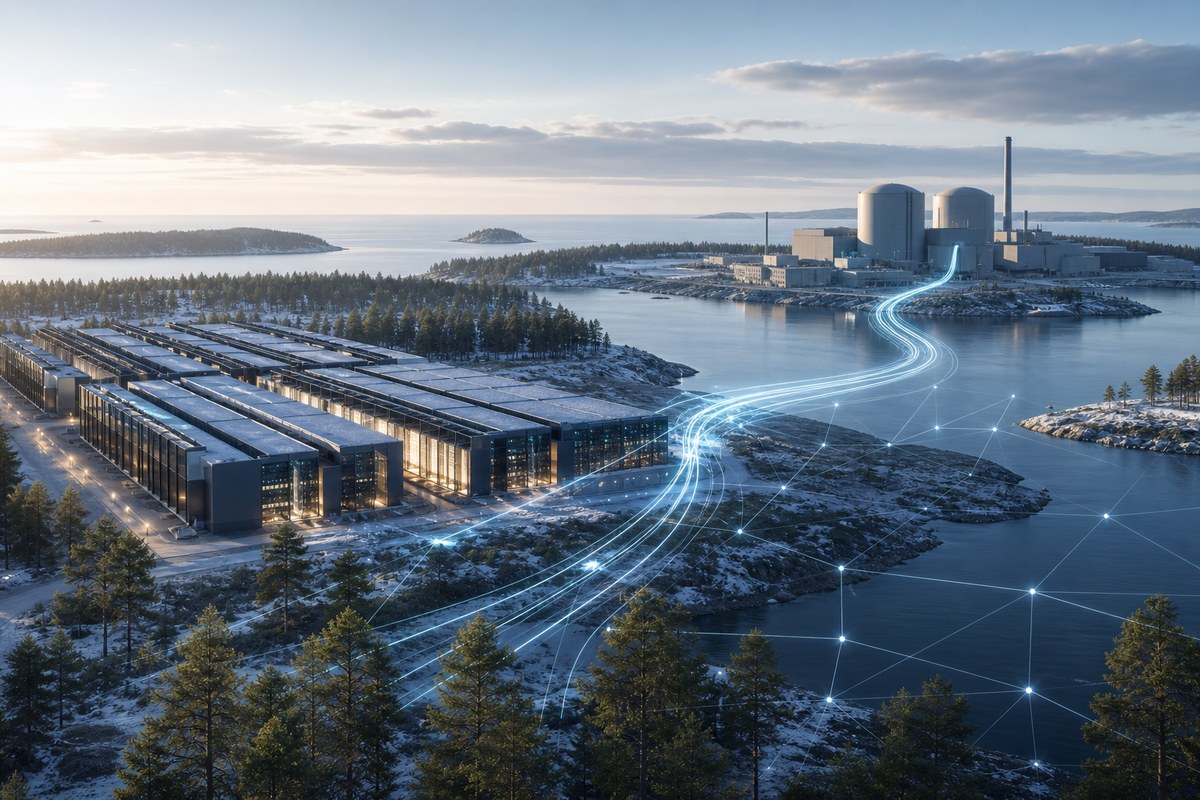
At a minimum, the announced two-year commitment implies average planned spending of €6.5 billion a year. That is a measure of the headline commitment, not an annual budget: Google has not publicly broken out how the €13 billion is to be divided among computing facilities, grid work, clean-energy projects or batteries, nor has it said how much of the total is associated with each Finnish location.
Data-center spending and electricity procurement are distinct commitments
The investment plan and the nuclear agreement are connected strategically but are not the same transaction. The €13 billion is Google’s announced infrastructure commitment for 2027-28. The Fortum arrangement is a long-term electricity purchase agreement, with a 22-year term and a ceiling of up to half of one plant’s output. Public reporting did not disclose settlement, delivery or volume details beyond that cap.
Fortum said the agreement creates economic certainty for a proposed lifetime extension and upgrade of Loviisa through 2050. That is narrower than saying Google is funding the entire project. Google and Fortum also said they would explore development of new nuclear and renewable energy in Finland, according to the Reuters account.
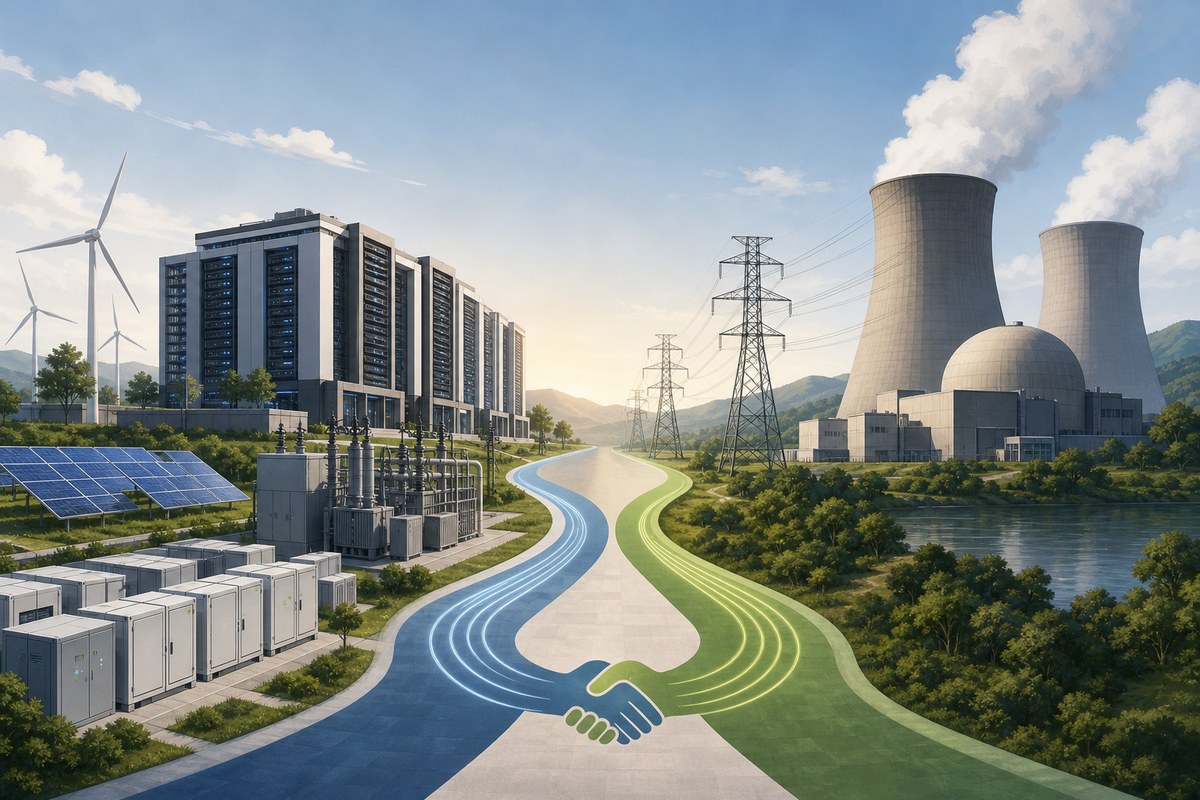
For Google, the agreement marks its first nuclear-energy deal outside the United States, Chief Investment Officer Ruth Porat said in a CNA report carrying Reuters coverage. Finland’s Prime Minister Petteri Orpo said the investment reinforced the country’s position in the AI economy, according to that report.
The pairing illustrates why the economics of large computing campuses extend beyond servers and buildings. Google is planning capacity whose operation will require substantial electricity over many years, while Fortum gains a long-duration prospective customer arrangement tied to an existing nuclear asset. The contract term runs far beyond Google’s stated 2027-28 construction-investment window.
Hamina campus anchors a broader Finnish footprint
Google already operates a data-center site in Hamina, which it acquired in 2009 after the property had operated as a paper mill. A Dow Jones Newswires report said the new financing encompasses Hamina and three other locations in Finland. Google has not publicly allocated the €13 billion among those four sites.
The planned infrastructure is intended to support Google services including Gemini, Search, Maps and YouTube, Dow Jones reported. That framing makes the Finnish commitment part of Google’s wider effort to expand capacity for consumer internet services and AI products, rather than a single-purpose local computing project.
Google’s broader description of the investment is important because the headline number should not be read as a data-center construction figure alone. Grid upgrades, clean-energy development and batteries are included in the announced scope. The available accounts do not provide capacity targets for the data centers, battery specifications, a timetable by site or a project-by-project spending schedule.
Economic projections require separate reading
Google said the build-out would contribute about $3.6 billion to Finland’s gross domestic product during construction and support roughly 7,000 jobs annually once the facilities are operational, as reported by Reuters. Those are company projections, not results already achieved, and the GDP estimate refers specifically to the construction period.
A separate TechRadar report put expected construction-phase employment at up to 37,000 jobs across 2027 and 2028 and said local communities would receive a combined $36 million for education and skills programs. The construction estimate and Google’s 7,000 annual operational-job projection describe different phases, so they should not be combined into a single employment total.
The same distinction applies to the company’s economic claims more broadly. The investment, its two-year target period and the 22-year power agreement are announced commitments. Employment and GDP effects depend on projects being built and entering service as planned.
Google’s decision also arrives after more than a decade of operations in Hamina, giving the company an established Finnish base from which to expand. The new plan moves the relationship into a larger phase: at least €13 billion of planned infrastructure spending through 2028, backed by an electricity arrangement that can extend for 22 years.

