


Google has confirmed that the Pixel 10a will ship with mandatory Battery Health Assistance, a software system that gradually limits charging speed and effective battery capacity as the device ages. Unlike earlier Pixels where related features could be toggled, this behavior cannot be disabled on the 10a.
The company outlined a stage-based process that begins after roughly 200 full charge cycles and reaches its most aggressive limits after about 1,000 cycles. In practical terms, owners will see slower top-up times over the phone’s lifespan and a reduced “full” capacity to help control stress on the lithium-ion pack.
- What Google Confirmed About The Pixel 10a Battery Safeguards
- How Battery Health Assistance Works Over The Phone’s Lifespan
- Why Google Is Implementing Mandatory Battery Limits On The Pixel 10a
- How It Stacks Up Against Rivals And Their Battery Policies
- What Pixel 10a Owners Should Expect As Cycles Accumulate
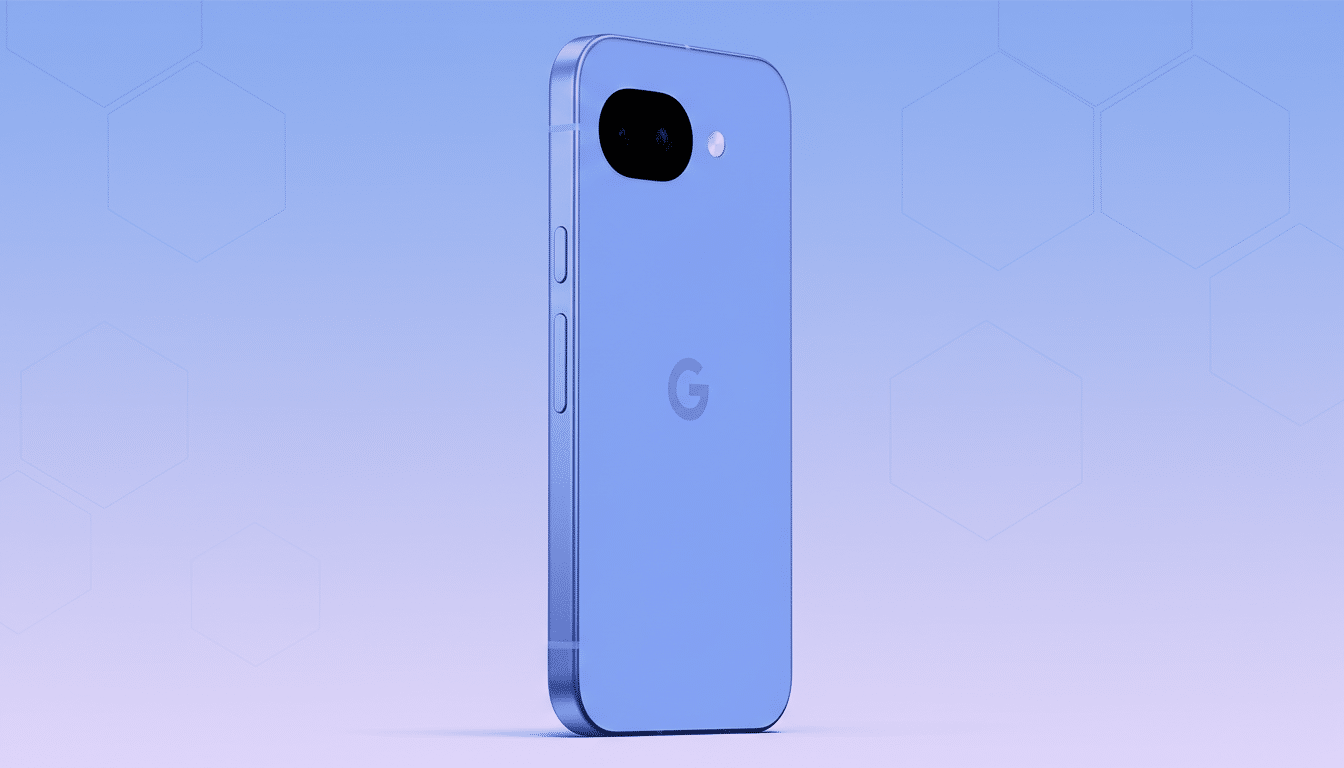
What Google Confirmed About The Pixel 10a Battery Safeguards
During a media briefing, Google said the Pixel 10a’s Battery Health Assistance (BHA) cannot be turned off. The feature joins the Pixel 9a and the broader Pixel 10 family, where the same policy applies. It dynamically tweaks the charge curve, trims the usable state-of-charge window, and lowers peak wattage as the battery accumulates cycles.
Google rates recent Pixel batteries, including the 10a, for about 1,000 cycles before reaching 80% of original capacity. BHA sits on top of that natural aging curve, adding software-defined guardrails designed to mitigate wear and reduce the risk of thermal events over time.
How Battery Health Assistance Works Over The Phone’s Lifespan
Every full charge and discharge counts as a cycle. BHA monitors these cycles and adjusts the charge strategy in stages. Early on, you may notice modest reductions in peak charging speed; later, the phone will preserve a slightly narrower top-end capacity to keep the pack away from the highest-voltage, highest-stress region.
This differs from passive degradation. Instead of merely reflecting chemistry-driven loss, the phone proactively avoids conditions that accelerate wear—high temperature, sustained 100% charge, and rapid current at high states of charge. The trade-off: safer, steadier long-term behavior, but slower charging and less headroom on day-to-day range.
As a rough benchmark, heavy users can cross 200 cycles within the first year, while average users often accumulate 250–300 cycles annually through partial top-ups. By two to three years—500 to 800 cycles—throttling becomes more noticeable, especially during hot charging sessions or when pushing the battery to a full charge repeatedly.
Why Google Is Implementing Mandatory Battery Limits On The Pixel 10a
Battery safety is the quiet story behind the switch. Prior A-series models faced scrutiny after real-world incidents: some Pixel 4a and Pixel 6a units were reported to overheat, several Pixel 6a phones reportedly caught fire, and a subset of Pixel 7a owners observed swelling. While these cases were limited, they highlight the outsized risks of lithium-ion failures.

Broadly, safety bodies and industry engineers have long warned that longevity hinges on temperature control and reduced time at high voltage. Organizations such as IEEE and independent battery researchers consistently show that capping charge levels and moderating current can extend usable life and reduce hazard probability. BHA operationalizes those principles by default.
How It Stacks Up Against Rivals And Their Battery Policies
Manufacturers take different paths to the same goal. Many Samsung phones are rated for up to 2,000 cycles before falling to 80% capacity, and Samsung also offers optional charge caps through its “Protect battery” feature. Apple’s Optimized Battery Charging delays full charges to reduce time at 100%. Crucially, these measures are typically optional.
Motorola has said it does not use an equivalent to Google’s BHA. Instead, it points to Overcharge Protection, which allows capping at around 80% to cut stress without mandating performance changes. That highlights the key contrast: Google’s newest approach is automatic and unavoidable, not a user-selectable preference.
What Pixel 10a Owners Should Expect As Cycles Accumulate
Short-term, you’ll likely notice little difference. The earliest stage typically nudges top-end charging behavior rather than gutting performance. As the phone approaches several hundred cycles, expect slower rapid-charging peaks and a “full charge” that translates to slightly fewer hours of screen time than on day one.
By the time the battery nears 1,000 cycles—often three to four years for typical users—the combined effect of natural wear and BHA safeguards will be apparent. For many buyers who upgrade on a two- to three-year cadence, the practical impact may feel like a gentle taper rather than a cliff.
You cannot disable BHA, but you can slow aging:
- Avoid heat during charging.
- Keep the phone off pillows or dashboards when plugged in.
- Use fast charging only when necessary.
- Favor partial top-ups over sitting at 100% for hours.
- Enabling adaptive charging features where available can also reduce stress during overnight plugs.
The policy will frustrate power users who prefer full control. Still, it reflects a safety-first stance after high-profile battery scares across the industry. If Google pairs this with transparency and optional user tools—like charge caps or scheduling—it could balance longevity, safety, and user choice more gracefully in future Pixels.
