


The Golden Globes came back with a night that pivoted from razor-edged comedy to tear-soaked acceptance speeches, studded with surprises and timely activism. It wasn’t that kind of night, the room was filled with risk and honesty — and a few delightfully strange distractions.
From Timothée Chalamet’s breakthrough victory to a red carpet protest that seemed to telegraph Hollywood’s political conscience, the show doubled as industry barometer and cultural mood ring. These are the moments that everyone will be talking about.
- Roasts and sharp monologues set a fearless tone
- Pins and a call for accountability across Hollywood
- Timothée Chalamet’s breakthrough win reshapes the race
- Teyana Taylor’s powerful tribute brings the room to tears
- Sinners and the return of the big-screen hit
- Rose Byrne keeps it human with a delightfully odd aside
- What the Night Told Us About Awards Season
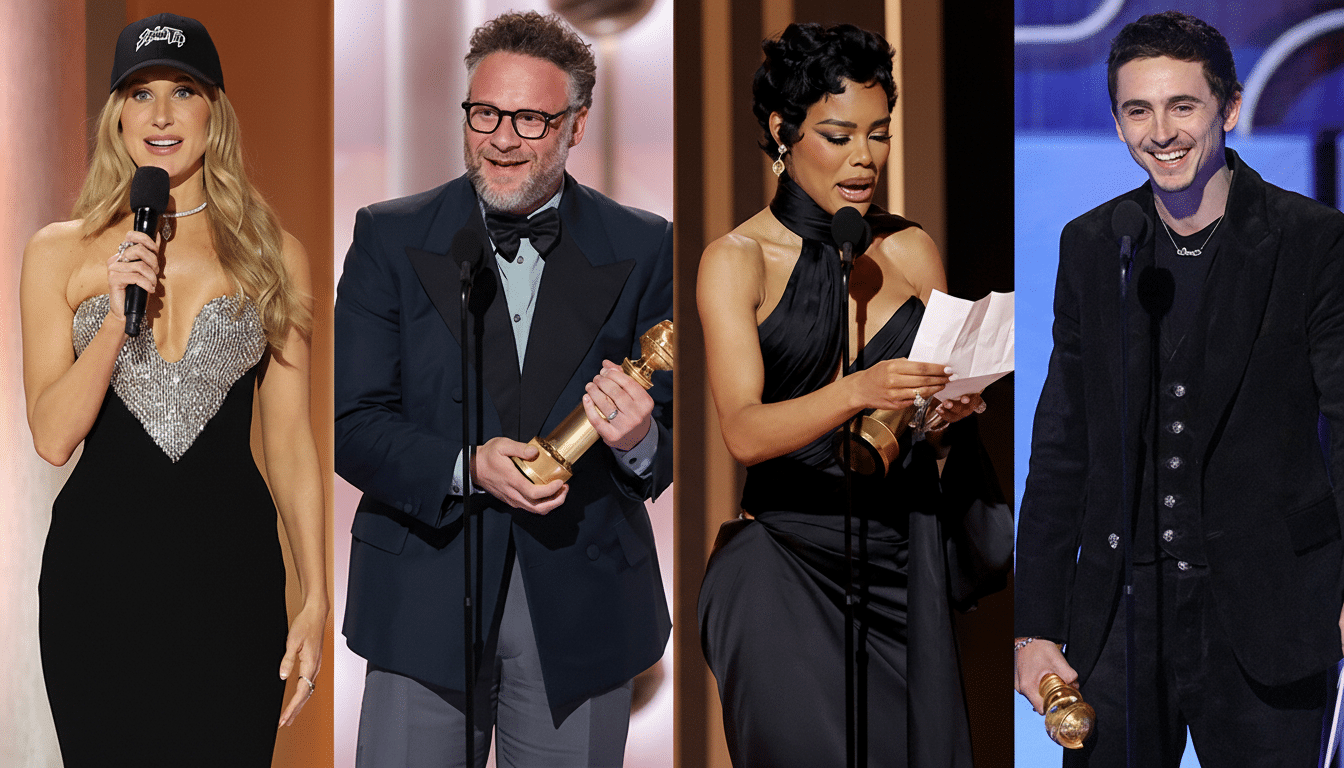
Roasts and sharp monologues set a fearless tone
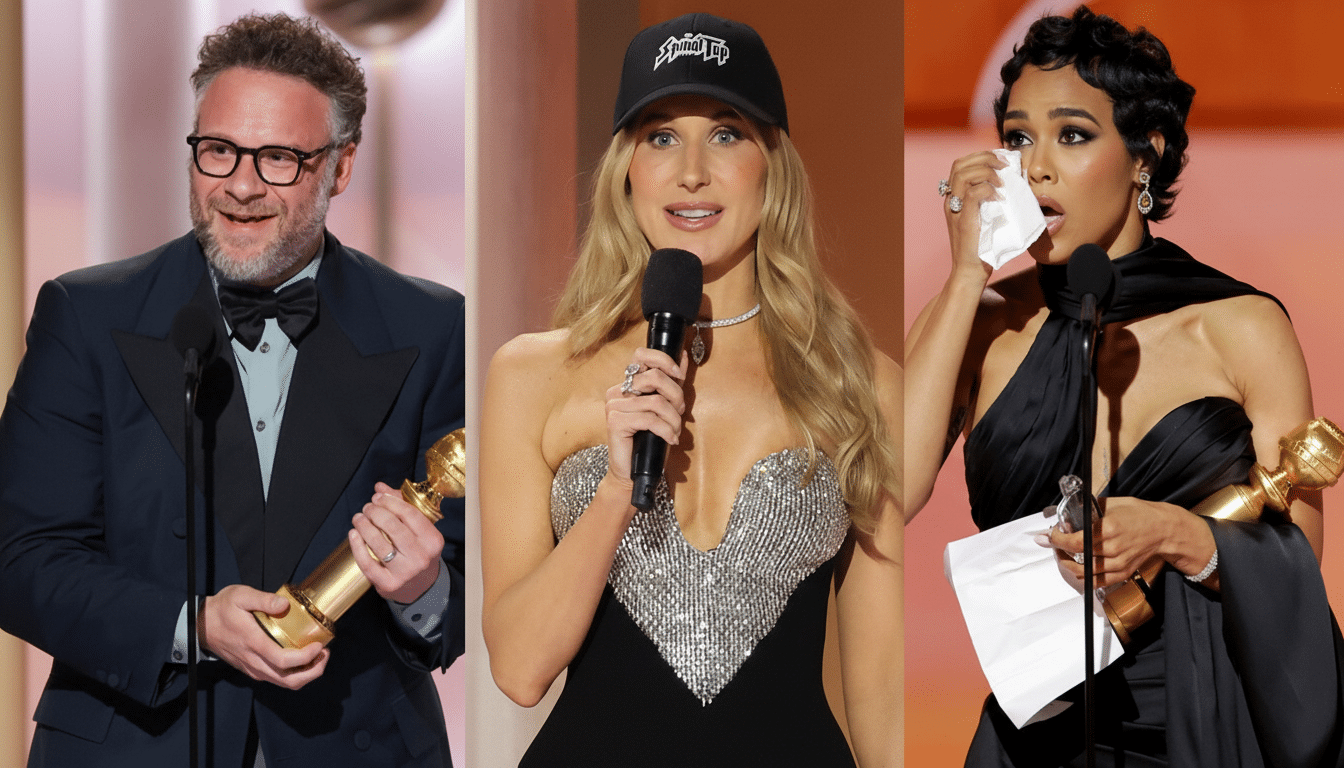
Nikki Glaser led the way with a rapid, pointed fusillade of jokes that were gleefully uncomfortable. “Yes, the Golden Globes: Clearly, the most important thing happening in the world right now,” she said dryly, later taking aim at the Department of Justice along with Hollywood’s A-list by citing “an A-list that has been heavily redacted.” The setup was tailored to the moment: fame and press-conference scrutiny, and a room prepared to laugh at both.
Pins and a call for accountability across Hollywood
On the carpet and in the ballroom, a silent protest was loud. Wearing stark white “BE GOOD” pins in solidarity after the killing of Renee Good in Minneapolis, Mark Ruffalo, Wanda Sykes and Natasha Lyonne were among those who attended. The message, said Working Families Power organizer Nelini Stamp to NPR, was simple: artists and entertainers have to speak up, not just stand back.
Awards stages have served as civic platforms for many years, but the visual unanimity — black caps on white squares — turned this into more than a one-time statement. It felt like a collective reminder that spotlight and responsibility are tandem concerns.
Timothée Chalamet’s breakthrough win reshapes the race
In one of the evening’s biggest upsets, Timothée Chalamet beat out industry legends like Leonardo DiCaprio and George Clooney to win his first Globe for Marty Supreme. It was the sort of results-card flip that upends an awards season narrative in a flash, and Chalamet fielded it with grace and a canny joke that somehow landed as gracefully as his performance seems to have done with voters.
The win highlights a larger one: Momentum is beginning to swing toward younger, more adventurous work in even the categories that used to be strictly for legacy names. Look for this to reverberate through guild ballots and beyond.
Teyana Taylor’s powerful tribute brings the room to tears
Teyana Taylor, who was named best supporting female actor for “One Battle After Another,” served the evening’s emotional high point. “To every brown girl and little brown girl that is watching tonight: Our softness isn’t a liability, our depth is as strong as any other,” she said, speaking well beyond her room. It was the striking fact that representation isn’t only an effect; it is a voice, is a posture, is a promise.
Sinners and the return of the big-screen hit
Ryan Coogler’s Sinners made it onto the board twice — Best Original Score and the Cinematic and Box Office Achievement award. The second, a relatively recent addition intended to commend cultural as well as commercial impact, had emerged as something of a bellwether for which titles people actually showed up to see. Coogler’s acceptance was also a kind of thank-you note to the public at large: “We didn’t know that they would show up, so we just want to say thank you that they did.”
It followed a larger industry narrative.
The Motion Picture Association has been describing a gradual return to theatrical attendance from pandemic lows, and Coogler’s comments expressed the shared sense of relief that filmmakers who bet on big-screen energy over playing it safe are starting to feel.
Rose Byrne keeps it human with a delightfully odd aside
Humor broke through the pageantry when Rose Byrne, winner of Best Female Actor (Motion Picture – Musical or Comedy) for If I Had Legs I’d Kick You, explained her husband Bobby Cannavale’s no-show as he was at a reptile expo purchasing a bearded dragon. It was exquisitely odd, a human moment of exactly the kind that makes a marathon broadcast feel alive.
What the Night Told Us About Awards Season
Key takeaways emerged: an appetite for bolder choices, a refocusing of theatrical experiences, and a nagging insistence that the mic is also a megaphone.
Now a partnership between Dick Clark Productions and Eldridge as well as with a voting body that’s now expanded to hundreds of international entertainment journalists, the show’s picks have matured into a more global read on taste.
If Chalamet’s victory turns into a trend and Sinners retains its commercial-and-craft lane, expect the race to narrow. And if it’s Taylor’s speech that will be the night’s legacy, it wasn’t just because here was a woman who stood behind her music — and friends — when she needed to; it’s because it did what awards shows at their best do best: elevating artistry while reminding an industry of who’s watching, and why it all matters.
