


Garmin is laying the groundwork for a new kind of metabolic insight from the wrist. A newly published patent application, spotted by industry outlet Wareable and filed with the United States Patent and Trademark Office, describes a watch-based system that estimates HbA1c, the clinical marker that reflects average blood glucose over roughly three months. Unlike continuous glucose monitors that deliver moment-to-moment readings, Garmin’s concept aims at long-term trends using optical sensors similar to those already found on its wearables.
In practical terms, the filing suggests Garmin is exploring a noninvasive way to give users a laboratory-adjacent metric without fingersticks or skin-inserted sensors. It’s still theoretical, and any product would face significant validation and regulatory hurdles. But it underscores a broader industry push to turn wearables into windows on metabolic health, not just step counters with heart rate.
How Garmin’s Approach Differs From Today’s CGMs
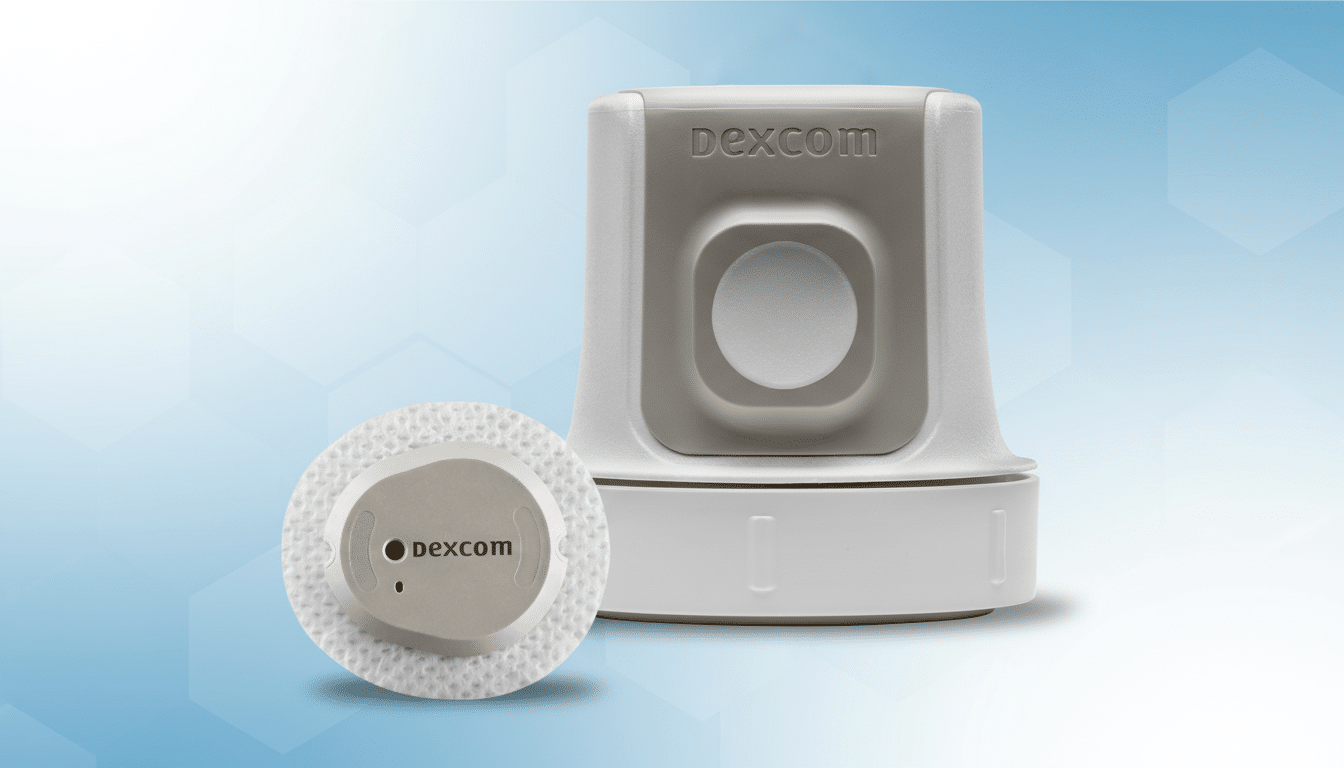
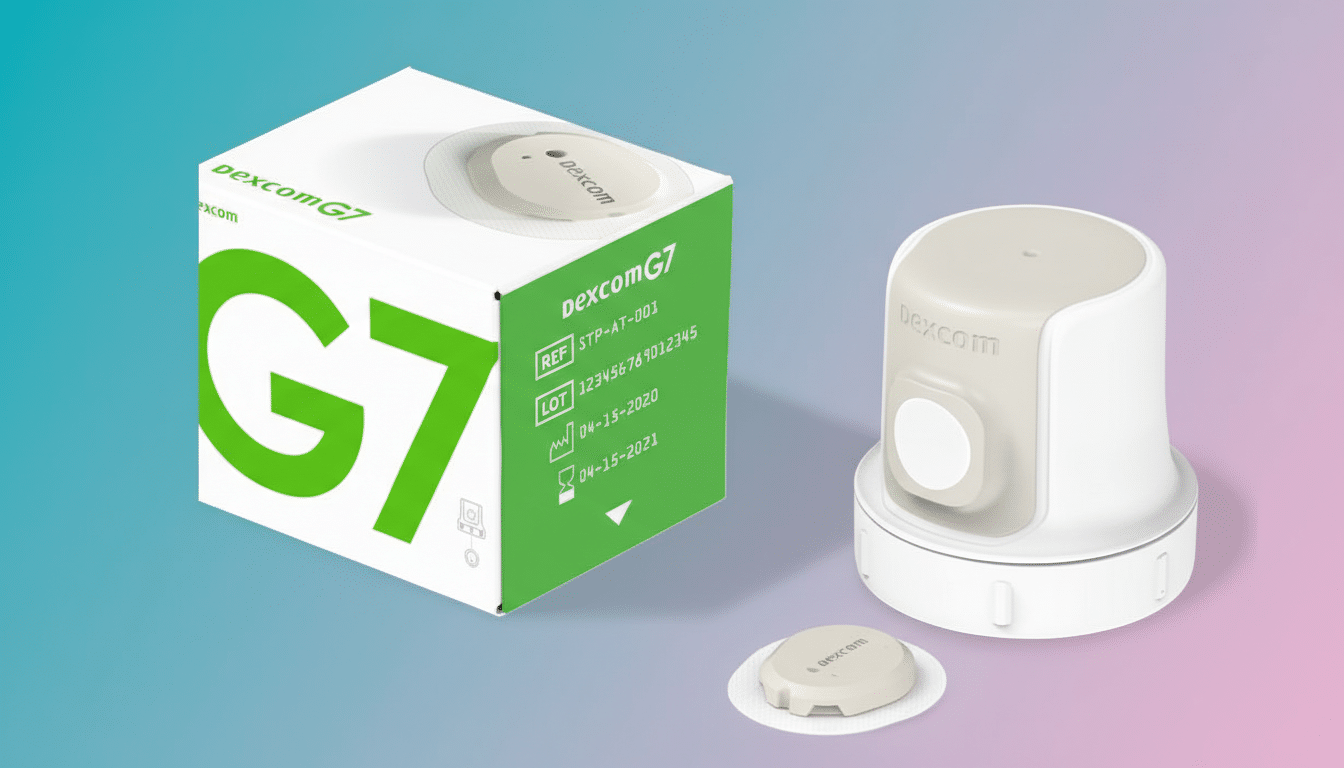
Current leaders in glucose tracking, such as Dexcom G7 and Abbott FreeStyle Libre 3, use tiny filament sensors under the skin to capture interstitial glucose and report values every few minutes. Their accuracy, often measured by Mean Absolute Relative Difference, typically falls in the high single digits, around 8–10%, and they’re cleared for treatment decisions.
Garmin’s patent sketches a different playbook. It describes gathering multiwavelength optical signals from beneath the skin—think of the same photoplethysmography used for heart rate, but expanded—and then applying algorithms to infer an estimated HbA1c value over time. Rather than predicting today’s glucose level, the system would look for subtle, cumulative patterns in how light interacts with tissue and blood. The appeal is obvious: a familiar wrist form factor, no disposables, and insights that align with how clinicians already gauge long-term control.
Why HbA1c Estimates From The Wrist Could Matter
HbA1c is central to diabetes care. The American Diabetes Association cites diagnostic thresholds of 6.5% or higher for diabetes and 5.7–6.4% for prediabetes, and many patients test every 3–6 months. A wearable that could estimate this marker—clearly labeled as an estimate—might help people spot worsening trends between lab visits, or motivate lifestyle changes earlier.
The public health context is massive. The CDC estimates about 38 million people in the U.S. have diabetes and roughly 96 million have prediabetes. Globally, the International Diabetes Federation puts the number of adults with diabetes at more than 530 million, with costs in the hundreds of billions annually. Even a directional wrist-based HbA1c could be meaningful at population scale, provided users understand it complements rather than replaces lab testing.
It’s also distinct from features already on some wearables. Huawei, for example, offers a diabetes risk assessment that categorizes users into low or high risk based on trends. Garmin’s patent points to estimating a defined clinical marker instead of a risk score, more akin to the “glucose management indicator” used by CGMs to approximate lab A1c—though aligning wrist estimates with gold-standard lab methods would require careful calibration and peer-reviewed evidence.
Technical Hurdles and Validation for Wrist HbA1c
Noninvasive glucose sensing has a long history of intriguing demos and disappointing follow-through. Optical signals are notoriously sensitive to motion, skin temperature, tissue hydration, perfusion, and skin tone. Add in exercise-induced changes and varying ambient conditions, and the modeling challenge becomes formidable. Robust datasets across diverse populations are essential to avoid bias and drift.
Clinically, any claim that a watch can estimate HbA1c would need to stand up to comparison with laboratory methods, typically high-performance liquid chromatography standardized by the NGSP. That implies prospective studies, transparent error metrics, and repeatability across months. On the regulatory side, a feature that informs medical decision-making would likely require FDA clearance—potentially via De Novo or 510(k)—whereas a generalized “wellness” trend indicator might not, but would be restricted in what it can claim.
Battery life and sensor design also matter. Adding more LEDs and wavelengths can improve signal quality but consumes more power and generates heat, both enemies of all-day wear. Garmin’s long-running Elevate optical platform shows it knows how to balance those trade-offs, yet HbA1c estimation raises the bar far beyond heart rate or SpO2 spot checks.
A Crowded Race Toward Noninvasive Metabolic Tracking
Garmin is not alone. Apple has reportedly investigated silicon photonics for glucose-related sensing for years, Samsung continues to research noninvasive biomarkers, and startups from Know Labs to Movano have pitched various optical and radio-frequency approaches. Rockley Photonics once championed a wearable photonics platform aimed at glucose-adjacent metrics before running into commercial headwinds, a reminder of how tough this domain remains.
Meanwhile, CGM heavyweights are expanding their reach. Abbott and Dexcom are refining sensors for broader populations, including people without diabetes interested in performance and nutrition. If wrist-based HbA1c estimates prove viable, they would sit alongside—not replace—those devices, offering a complementary, low-friction view of metabolic health.
What To Watch Next As Garmin Explores Wrist HbA1c
Patents are signals, not shipping products. The next telltales would be clinical collaborations, white papers, or developer toolkits hinting at new wavelengths in Garmin’s optical stacks. Hardware teardowns showing additional emitters or photodiodes, or software language that frames results as “estimated HbA1c,” would further clarify intent.
If Garmin can deliver a reliable, clearly caveated HbA1c estimate from the wrist, it could give millions a new lens on long-term glucose control. If not, the work may still yield better optical models that benefit fitness recovery scores, sleep staging, and cardiovascular metrics. Either way, the message is clear: the wrist is gearing up for metabolic insight, and the race is far from over.
