


I never saw myself sticking with a foldable. Two months living with the Galaxy Z Fold 7 flipped that script. The difference this time is not a single feature but the way everything clicks together — the weight, the cover screen, the surprisingly strong battery life, and software that finally treats the big inner display like the main event. It hasn’t erased every compromise, but it’s the first foldable I genuinely prefer to a slab.
The Form Factor Finally Makes Sense Day to Day
What unlocked it for me was the physical feel. Older Folds always reminded me I was carrying a hinge. The Z Fold 7 doesn’t. At roughly 8.9mm folded and around 215g, the device lands squarely in “daily carry” territory rather than “special occasion.” That drop from the brick-like early models is enormous in practice — it’s lighter than some big slabs and barely thicker in pocket, despite housing two screens, two batteries, and a hinge assembly.
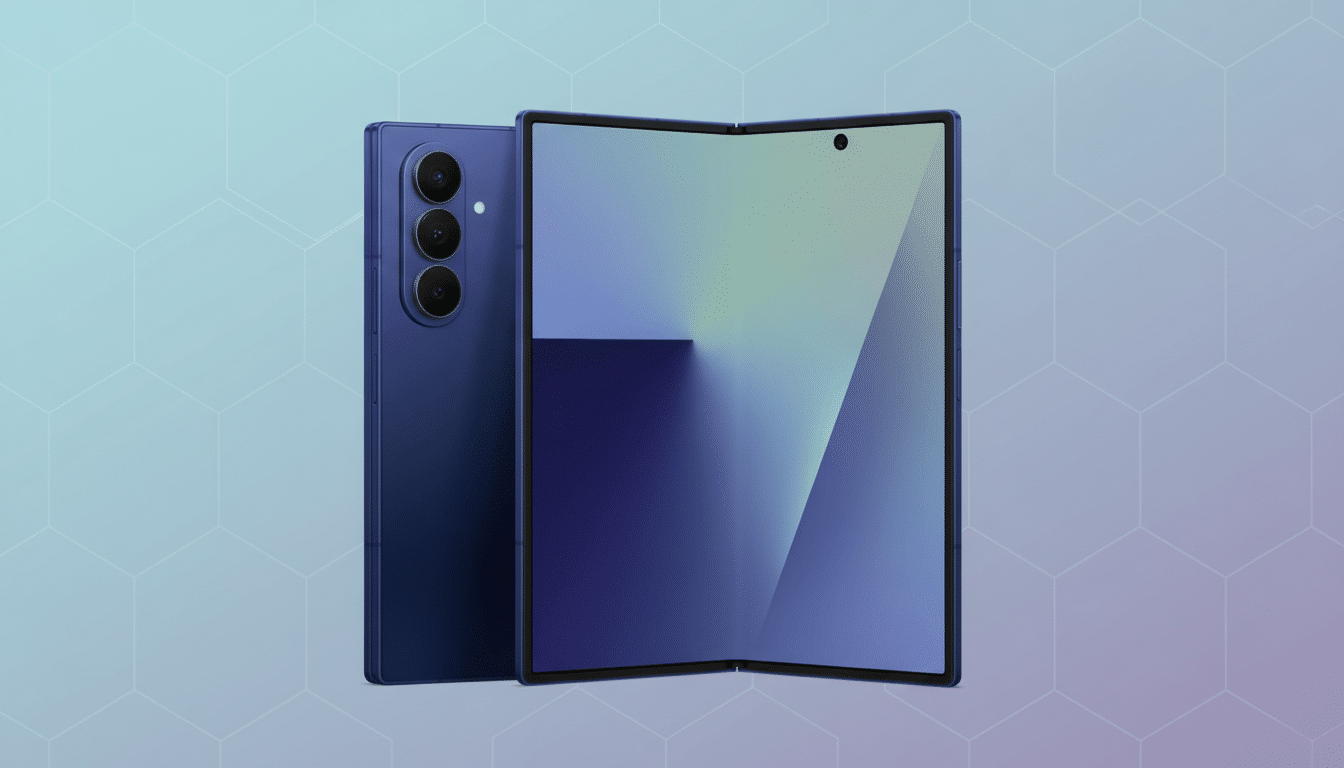
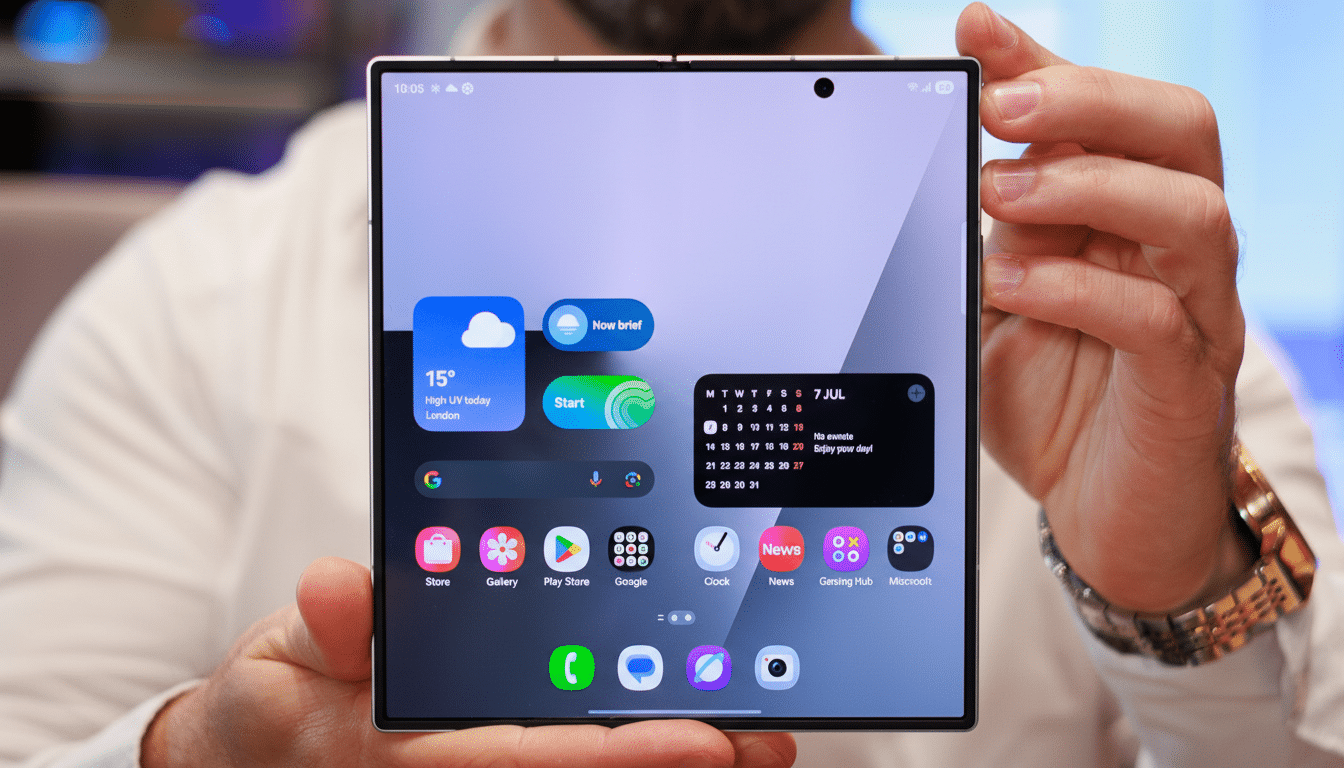
The larger 6.5-inch cover screen is the other quiet victory. Previous narrow fronts made typing and app navigation feel like compromises; this one doesn’t. It’s still tall and one-hand friendly, but wide enough to live in messaging threads, maps, and email without begging for the inner display. When I do open it, the 8-inch OLED makes documents, dashboards, and split-pane apps feel native rather than stretched.
Battery Life That Defies The Specs In Daily Use
On paper, the 4,400mAh capacity hasn’t changed in years. In the hand, endurance has. With the Snapdragon 8 Elite for Galaxy, tighter display power management, and One UI’s background tuning, I routinely hit 6–7 hours of screen time across a full day using both displays about half the time. That includes three-app multitasking on the inner screen — Slack, a messenger, and music — plus 5G bursts.
One real-world stress test was a cross-country dash: wireless Android Auto for hours, GPS navigation, 5G streaming, messaging updates, and location sharing. The phone dropped from roughly two-thirds to one-fifth, never warmed significantly, and — importantly — didn’t force me into battery triage. My previous slab would have surrendered before the destination.
It Still Feels Special Without Feeling Gimmicky
The “wow” of unfolding hasn’t worn off seven generations in, but the novelty now rides alongside maturity. Android’s large-screen features and Samsung’s taskbar, app continuity, and drag-and-drop gestures feel finished. Two apps side-by-side plus a floating window is no longer a party trick; it’s a workflow. As a bonus, the hinge and crease are less conspicuous than ever, matching what display analysts at DSCC have reported about steady panel and hinge improvements across the category.
Market momentum reflects that evolution. Research firms like IDC and Counterpoint have charted foldables past the 20 million annual shipments mark recently, with double-digit growth expected as designs slim down and prices normalize. In short, what once looked niche now behaves like the next mainstream tier.
Trade-offs You’ll Notice Living With This Foldable
Thinner comes with taxes. The Wacom digitizer layer is gone, so there’s no S Pen support. If you sketch, annotate PDFs, or live in pro note-taking, you’ll miss it. I do — often.
The side-mounted fingerprint sensor also suffers from the diet. While I’ve long preferred power-button readers to in-display optics, this slimmer key is pickier and easier to miss under a case. Small change, big friction. Samsung also removed the swipe gesture on the sensor for notifications, a tiny loss that added up in daily use.
Then there’s the inner camera. Samsung ditched the under-display unit for a conventional hole punch. The image quality is better, but the cutout can intrude on text and full-screen video. A corner placement — the approach used by some rivals — would keep it out of the way more often.
Cameras Still Trail The Price Tag At This Level
Hardware headliners — a 200MP main and a 3x tele — don’t erase the tuning quirks. Shutter lag remains noticeable outside ideal light, the 3x lens isn’t worth leaning on compared to cropping from the main sensor, and the ultrawide’s aging specs show up in dim scenes. Independent testers have long called out Samsung’s tendency to chase brightness and smoothing; that pattern persists here. For a flagship in this bracket, imaging is the weak link.
The Verdict After Two Months Of Daily Use
This is the first foldable I didn’t want to abandon after the honeymoon. The weight drop, the truly usable cover screen, and the all-day battery change the daily calculus. Add an inner display that turns multitasking into muscle memory, and the Z Fold 7 stops being “a cool demo” and starts being the phone I reach for.
I still want the S Pen back, a less fussy fingerprint reader, and camera tuning that matches the price. But those gripes no longer outweigh the gains. If you wrote off foldables as too heavy, too compromised, or too gimmicky, the Galaxy Z Fold 7 is the counterargument that stuck with me — and the first one I’d recommend without asterisks to anyone curious about the form factor.
