


Project Aura, powered by the Android XR platform and Snapdragon XR2 Plus Gen 2 chipset, delivers a more accessible form factor to bring Galaxy XR’s experience to all users with a tethered pair of optical see-through glasses developed in partnership between Google and XREAL. It moves the heavy compute off the face and into a pocketable puck, with the goal of making long XR sessions for travel, productivity, or entertainment feasible. A full launch is planned for 2026, which represents a massive expansion of Google’s XR hardware ecosystem.
What Project Aura Is and How the System Is Designed
Project Aura is a pair of wired XR glasses with lightweight, AR-style eyewear and a tethered computing puck. Rather than being a fully enclosed VR headset, the glasses feature optical see-through lenses and a 70-degree field of view to superimpose apps and media onto the real world. Imagine a big, personal screen you can wear that doesn’t cause you to lose touch with the environment around you.
- What Project Aura Is and How the System Is Designed
- Galaxy XR Experience but Without the Helmets
- Why Tethering May Win for Mobile XR on the Go
- Optics and Interaction Suitable for Daily Use
- What We Know and What We Don’t About Project Aura
- Why It Matters for Android XR and Developers
- Bottom Line on Project Aura and the Galaxy XR Vision
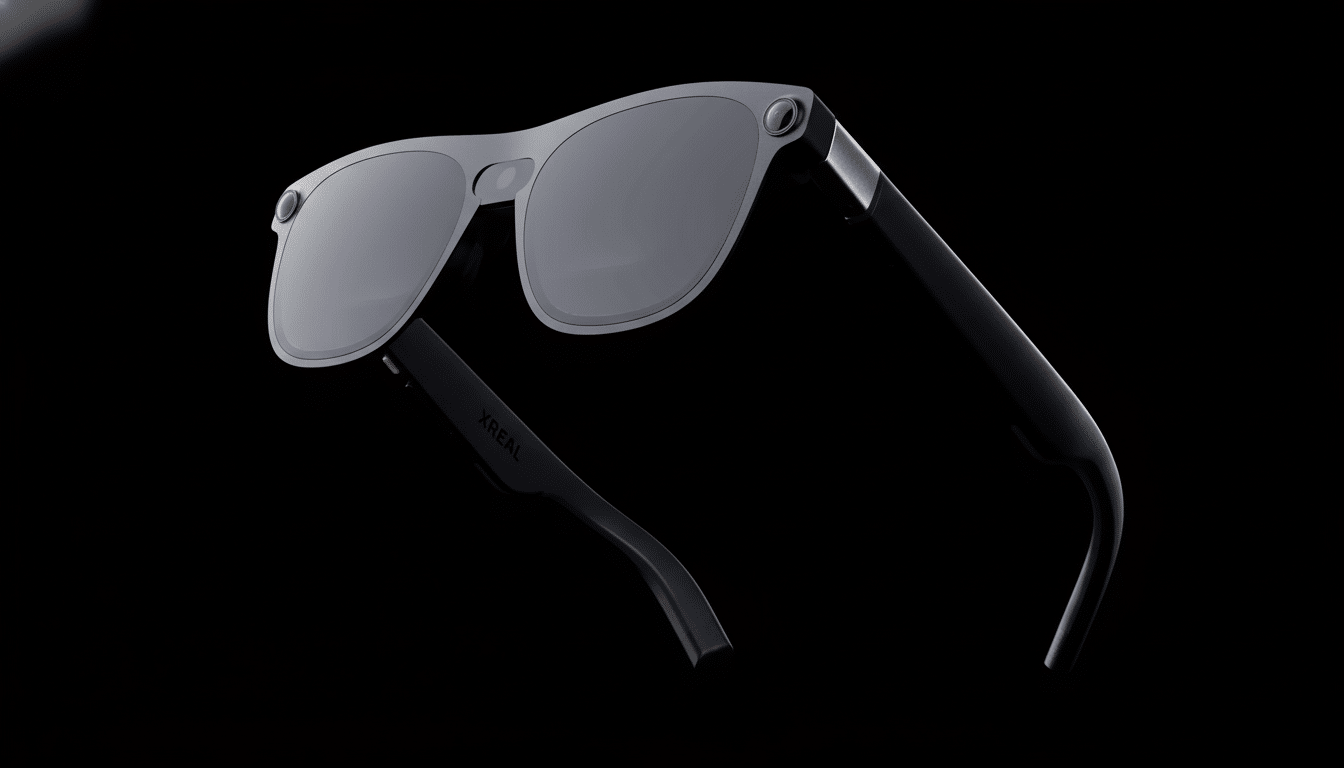
This approach reflects lessons learned from past enterprise devices that separated the compute process and the head-worn unit, but Project Aura is aimed at mainstream Android XR consumers. Take that heat and those batteries off the face, and it provides a more comfortable daily wear scenario than you’d likely see with competing standalone headsets that weigh 400–600 grams.
Galaxy XR Experience but Without the Helmets
Project Aura is powered by Android XR—the same OS as the Galaxy XR—and Qualcomm’s Snapdragon XR2 Plus Gen 2. That will include standard gesture controls using hand tracking, shared UI conventions, and a pipeline into the same app store that developers are now targeting for Galaxy XR. The pitch for users is straightforward: it’s the Galaxy XR software, as you’re already familiar with it, in a discreet glasses form factor.
For developers, platform parity matters. A unified OS and chipset decrease fragmentation, streamlining the optimization process for both performance and input models across different device types. You should expect things like multi-window productivity, enriched video experiences, and 3D spatial browsers to port with little extra development (tuned for AR-forward presentation rather than full VR occlusion).
Why Tethering May Win for Mobile XR on the Go
Travel is the apparent use case. When you need to talk to flight attendants or look at a boarding pass, it’s much more practical to wear glasses than a clunky VR headset on an airplane. Google specifically positioned wired XR glasses as a mobility-friendly solution, with the computing puck allowing for longer sessions without the weight and heat drawbacks associated with self-contained headsets.
There’s precedent. Magic Leap’s “lightpack” split helped enterprise AR take on-head weight down, and premium VR systems, even with a battery carried on a cable, have demonstrated to manufacturers that users are okay with tethers if comfort and session length get better. Project Aura takes that concept and applies it to a consumer Android XR scenario that might get more traction among commuters and frequent fliers looking for a personal theater and spatial workspace.
Optics and Interaction Suitable for Daily Use
A 70-degree field of view isn’t VR-wide, but it’s wide enough for see-through AR and for apps that work great in pinned mode, such as streaming video or side-by-side documents. Optical see-through also reduces motion sickness for some users, because your peripheral vision remains linked to reality. Built-in features lend heavy hand-tracking focus with Android XR, meaning Aura’s default input model doesn’t require bulky controllers — the “glasses, not headset” narrative is hard-coded.

Privacy will be a factor. Organizations and venues prefer clear lenses to opaque headsets, while any cameras onboard for tracking raise questions. Clear status displays and privacy levers will be crucial for acceptance in the workplace and while traveling — both areas where Google and XREAL will have to tread lightly.
What We Know and What We Don’t About Project Aura
Confirmed details:
- Android XR platform
- Qualcomm Snapdragon XR2 Plus Gen 2
- Optical see-through displays with a 70-degree FOV
- Hand-tracked gesture controls
- Wired compute puck
- Launch planned for 2026
- Concept geared toward everyday on-the-go use, not maximum VR
Not disclosed:
- Battery life
- Weight figures
- Pricing
- Product name
- Camera count
- Enterprise vs. consumer configurations
These variables will define whether Aura leans closer to a premium personal theater, a general-purpose spatial computer, or an adaptable platform that spans both.
Why It Matters for Android XR and Developers
The strategy for Android XR is starting to take shape: it’s one platform with many forms. Galaxy XR secures the heavyweight, standalone immersive side while Project Aura offers lightweight, AR-first use. (Everyone likes to bundle the platforms for at least their magic-plus-one pitch and sales meeting demo, usually starting with HoloLens.) Qualcomm’s new XR silicon is the hedge there, while developers get a potentially broader addressable base without scabbing it out in terms of runtimes.
Some industry observers expect head-worn device shipments to recover as mixed reality grows up, breaking out further from the traditional gaming and video market dominated by VR, with companies such as IDC citing stronger use cases and better-performing hardware. If Project Aura can deliver comfort and continuity — your apps, your media, your workspace everywhere — it could be the default way many people experience Android XR for the first time.
Bottom Line on Project Aura and the Galaxy XR Vision
Project Aura reimagines the Galaxy XR experience as glasses that you might actually wear. By moving compute to the puck and doubling down on Android XR’s common denominator, XREAL and Google are betting that the best XR device isn’t always going to be the most powerful device you strap to your face — it will be the one you never take off. The next year will be spent filling in the specs and proving the comfort story holds up to real-world testing.
