


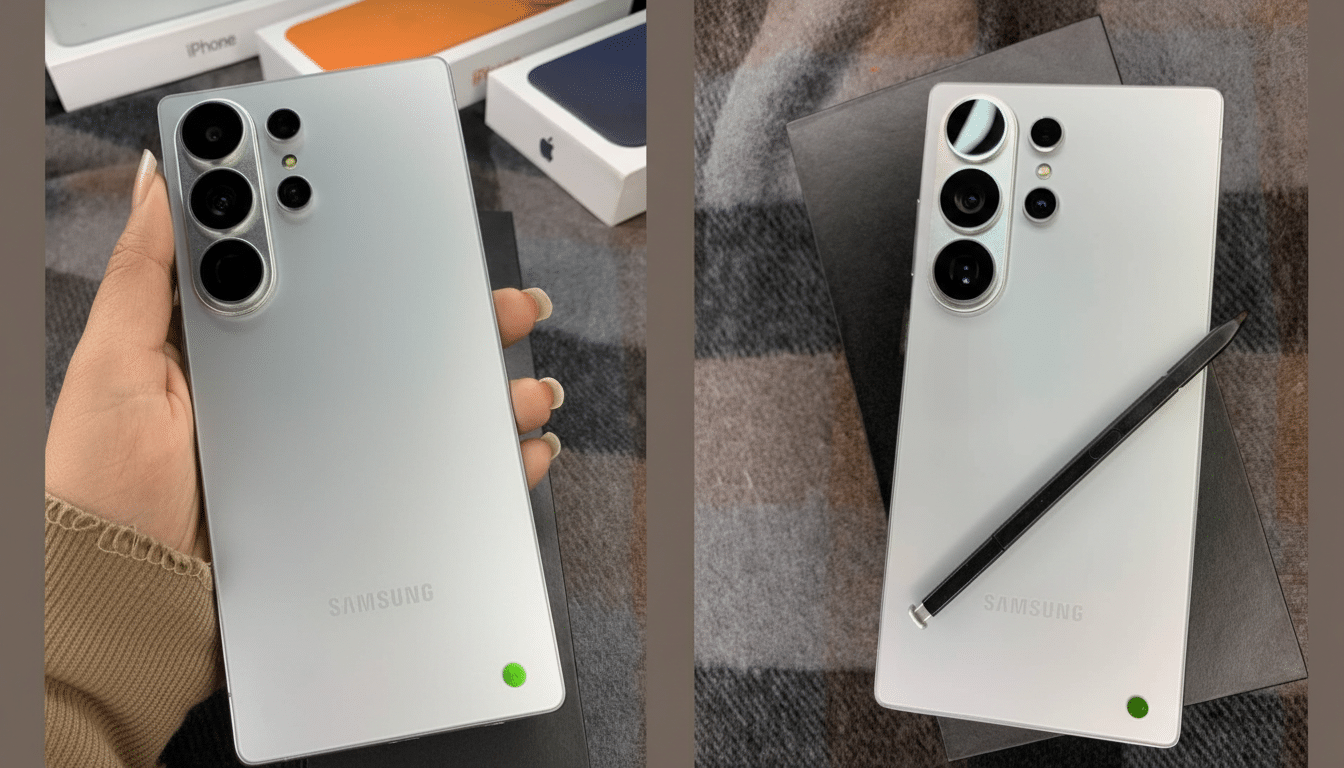
The next Samsung flagship may be heading for a durability leap. A well-known industry leaker claims the Galaxy S26 Ultra will introduce a new generation of “ultra-high strength” Gorilla Glass, paired with a built-in privacy display and a more advanced anti-reflective coating—an ensemble that could make aftermarket tempered glass protectors unnecessary for many users.
While details remain unofficial, the direction is clear: Samsung appears to be folding the most common reasons people install screen protectors—scratch resistance, glare reduction, and prying eyes—directly into the display stack.
What A New Gorilla Glass Could Mean For Durability
Corning’s recent trajectory sets useful context. With the Galaxy S24 Ultra, Corning introduced Gorilla Armor, touting up to 4x better scratch resistance than competitive aluminosilicate glass and up to 75% lower reflections compared to typical cover glass, according to the company’s own testing. A next-generation formulation for the S26 Ultra would likely target even tougher scratch performance while preserving or improving optical clarity and drop resilience.
It’s important to remember that glass engineering is a balancing act. Harder surfaces can resist scratches but may become more brittle under impact, so materials scientists juggle compressive stress profiles, ion exchange depths, and coating stacks to protect against both micro-abrasion and catastrophic shattering. Any new “ultra-high strength” iteration will be judged on how well it advances that balance in real-world use, not just on lab numbers.
Privacy Display And Anti-Reflective Push
Recent references to a Samsung “Privacy Display” suggest a native, on-demand viewing angle limiter that narrows visibility to the person directly in front of the screen. Traditionally, privacy filters are add-on films that dim the panel and introduce color shift; integrating the effect at the OLED and cover-glass level could mitigate those trade-offs or enable toggling via software without a permanent brightness penalty.
The anti-reflective story matters just as much. The S24 Ultra’s coating won praise for dramatically cutting mirror-like glare, a benefit you notice outdoors and under office lighting. However, user reports also surfaced about coatings wearing down over time. If Samsung is refining both the formula and the topcoat’s durability—resisting abrasion from pockets, sand, and cleaning—S26 Ultra buyers could see lasting clarity without resorting to matte protectors.
What This Means For Screen Protectors And Users
Screen protectors remain a thriving accessory category because they’re cheap insurance against scratches that chip away at resale value. Allstate Protection Plans has consistently noted that display damage is the most common phone repair, and independent repair costs often sit in the few-hundred-dollar range. Even if drop toughness improves, many owners keep a protector for peace of mind and easier replacement when micro-scratches accumulate.
That said, better native glass and coatings could change behavior. If the S26 Ultra ships with demonstrably higher scratch resistance, lower reflectance, and a built-in privacy mode, a significant portion of buyers may skip add-ons entirely—especially those who dislike the feel, edge bubbling, or fingerprint halo some tempered glass protectors introduce. Accessory makers could shift toward ultra-thin films or case-first protection strategies if attach rates fall.
How It Compares And What To Watch In Testing
Look for independent lab results to validate any claims. Organizations like DXOMARK and DisplayMate analyze reflectance, color accuracy, and brightness; Allstate Protection Plans frequently publishes standardized drop tests; and Corning provides abrasion and impact metrics under controlled conditions. Key figures to watch include reflectance (%) under standardized lighting, haze, scratch thresholds across Mohs picks, and survival rates in drop scenarios onto rough surfaces.
Branding is an open question. Samsung and Corning could extend the Gorilla Armor family or unveil a distinct name to signal a step-change. Either way, the meaningful test will be long-term wear: whether the anti-reflective top layer resists micro-abrasion from grit, whether privacy mode maintains brightness and color fidelity, and whether the glass avoids the hairline scuffs that push users back to protectors.
Bottom Line: What The S26 Ultra Display Upgrades Suggest
If the rumor holds, the Galaxy S26 Ultra’s display could become a headline feature in its own right—tougher against scratches, clearer in bright light, and more private in public spaces. That combination won’t eliminate every reason to use a screen protector, but it could make going “naked” feel less like a gamble and more like the default for a flagship built to be seen and used without compromise.
