


A crisp 360-degree video leak has given the clearest look yet at the GalaXy S26 Ultra, revealing a refined silhouette, a redesigned camera housing, and a color-matched S Pen that hints at a bolder design push for Samsung’s next flagship.
What the 360-degree video reveals about Samsung’s design
Shared by noted leaker Evan Blass on X, the high-resolution clip slowly rotates the device to showcase a brushed metal frame, a backplate with cleaner camera cutouts, and the Cobalt Violet finish taking center stage. The footage is clearly marketing-grade, suggesting it comes from official promotional assets rather than renders or case-maker mockups.
- What the 360-degree video reveals about Samsung’s design
- Aluminum frame signals a pivot from prior titanium
- Camera ring exit and subtle design tweaks on the rear
- S Pen details and colorways suggest tighter coordination
- Magnets and charging ecosystem questions around Qi2
- Privacy display and other rumors gaining traction
- Pricing and market context for Samsung’s next Ultra
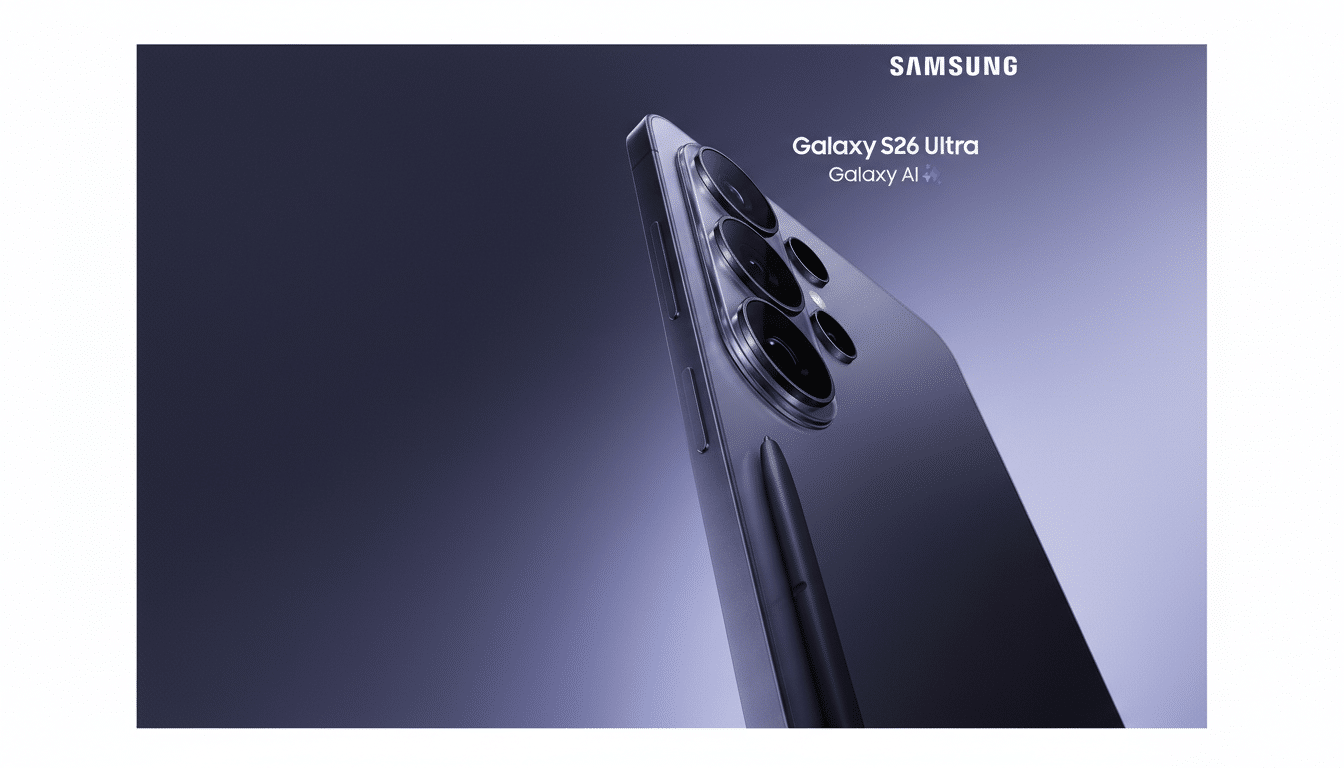
The camera array appears more cohesive: gone are the raised rings around each lens, replaced by flush openings that make the rear look tidier and arguably more premium. Up front, there’s little to see beyond a familiar single punch-hole and wallpaper that aligns with prior imagery, reinforcing that the final industrial design is largely locked.
Aluminum frame signals a pivot from prior titanium
The frame is widely expected to be aluminum alloy rather than titanium, reversing a high-profile materials shift from the previous Ultra generation. On paper, aluminum’s lower density versus titanium could trim a few grams, while a brushed finish helps disguise micro-scratches. Titanium offers superior stiffness and scuff resistance, but also adds cost and can complicate finishing. This may be a strategic balance: lighter feel, easier mass production, and a cleaner aesthetic without sacrificing overall rigidity.
It also tracks with the broader market. Teardowns across the category show most premium Android flagships favor aluminum, with titanium remaining the outlier. If Samsung can tighten tolerances, reinforce stress points, and tune the chassis with better internal bracing, the practical difference for users may be negligible while improving yields and repairability.
Camera ring exit and subtle design tweaks on the rear
Eliminating the protruding rings could be more than a cosmetic refresh. Users have complained in support forums and on social channels about cosmetic wear or peeling on decorative rings in past models, and dust accumulation around each ring was a recurring gripe. A flush cutout can reduce snag points for cases, simplify cleaning, and minimize parts that can separate over time.
While the video doesn’t confirm sensor specs, the cleaner lens surround hints at confidence in the camera hardware and image processing pipeline. In recent cycles, Samsung has leaned on larger sensors, improved OIS modules, and AI-based HDR tuning to close the gap in low light and texture retention. Expect that emphasis to continue, especially with rivals investing heavily in multi-frame fusion and periscope zoom refinements.
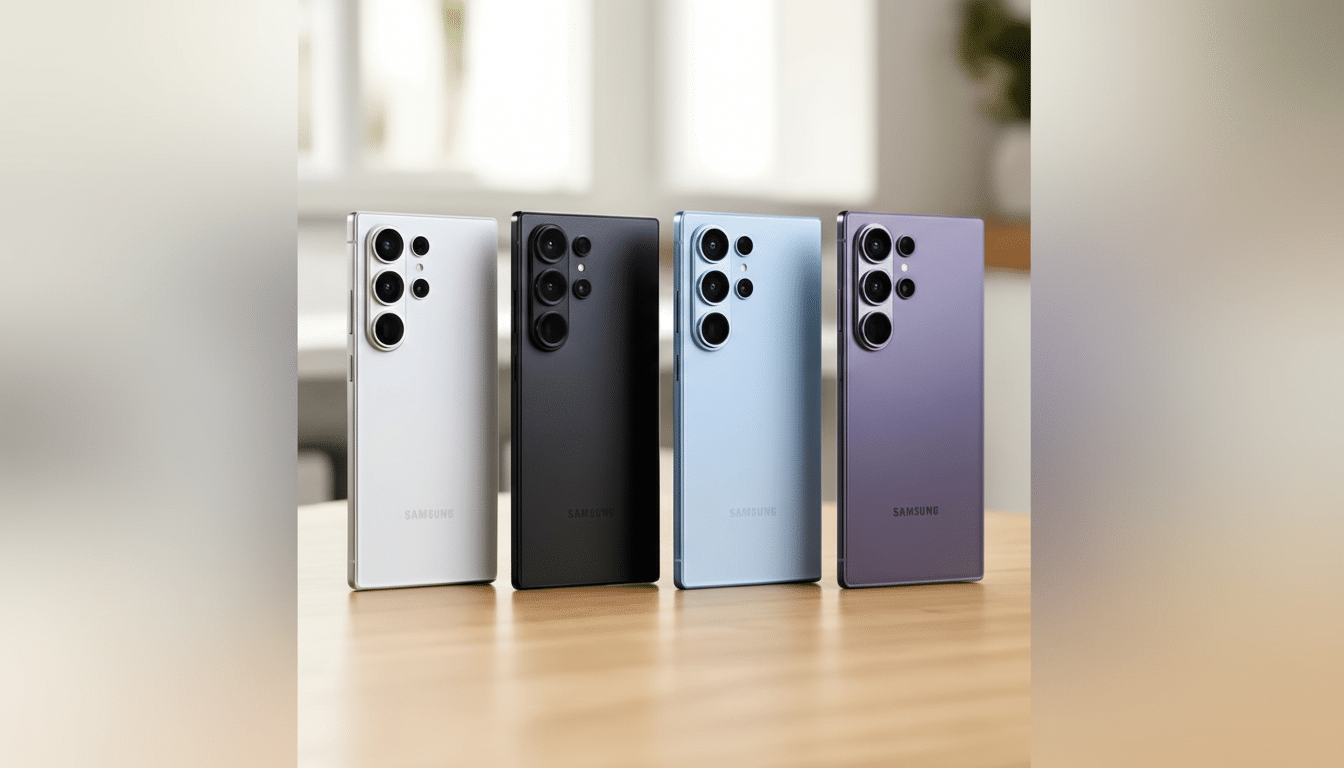
S Pen details and colorways suggest tighter coordination
The S Pen peeks out with a matching Cobalt Violet clicker, signaling tighter color coordination across accessories and chassis. The stylus remains holstered in the base—still the defining feature that separates the Ultra from most competitors. Given the brand’s push into productivity and creative workflows, incremental latency reductions and tighter palm rejection would be logical steps, even if the industrial design changes steal the spotlight today.
Magnets and charging ecosystem questions around Qi2
One unanswered question looms: built-in magnets. Multiple leaks suggest the Ultra may continue without a magnetic alignment ring for chargers and accessories. That would be a notable omission as the industry coalesces around Qi2, which standardizes magnet-assisted alignment for faster, more reliable wireless charging and a growing accessory ecosystem. The Wireless Power Consortium has emphasized Qi2’s interoperability as a key driver of adoption, and accessory makers have responded with magnet-ready stands, wallets, and battery packs.
Skipping magnets would not break compatibility with conventional Qi pads, but it could limit accessory versatility. If true, Samsung might be betting that users prioritize wired fast charging and battery longevity over magnetic add-ons—or it may reserve magnets for specific regions or future variants. Either way, this decision will shape the Ultra’s daily convenience story.
Privacy display and other rumors gaining traction
Another rumor gaining traction is a built-in privacy display mode that narrows viewing angles to thwart shoulder surfers. Industry chatter from Korean supply chain watchers points to panel-level solutions rather than clip-on filters. If implemented well, it could offer a one-tap toggle for sensitive content without the haze and color shift typical of third-party films.
Pricing and market context for Samsung’s next Ultra
European pricing whispers have surfaced via retail channels, though US figures remain under wraps. Historically, the Ultra tier anchors the lineup near the top of the market, and regional VAT typically skews EU tags higher. Any movement—up or down—will be read against a backdrop of longer replacement cycles; IDC and other researchers note average upgrade intervals stretching past three years as users hold on to premium devices longer.
The stakes are high. Counterpoint Research has reported that the premium segment continues to consolidate around a few brands, with Apple and Samsung leading the pack. A sleeker design, better durability, and a coherent accessory story could nudge existing Ultra owners to upgrade sooner. With the 360-degree video now in the wild, the only major questions left are price tiers, final camera specs, and whether magnets or a privacy mode make the cut at launch.
