


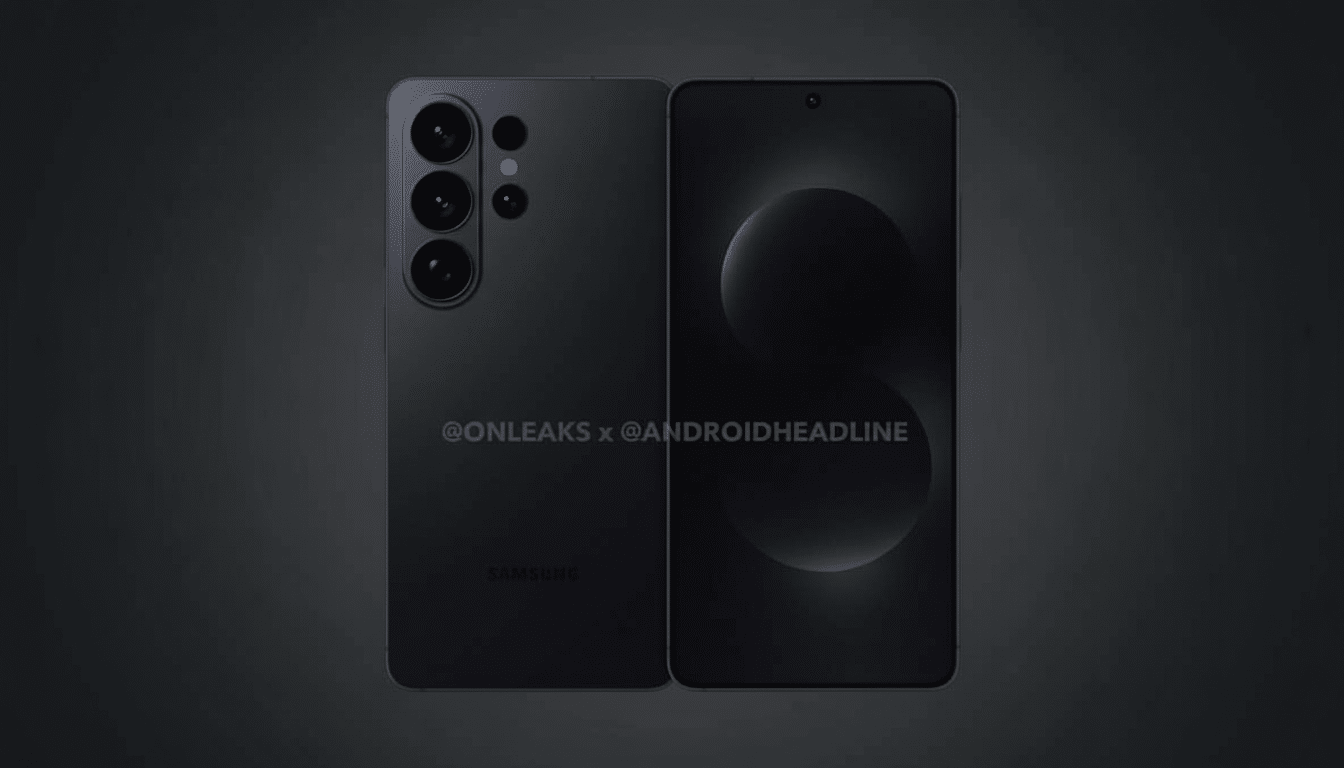
New renders of the Galaxy S26 Pro and Galaxy S26 Ultra, meanwhile, suggest the arrival of an about turn in the design playbook – namely, the return of chunky camera bumps. If true this would see Samsung deviating from its minimalist “floating lens” design aesthetic from the recent S-series phones to a more island-style housing, which will house all of the rear sensors.
Renders suggests change to island-style modules
CAD-based renders posted by SmartPrix showcase the S26 Pro and S26 Ultra as having definite camera islands. The Pro model looks to fit three rear cameras into the raised rectangle, while the Ultra features three vertically stacked cameras inside the island and a fourth sensor — plus a laser autofocus module — offset just beyond the housing.

The overall profile is cleaner but a little more emphatic. It’s a theme with flat edges, albeit the Ultra’s frame and corners feel a little softer than its predecessor. The visual language is consistent with Samsung’s wider portfolio, which has embraced the island-stack approach used in more recent Galaxy Z Fold phones.
Why bring the bump back at all?
There’s a simple physics argument. Bigger sensors, periscope lenses, and more sophisticated OIS hardware require depth. Integrating these parts into a frame island would enhance stiffness, decrease tilt of the lens under impact and simplify the internal structure. Teardowns have long revealed telephoto stacks to be some of the thickest modules jutting out of any flagship phone, frequently driving the overall design and heat management of a device.
An island protects the lenses, too. When the phones are lying flat on a surface, the raised ring minimizes direct contact with glass covers, which can lessen scratches. It is a compromise that makes sense: adding a bit more visual bulk for more reliable optics and potentially better thermal paths around the delicate camera hardware.
Thickness claims raise questions
SmartPrix claims the S26 Pro will be 6.7mm two, the S26 Edge 5.5mm and the S26 Ultra 7.8mm. Those numbers are almost certainly for the chassis without the camera island. To put that into context, a lot of the most recent Android flagships range from about 7.6mm to 8.9mm in thickness overall, and the Galaxy S24 Ultra is purportedly around 8.6mm thick. A 5.5mm chassis would be incredibly thin for a mass-market handset, implying a pretty aggressive play on materials and internal packaging – or a spec that excludes the protrusion (and possibly other elements).
And expect tradeoff design choices if Samsung is to push for ultra-slim bezels are here: bigger camera bumps to house optics, more aggressive thermal enveloping of the chipset and careful battery optimization are all necessary considerations. And as market analysts have repeated ad nauseam, it’s the camera-quality-and-thermal-headroom trade-off that is the defining design puzzle for premium phones.
Pro vs. Ultra: what the layouts mean
The Pro’s triple camera island references a playbook we all know by now—perhaps wide, ultrawide and moderate telephoto—all aimed at everyday photography. The Ultra’s split set up points to a dedicated long range lens (many times a periscope unit) sitting alongside a high resolution main sensor and ultrawide, plus laser AF for a clutch of subject lock on. The exclusion of the fourth sensor from inside the island may be a packaging decision to manage lens height and board routing.
This tidily stratifies the S26 family, from a strategic standpoint. With fast, versatile shooters in the Pro, and the Ultra doubling down on zoom reach and low light performance, the Pro would be for most users. Industry testing by the likes of labs such as DXOMARK and independent review outlets regularly confirm that bigger sensors and longer focal lengths pay off in better dynamic range and detail — naturally, if the phone can properly manage heat and noise.
Consistent design throughout Samsung’s lineup
The flat-edge frame and shift to an island put Samsung in tune with broader market trends. Apple’s iPhone line has kept a prominent camera island for years, while Google’s Pixel invites a full-width bar. In returning to a unified module, Samsung could also be aiming for a unified, instantly-recognizable look across slabs and foldables alike without abandoning ergonomics.
A fatter Ultra might also represent a gentle shift towards comfort and pocketability after the sharper profiles that have characterised recent cycles. Tiny dimension tweaks in the corners can have a significant impact on the grip and perceived heft, particularly when we’re working with phones that edge up toward 230g or heavier with bigger batteries and cameras.
What to watch next
These renders are early signs, not authoritative confirmation. Look to followup leaks to shed some light on materials, sensor sizes, and zoom strategy, as well as chipset, battery, and display info. Samsung has a history of slotting new S-series Galaxy flagships in early-year launch windows, allowing time for final refinements during a period in which the hardware is already locked down.
For now, the headline is that the S26 Pro and S26 Ultra seem to prioritize function with purposeful camera islands. If Samsung can get the balance right, optics in thermals in, battery life, the return of the bump might not be a step back, but rather a smart move.
