


Freshly reanalyzed data from NASA’s Cassini mission indicates that complex organic molecules are spewing out of mysterious watery geysers on Saturn’s small moon Enceladus, offering new evidence in the search for life beyond Earth. The new study, led by Nozair Khawaja of Freie Universität Berlin and published in Nature Astronomy, further supports the case that molecular building blocks and energy sources for life’s beginnings on Earth are present in significant quantities in the moon’s global ocean.
The results focus on organic-rich ice grains that Cassini sampled originating from geysers the icy moon emits from fractures near its south pole and into Saturn’s E-ring. Concentrating on grains snagged at the mission’s highest flyby speed—more than 40,000 miles per hour—the team singled out a suite of complex organics that seem to hail from the ocean floor rather than from space-scoured debris.
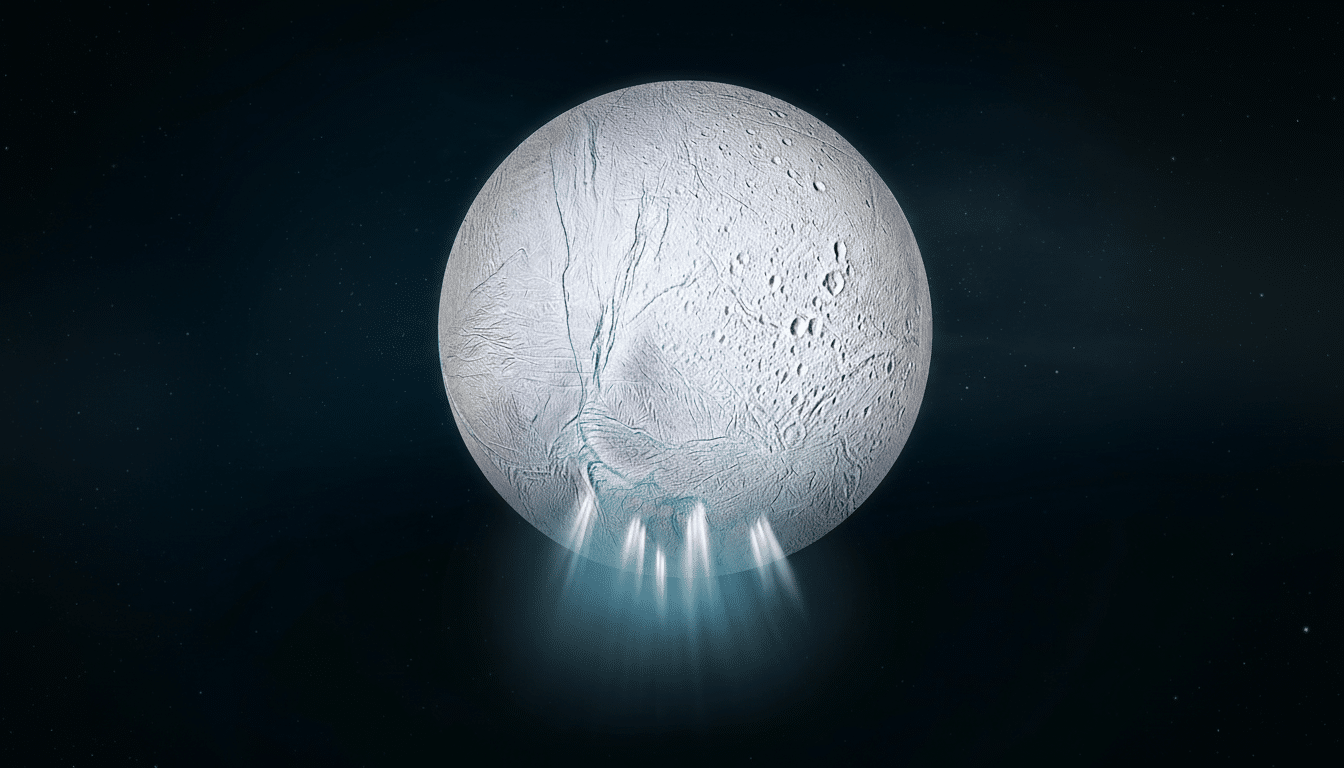
A chemical soup with bits and pieces in Enceladus’ plumes
Cassini’s Cosmic Dust Analyzer was built to probe the molecular composition of tiny particles by means of impact ionization. In the new work, scientists compared the signals of distant E-ring particles with those from “fresh” grains spewed out minutes earlier by Enceladus and recreated those impacts in laboratory shots in order to test whether what the instrument was seeing was really real. The upshot: consistent signs of many different organic compounds.
Detected families included oxygen-bearing organics like aldehydes, esters, and ethers as well as alkenes and cyclic or aromatic fragments—types of chemistry that are common in biological lipids and prebiotic reaction networks on Earth.
The team also finds nitrogen-containing organics (including potential nitriles such as acetonitrile) and hints of heterocycles similar to pyridine moieties. The pattern hints at a tinkering chemistry between water and rock in the interior.
Most important, Enceladus’s chemical inventory has been accumulating. Previous results from Cassini offered salts that jibed with the conditions of a soda ocean and molecular hydrogen in the plume gas—an energy food microbes on Earth’s seafloor vents use. In 2023, researchers studying Cassini grains reported plentiful phosphates in the ocean, suggesting phosphorus, an essential component of DNA and cell membranes, is widespread and available for microbial life. Sulfur (the other CHNOPS element) is more elusive, but is expected in the rocky core and may be difficult to measure with these data.
Signs of hydrothermal activity on Enceladus’ seafloor
So many lines of evidence suggest an actively chugging seafloor. Silica particles found in 2015 indicated water flowing over rocks at temperatures of about 194 degrees Fahrenheit or higher—similar to those seen on terrestrial hydrothermal vents. When researchers discovered molecular hydrogen in 2017, they concluded that serpentinization was perhaps taking place even today, meaning water and ultramafic rock are getting together and making hydrogen—as well as generating the chemical imbalances that life would find useful.
Geophysical measurements have previously indicated that Enceladus harbors a global ocean under its ice shell, while the geyser-like plume—primarily water vapor with up to 1 percent of it being ice particles—is thought to be erupting from near the moon’s south pole at a rate of approximately 200 kilograms every second.
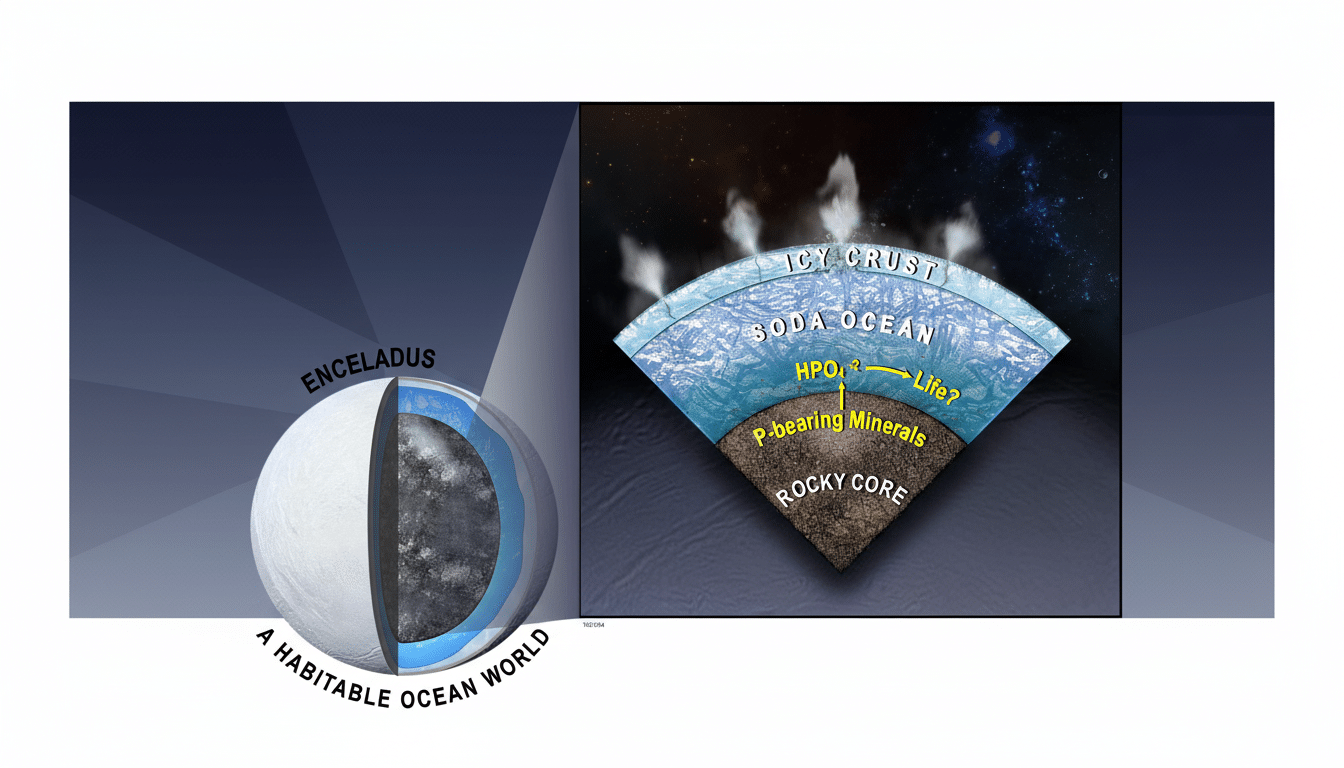
Its ocean is probably a high-pH alkaline solution similar to our planet’s soda lakes, and saturated with sodium salts. On Earth, in similar environments, and under clement conditions, carbon-bearing molecules can assemble and endure; reaction-promoting mineral surfaces might also spur reactions that generate complex species from simple starting materials.
Why the new reanalysis of Cassini dust data matters
It may seem counterintuitive to be grabbing ice grains at such superfast speeds, but doing so allowed the team to distinguish between real molecular structures and artifacts from the instrument. At higher impact energies, the fragments have regular patterns that can be compared to lab shots. That such organic handmaidens of life found on Earth are barely different from those detected by Cassini as it flew past at 19 kilometers per second strengthens the case that they represent genuine ocean chemistry, untainted by exposure to space or the detector.
The match between particles in fresh plumes and the older E-ring grains is also evidence for a single source: Enceladus’ subsurface ocean. Together with evidence for hydrogen, salts, phosphates, and silica, those new organics paint a converging picture—liquid water, key inorganic ingredients of life, and some apparently sustained chemical energy provided at an accessible redox interface. Those are the basic ingredients for habitability on Earth, especially at vent ecosystems where microbes live without sunlight.
From habitability to detection of potential biosignatures
None of this is proof that life exists on Enceladus, but it makes the case for a habitat there a little tighter. Aldehydes and nitriles can feed prebiotic pathways, esters and ethers are relevant to protocell membranes, and redox energy from water-rock reactions can power metabolism. These are not far-fetched leaps; they are the result of decades of laboratory experiments and studies focused on Earth analogs, many documented by institutions such as the National Academies and NASA’s Jet Propulsion Laboratory, teaching us how these chemistries can orchestrate the assembly of biomolecular building blocks.
The next step, in terms of what can be detected by science, is to look for biosignatures—molecular patterns that are difficult to explain without something living, such as certain distributions of amino acids, isotopic fractionations, or complex lipids with repeating subunits.
What’s next for Enceladus exploration and future missions
Mission planners are taking note. The Enceladus Orbilander, a flagship concept recommended by the National Academies’ planetary science decadal survey, would orbit the moon to investigate plume variability before landing to sample freshly fallen frost near crack sites. In Europe, concepts are being studied for in situ investigations of plume chemistry using next-generation mass spectrometers and performing precision landing close to the south pole terrain. Both methods are designed to analyze delicate organics in situ and larger grains that could host preserved complex molecules.
The archive of Cassini is still coming through in the meantime. As Khawaja’s team shows, with careful reevaluation and modern laboratory calibrations, new signals can be mined from old data. Each step forward brings into sharper focus a tantalizing possibility: Beneath the ice of Enceladus, one of Saturn’s moons, researchers see increasing evidence for a small ocean world where the conditions are potentially right for life to cook up the same way it did here on Earth.
