


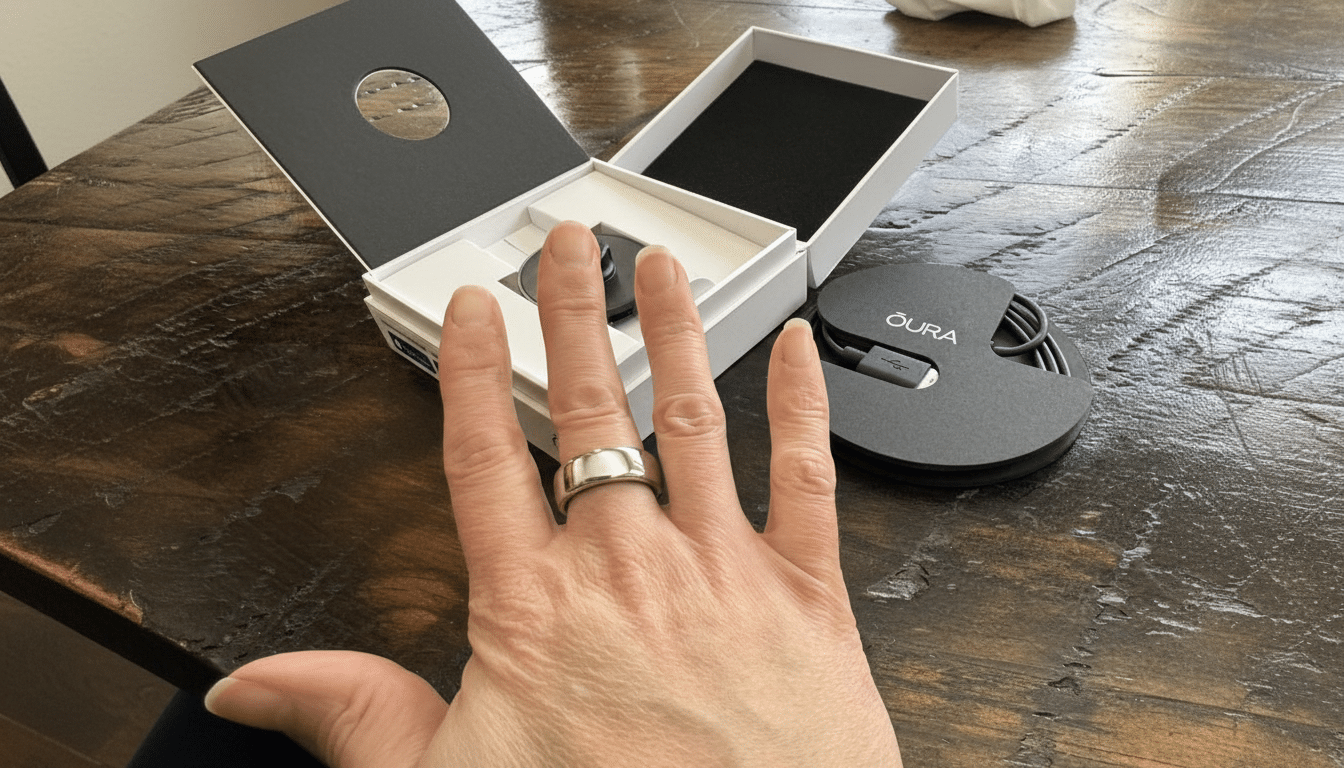
I put a new community-built tool called Simple Wearable Report to the test with my Oura Ring data, and it surfaced patterns I hadn’t seen in the official app. The twist: those added layers of insight came via an AI analysis step that was illuminating, occasionally blunt, and not always confidence-inspiring. Here’s what the tool uncovered—and why I’m still on the fence.
What This Free Report Actually Adds to Your Oura Data
Simple Wearable Report was created by an Oura user in the r/ouraring community to turn raw exports into a single, scannable summary. If you’ve ever tried to walk a physician through the Oura app’s tabs and charts, you’ll see the appeal: it compiles readiness, sleep, and activity metrics into a lab-style snapshot with trends and highlights you can hand to a doctor or coach.
- What This Free Report Actually Adds to Your Oura Data
- AI Versus Oura’s Own Advisor: How Guidance Differs
- When Advice Gets Useful—and When It Doesn’t
- Signal Versus Noise in AI-Interpreted Oura Reports
- Privacy and Medical Limits When Using Health AI Tools
- Bottom Line on Simple Wearable Report and AI Insights
To be fair, Oura already offers shareable looks at sleep, cycle insights, health panels, and perimenopause check-ins, plus weekly to yearly rollups. The difference here is friction. Instead of swiping through screens, you get a clean report designed for quick review and optional AI interrogation afterward.
AI Versus Oura’s Own Advisor: How Guidance Differs
After generating the report, I uploaded it to a general-purpose AI assistant and asked basic questions: When were my best wellness days? What changed physiologically during a recent cold? Oura’s built-in Advisor leaned empathetic and macro: gentle nudges, broad ranges, and themes. The external AI went micro. It pinpointed exact dates with peak readiness and sleep scores, called out which inputs (HRV, resting heart rate, sleep timing) pushed those scores up or down, and contrasted “great” versus “just OK” days in plain language.
More striking, the AI assigned contribution scores to individual signals that Oura does not numerically rate in-app. For example, on a sick day, it labeled resting heart rate as a single-digit drag on overall recovery and flagged sleep debt with a low contribution score. Those numbers were easy to digest—but they’re model-derived interpretations, not official Oura metrics. That distinction matters if you’re planning to change routines based on them.
When Advice Gets Useful—and When It Doesn’t
On behavior, the split widened. The AI observed my step counts swinging from near zero to over 17,000 and noted sedentary stretches hitting almost 12 hours. It suggested a floor of 5,000 steps on off-days to keep joints and metabolism happier, plus extending time in bed by 45 to 60 minutes. Oura’s Advisor made similar points but with softer framing and fewer hard thresholds.
The bluntness helped me prioritize: I don’t necessarily need “better” sleep architecture on normal nights; I need more total sleep time and steadier daytime movement. Still, much of this mirrors what experienced wearables users already infer. The report and AI simply compress the homework and make trade-offs unmistakable.
Signal Versus Noise in AI-Interpreted Oura Reports
There’s a bigger question: Does adding an AI layer improve outcomes or just amplify what’s already visible? Research from Scripps Research and Stanford Medicine has shown that wearable signals like resting heart rate, HRV, and sleep duration can flag physiological shifts ahead of symptoms, but translating those nudges into better health depends on adherence, context, and coaching.
In practice, the AI’s granular comparisons were most helpful in two scenarios: confirming that a routine (earlier wind-down, lighter late meals) really moved HRV and resting heart rate in the right direction, and highlighting how illness or travel disrupted baseline. Beyond that, the extra scoring sometimes felt like precision theater—clean numbers that overstate certainty when confounders like caffeine, stress, and hormonal cycles aren’t fully accounted for.
Privacy and Medical Limits When Using Health AI Tools
It’s worth noting the privacy trade-offs. Many consumer AI chatbots are not covered by HIPAA, and the Federal Trade Commission has warned health apps about opaque data sharing. Uploading granular biometrics and symptoms to a third party introduces risk—especially if your report contains identifiers. If you do experiment, strip personal details and avoid seeking diagnoses.
Professional bodies including the American Medical Association and the World Health Organization emphasize that AI in health should augment, not replace, clinical judgment. This tool aligns with that framing: useful for pattern recognition and discussion starters, not a diagnostic engine.
Bottom Line on Simple Wearable Report and AI Insights
Simple Wearable Report makes Oura data easier to scan and share, and pairing it with an AI assistant can surface crisp, actionable summaries—especially around sleep regularity, step floors, and recovery signals. For data enthusiasts or patients preparing for a checkup, it’s a smart, zero-cost add-on.
Am I fully convinced? Not yet. The AI’s invented contribution scores and confident tones risk overstating certainty, and most recommendations echo what Oura already suggests. I’ll keep using the report as a clarity tool, but I’m reserving judgment until there’s stronger evidence that these AI-generated insights drive better adherence, faster recovery, or measurable gains beyond Oura’s own coaching. Until then, it’s a helpful layer—not a health oracle.
