


Free AI has grown up fast. The baseline chatbots most people try first can now draft emails, summarize PDFs, brainstorm campaigns, even write passable code. But as more of our work moves into AI-driven workflows, the question keeps coming up: is the free tier enough, or is it time to pay for more power?
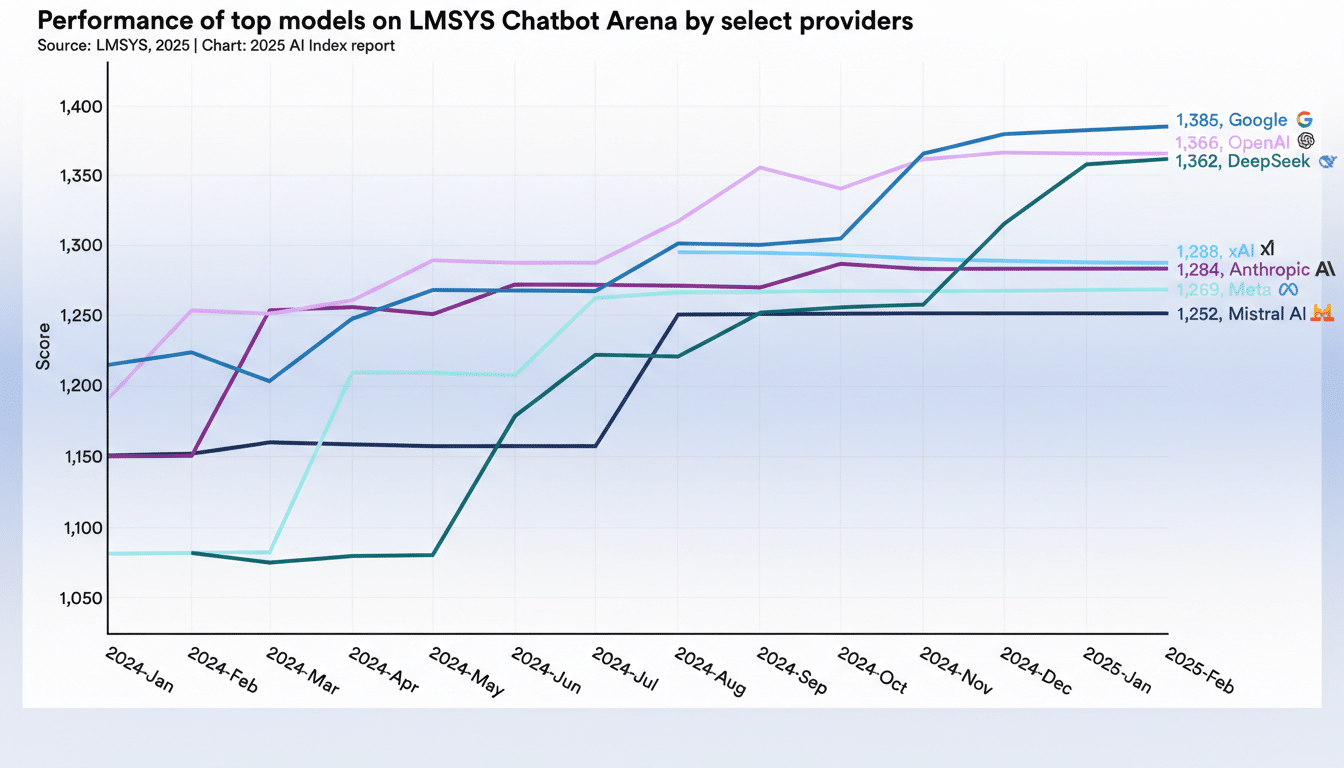
Usage has exploded as generative AI moved from novelty to utility. Stanford’s AI Index has tracked broad adoption across sectors, while analysts like McKinsey report measurable productivity gains when teams deploy AI at scale. That momentum puts pressure on individuals and businesses to pick the right tool—and to know exactly when upgrading pays off.

Here’s a clear framework to decide what you need, which chatbot fits your workflow, and when a premium plan actually delivers ROI.
What Free Chatbots Do Well For Everyday Tasks
For light and mid-weight tasks, free chatbots are more than serviceable. Expect strong performance on outlining articles, rewriting copy for tone, explaining concepts, translating short passages, creating study guides, and drafting simple scripts or code snippets. Most free plans also handle quick web lookups or provide citations, especially in research-focused tools.
Real-world example: a student can upload lecture notes, generate practice questions, and summarize key points. A small retailer can spin up product descriptions and Instagram captions in minutes. A traveler can build a day-by-day itinerary with dining suggestions and transit tips. None of that requires a paid tier.
Caveat emptor still applies. Free tiers often have stricter message caps, smaller context windows (how much a model can “remember” in one session), slower queues during peak demand, and limited access to advanced tools like code execution, data analysis, or premium image generation. For casual use, those trade-offs rarely hurt. For sustained work, they do.
Red Flags That Signal It’s Time To Upgrade
You hit rate limits or long queues at the worst moment. Premium plans typically provide faster responses, higher caps, and priority access—critical if you work on deadlines or collaborate across time zones.
Your projects exceed the model’s memory. If you need to analyze long reports, legal documents, research archives, or large codebases, a bigger context window and better file handling in paid tiers save hours of manual chunking.
You need advanced tools, not just text. Paid plans often unlock data-analysis sandboxes, code interpreters, spreadsheet charting, multimodal inputs and outputs, PDF extraction, and higher-quality image generation. These are the features that move a chatbot from “helpful” to “indispensable.”
Reliability matters as much as raw IQ. If you brief clients, ship code, or publish research, uptime and consistent behavior are worth paying for. Business and pro tiers usually come with service guarantees and admin controls.
Compliance and privacy are nonnegotiable. Handling client data or proprietary material? Look for plans offering training opt-outs, data retention controls, and attestations such as SOC 2 or ISO 27001, plus enterprise-grade governance integrations.
The ROI checks out. A widely cited study by researchers from Stanford and MIT found a 14% productivity lift in a large customer support setting when workers used AI assistance. GitHub reported developers completed coding tasks 55% faster in a controlled trial with AI help. If a premium plan consistently saves even 20 minutes a day, the time value usually dwarfs a $20–$30 monthly fee.
How To Choose The Right Chatbot For Your Workflow
Start with your ecosystem. If your day runs on Word, Excel, PowerPoint, Outlook, Teams, and Windows, a chatbot deeply integrated into that stack can summarize meetings, build slides from documents, and automate repetitive Office tasks with minimal friction.
If you live in Gmail, Docs, Sheets, Drive, and Chrome, look for an AI that natively understands Google’s formats, can summarize email threads, and can act across your Drive with strong permission controls. Android users benefit from on-device features and voice tools that mirror this tight integration.
Need a versatile generalist for writing, coding, analysis, and images? A flagship, model-agnostic chatbot with custom assistants and plug-in-style tools is a safe default for most users. These platforms often excel at complex reasoning, agent-like automation, and bespoke workflows.
Do research all day? Consider a search-first chatbot that cites sources by default, supports model switching, and lets you trace claims back to original reporting or papers. Analysts, journalists, and students tend to value this transparency.
Care about real-time social signals or fast-moving news? A chatbot wired into live platforms can surface trending content, summarize conversations, and mine fresh posts—useful for comms teams and creators.
Working with long-form writing or complex reasoning across big documents? Some models are known for large context windows and careful, “constitutional” guardrails that reduce drift and hallucinations—good for writers, researchers, and policy teams.
Costs, Privacy, and Contract Terms To Review First
Most premium tiers cluster around $20–$30 per month for individuals. Read the fine print: message caps, file size limits, image credits, and fair-use policies vary widely. Team plans can add centralized billing, SSO, and audit logs—vital for agencies and startups.
Protect your data. Check whether prompts are used for training by default and whether you can disable it. Confirm where data is stored, how long it’s retained, and whether you can export or delete it. If you handle sensitive information, choose business or enterprise plans with enforceable data-processing terms.
Avoid yearlong lock-ins unless you’ve proven fit. AI capabilities evolve quickly; monthly plans keep you nimble as models leapfrog each other.
A Smart Upgrade Strategy You Can Test In 30 Days
Baseline your work for a week. Track time spent drafting, analyzing, and researching without premium features. Note friction points—rate limits, copy-paste overhead, lost context.
Run a 30-day premium trial against real deliverables. Measure turnaround time, error rates, and revision cycles. If quality improves and time drops meaningfully, the subscription is justifiable.
Pick one primary chatbot aligned to your ecosystem, then add one specialist if your role demands it—often a research-first tool or a long-context writer. Reassess quarterly as models, prices, and your workload change.
The bottom line: Free AI is enough for many everyday tasks. Upgrade when your work demands speed, reliability, larger context, advanced tools, or stronger data protections. The right choice is the one that removes the most friction from the jobs you do every day—consistently and credibly.
