


Ford is betting that Formula 1 aerodynamics, a universal EV platform, and an internal engineering bounty program can unlock a $30,000 electric pickup without sacrificing profits. The plan leans on rapid prototyping and ruthless efficiency gains to counter intensifying competition from Chinese automakers and to reset Ford’s EV economics after a multibillion-dollar charge and the halt of F-150 Lightning production.
Why F1 Aerodynamics Matter For A $30K EV Truck
Ex–Formula 1 engineers embedded with Ford’s design team are treating drag like a line item on the bill of materials. Using 3D-printed and machined parts in a Lego-like test mule, they’ve been swapping body components in minutes and hitting the wind tunnel early and often. Ford says the result is a midsize pickup that’s about 15% more aerodynamically efficient than any truck on sale today—critical because every point of drag saved lowers energy use and allows a smaller, cheaper battery.
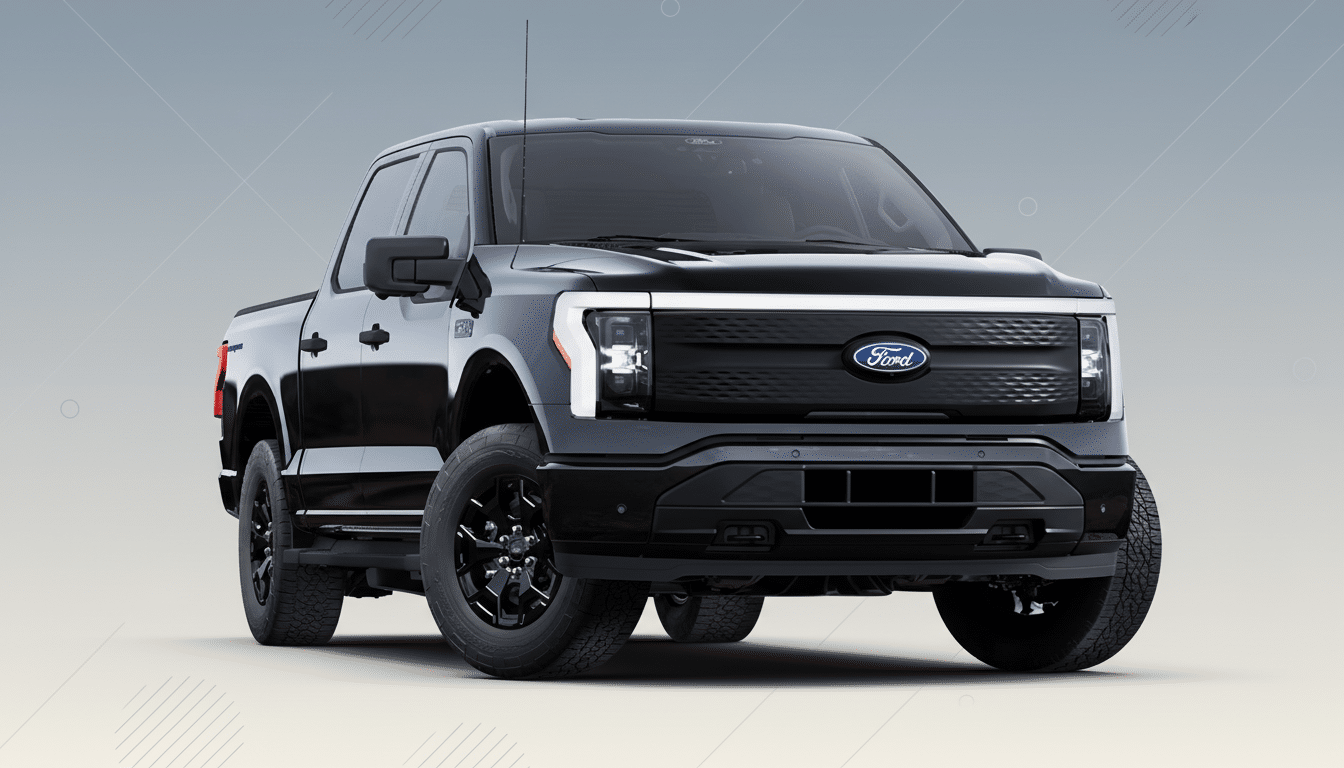
The F1-style workflow prioritizes accuracy and iteration speed: thousands of printed parts, tolerances within fractions of a millimeter, and constant verification against simulation. It’s an approach carmakers typically reserve for late-stage design; Ford is pushing it to the front of the process to bake efficiency into the vehicle’s shape from day one.
A Bounty Culture To Squeeze Out Engineering Costs
Inside the skunkworks led by Alan Clarke, a 12-year Tesla veteran, engineers chase “bounties” tied to quantifiable wins—mass removed, drag reduced, parts eliminated. The goal isn’t cheapening the product; it’s paying more where it saves more elsewhere. One example: making power-folding mirrors standard on the base truck because they cut aerodynamic drag, then saving money by using a single motor to control both adjustment and folding.
The team, drawn from F1, Apple, Lucid, Rivian, Tesla, and Ford’s 2023 acquisition Auto Motive Power, is about 450 people in Long Beach with another 200 in Palo Alto. Their remit is to connect day-to-day engineering choices directly to customer value and unit economics—every gram and watt accounted for.
Universal Platform And Manufacturing Breakthroughs
At the core is a clean-sheet universal EV platform (UEV) that debuts under a midsize pickup and can later support a sedan, crossover, three-row SUV, and small commercial vans. Ford is embracing single-piece aluminum unicastings to slash parts and assembly steps, mirroring strategies popularized by Tesla. The company is also moving away from the traditional moving assembly line to cell-based manufacturing at its Louisville complex, aiming for roughly a 15% productivity boost after a planned $2 billion retooling.
Design for manufacturing is embedded up front. The same modular “Lego” prototype logic used in aero carries into production, with fewer unique components, faster changeovers, and simplified trims to contain complexity and cost.
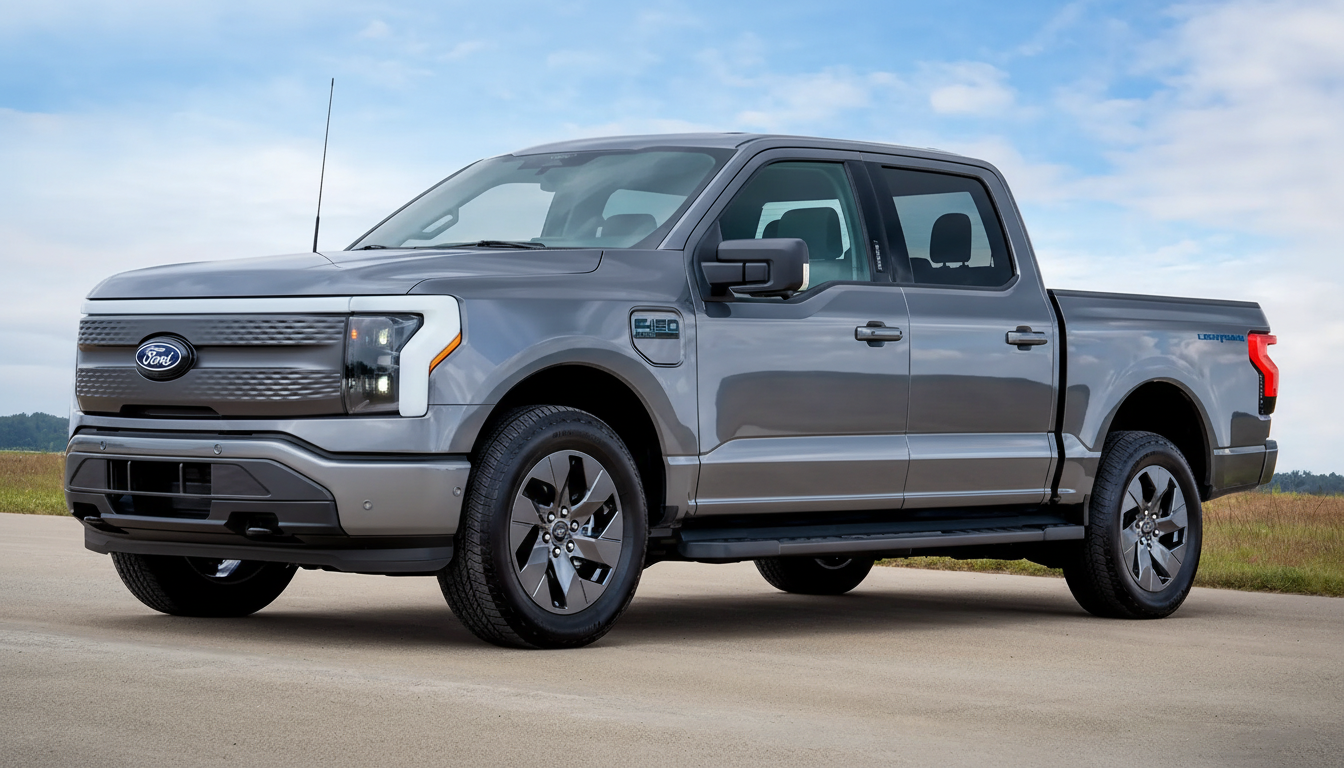
Electronics Architecture And Software Control
Instead of dozens of scattered ECUs, the truck consolidates functions into five zonal modules. Ford says this zonal architecture cuts copper use and helped shrink the wiring harness by about 4,000 feet and 22 pounds compared with its first-gen EVs. A new 48-volt subsystem handles high-load features more efficiently than legacy 12-volt designs, further trimming mass and losses.
A single power electronics module manages power distribution, battery management, and bidirectional AC output for home backup, reducing part count and simplifying service. Ford also wrote the software stack for those five ECUs down to the application layer. Owning the codebase gives the company portability across vehicle types and the ability to tightly couple sensors, body controls, and user experience—opening the door to features that span the entire vehicle rather than isolated modules.
The Battery Math And Supply Chain Reality
Because batteries can represent around 40% of an EV’s cost, the plan hinges on using a smaller pack without sacrificing real-world range. Efficiency gains from aerodynamics, mass reduction, and electronics allow Ford to do exactly that. The company is standardizing on lithium iron phosphate (LFP) cells with technology licensed from China’s CATL, trading some energy density for lower cost, better cycle life, and improved tolerance to frequent fast charging.
Ford projects roughly 15% more driving range—about 50 extra miles—versus a comparable pickup baseline thanks to the efficiency-first design. Industrywide, BloombergNEF reported average battery pack prices near $139/kWh in 2023, underscoring why downsizing the pack is pivotal to reaching a $30,000 sticker. Hitting that price also means tight control of part counts, dealer inventory, and options packaging.
Why The $30K Target Matters For EV Truck Buyers
According to Cox Automotive, the average new vehicle in the U.S. still transacts around the $50,000 mark. A credible, profitable $30,000 electric pickup would undercut that by roughly $20,000, opening EV ownership to a far broader audience while blunting pressure from Chinese brands scaling aggressively on cost. For Ford, it’s also a strategic reset: the universal platform, zonal electronics, and software control are foundations it can reuse across multiple vehicle types and price points.
Specs like exact range, charging speeds, and towing ratings remain under wraps. The metrics to watch are the ones Ford has already put stakes in the ground on: aerodynamic efficiency, wiring reduction, power electronics integration, and whether the UEV can truly deliver smaller batteries without compromising capability. If those numbers hold, a $30,000 electric truck stops being a headline and starts becoming a template.
