


If you dread operating system updates, atomic Linux distros were built for you. They stage upgrades to a separate, read-only system image, then flip to it on reboot only if everything validates. If anything fails, you simply boot the previous image—no half-broken packages, no repair marathons. This approach, popularized in the server world by rpm-ostree and transactional-update and proven on phones with Android’s A/B system updates, is now thriving on the desktop.
After months of testing across laptops, desktops, and a handheld gaming PC, these five atomic distros consistently delivered stress-free updates, clean rollbacks, and strong software ecosystems.
- Why Atomic Upgrades Protect You From Bad Updates
- Vanilla OS Is Flexible and Fail-Safe by Design
- AerynOS Delivers Minimalist Power With KDE Plasma
- Fedora Kinoite Backed by rpm-ostree for Stability
- Aurora Smooth Landing For Windows Migrants
- Bazzite Is a Gaming-Ready Atomic Fedora Edition
- How I Judge Update Trust on Atomic Linux Desktops
- Bottom Line: Atomic Desktops Make Updates Predictable
Why Atomic Upgrades Protect You From Bad Updates
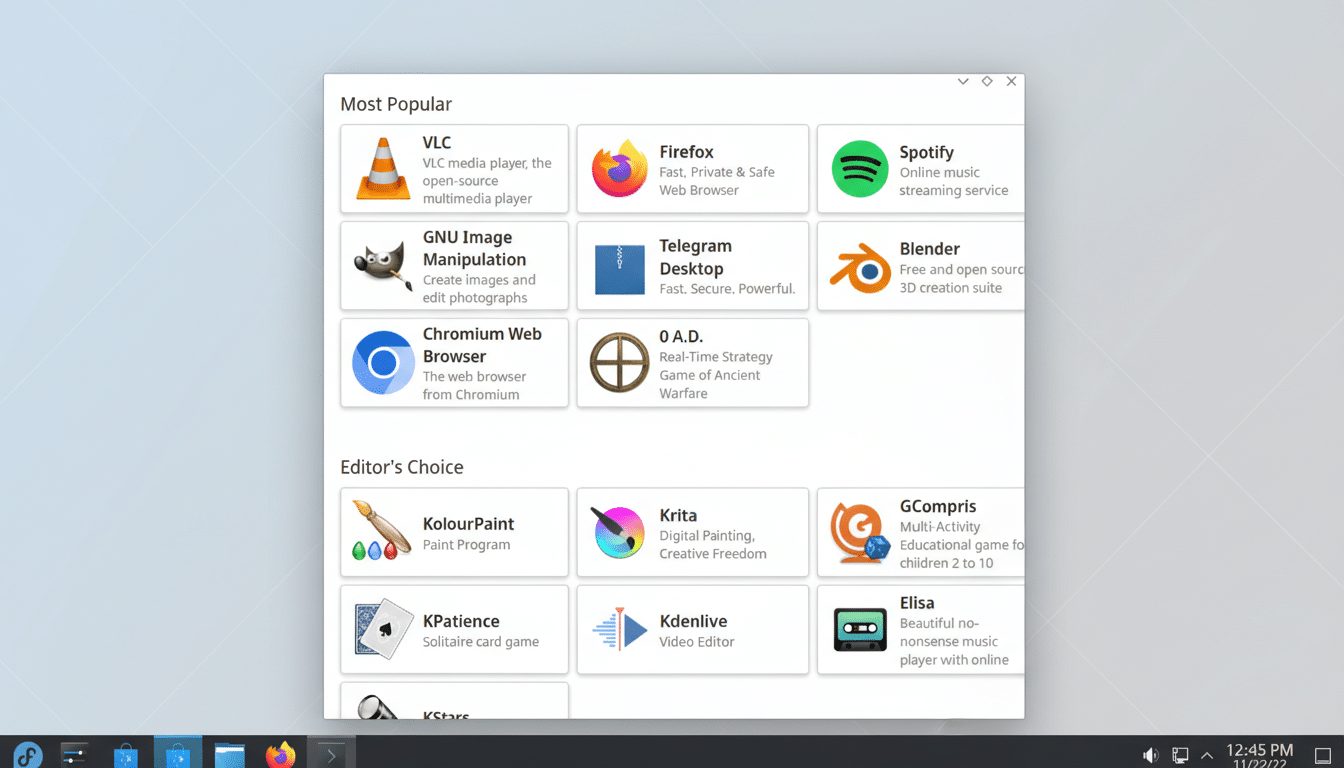
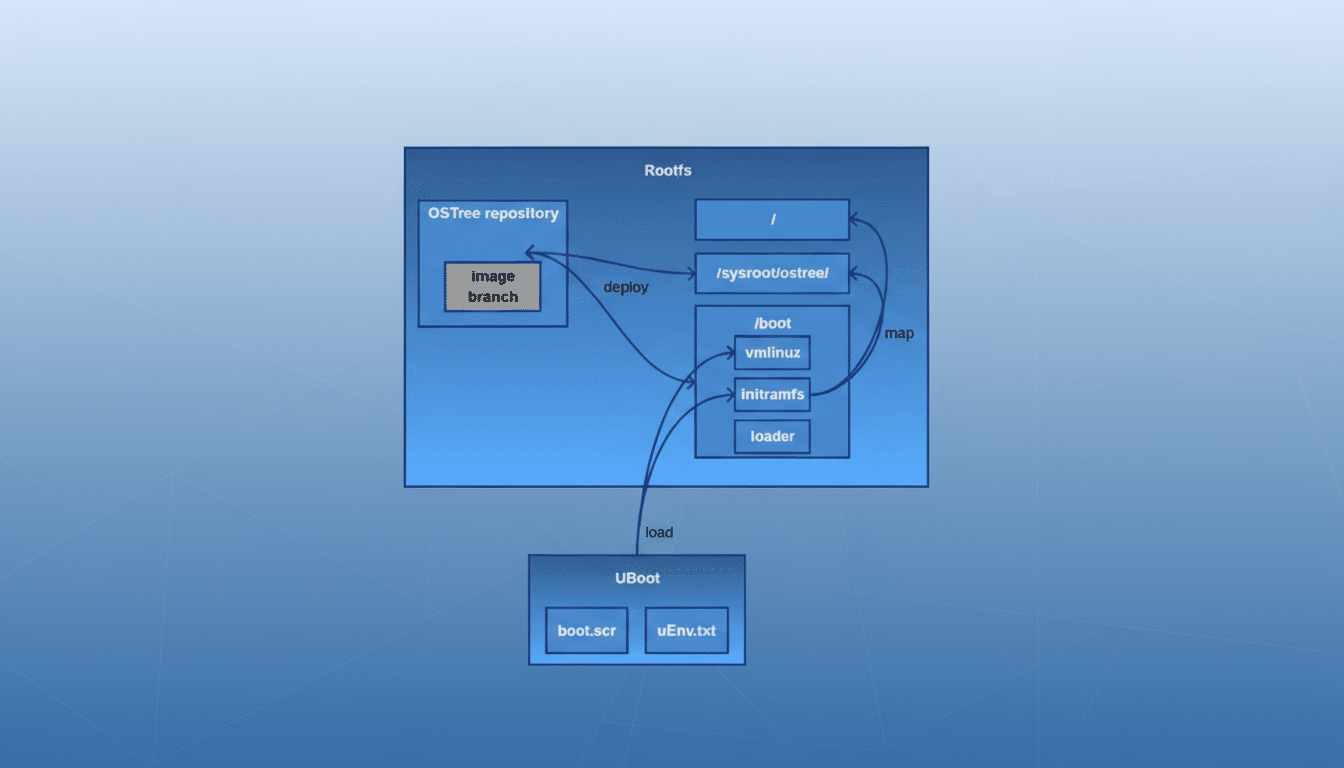
Atomic systems write updates to a new deployment—think snapshot or alternate root—without touching your active environment. On reboot, the bootloader switches to the new image if checks pass; otherwise, it keeps the known-good one. Red Hat’s rpm-ostree, SUSE’s transactional-update, and Google’s Android A/B model all embody this design, which reduces update risk and shortens recovery to a single reboot. It’s the same playbook used in Kubernetes nodes and edge devices, now paired with friendly desktops and app stores.
Vanilla OS Is Flexible and Fail-Safe by Design
Vanilla OS pairs atomic upgrades (via ABRoot) with a clever package strategy. Its Apx tool installs apps in isolated environments, letting you blend Debian/Ubuntu packages, Flatpaks, and AppImages without contaminating the base image. During setup, you choose your browser and office suite and even schedule when updates apply, including idle-only windows. The result feels both polished and pragmatic: a read-only core that’s easy to revert, with containerized apps that stay out of the system’s way.
Why I trust it: ABRoot’s dual-partition model borrows from time-tested A/B mechanisms, and the team’s focus on isolation reduces “dependency drift” that typically breaks upgrades.
AerynOS Delivers Minimalist Power With KDE Plasma
AerynOS is for users who want a clean, immutable KDE Plasma desktop and don’t mind a text-based installer. You’ll partition manually (GParted helps), then get a near-vanilla Plasma with atomic updates applied during setup. After first boot, there’s little ceremony—just a lean, reproducible system that upgrades in the background and reboots cleanly.
Why I trust it: Minimal customization means fewer moving parts to regress. AerynOS leans on proven upstream components and keeps the base tight, which lowers update risk.
Fedora Kinoite Backed by rpm-ostree for Stability
Fedora Kinoite delivers KDE on an rpm-ostree base, inheriting the same atomic engine used in Fedora Silverblue and Fedora CoreOS. Apps land as Flatpaks by default, shielding the immutable system from package churn. Kinoite also follows Fedora’s predictable cadence, with major releases on a known schedule and about a 13-month window before upgrades, making planning simple.
Why I trust it: rpm-ostree has a production pedigree—Fedora CoreOS and enterprise edge offerings rely on it—plus Fedora’s CI-driven pipelines catch regressions early. Rollbacks are a single GRUB selection away.
Aurora Smooth Landing For Windows Migrants
Aurora ships a ready-to-work KDE experience on an immutable, atomic base. Sensible defaults, preloaded essentials, and an “it just works” feel make it an easy switch for Windows users. A standout is Distroshelf, a friendly tool for launching other distros as VMs so you can explore safely without touching the host.
Why I trust it: Aurora’s curated stack keeps the base image consistent while empowering experimentation in virtual machines. You get a stable core and a sandbox for everything else.
Bazzite Is a Gaming-Ready Atomic Fedora Edition
Bazzite is a gaming-focused, SteamOS-like distro built on rpm-ostree. Expect excellent hardware detection, Proton-ready Steam, optional proprietary NVIDIA drivers, controller and handheld support, and quality-of-life tweaks like the System76 scheduler. It’s equally capable as a daily driver thanks to Flatpaks and strong security defaults, including LUKS full-disk encryption.
Why I trust it: The atomic base means game-mode updates won’t nuke your weekend. With Steam’s Hardware Survey consistently showing Linux around the 1–2% range, this kind of stability matters for a community managing diverse hardware and drivers.
How I Judge Update Trust on Atomic Linux Desktops
My checklist is simple and strict: a read-only base with transactional rollbacks; a clear release cadence; apps isolated from the system (Flatpak or containers); automated testing and reproducible images; and transparent upstreams. Fedora’s QA and rpm-ostree docs, SUSE’s transactional model, and Android’s A/B lineage all validate the core patterns these desktops use.
In practice, each of these distros applied updates quietly in the background and switched deployments on reboot. When I forced a failure—by cutting power mid-update—the systems either booted the prior image or presented an easy rollback option. That’s the whole point: updates should be boring.
Bottom Line: Atomic Desktops Make Updates Predictable
If you value reliability over ritual, atomic desktops change the calculus. Vanilla OS for flexibility, AerynOS for minimalism, Fedora Kinoite for rpm-ostree rigor, Aurora for an easy transition, and Bazzite for gaming—all give you the same promise: updates that either work or don’t land at all. That’s how an OS should behave.
