


The Federal Communications Commission has approved new rules for the 6 GHz band that let certain unlicensed devices operate at higher power and in more places. The standout addition is a “geofenced variable power” class, designed to unlock better range and reliability while keeping incumbent spectrum users safe from interference. It’s a technical change with practical upside for the next wave of routers, phones, wearables, and smart home gear.
What Changed In The 6 GHz Band Under New FCC Rules
Since opening 1200 MHz of spectrum between 5.925–7.125 GHz for unlicensed use, the FCC has allowed several device types: low-power indoor (LPI) access points, very low power (VLP) portables, and standard-power gear that must consult an automated database to steer clear of licensed microwave links. The new geofenced variable power (GVP) category adds another tool: devices can boost transmit power, including outdoors, so long as they use certified location-aware controls to avoid protected areas.
Put simply, GVP lets equipment adapt power to where it actually is. If a device knows it’s far from a utility backhaul link or a broadcast auxiliary service path, it can turn up the signal; if it’s close, it dials back. That flexibility has been a sticking point for outdoor WiFi coverage until now.
Why Geofenced Variable Power Matters For 6 GHz
The 6 GHz band is crowded with critical incumbents — utility companies, public safety networks, broadcasters, and fixed microwave services. Historically, that kept unlicensed devices on a short leash. Geofencing changes the equation by enforcing “keep-out” zones that are computed from accurate device location and certified software, rather than blanket power limits.
The result should be stronger links and fewer retries. Higher power can lift signal-to-noise ratio, which reduces packet loss and latency. In practice, that means a mesh router that finally blankets the backyard without falling back to slower 5 GHz, or warehouse scanners that hold a steady connection while moving between docks and aisles.
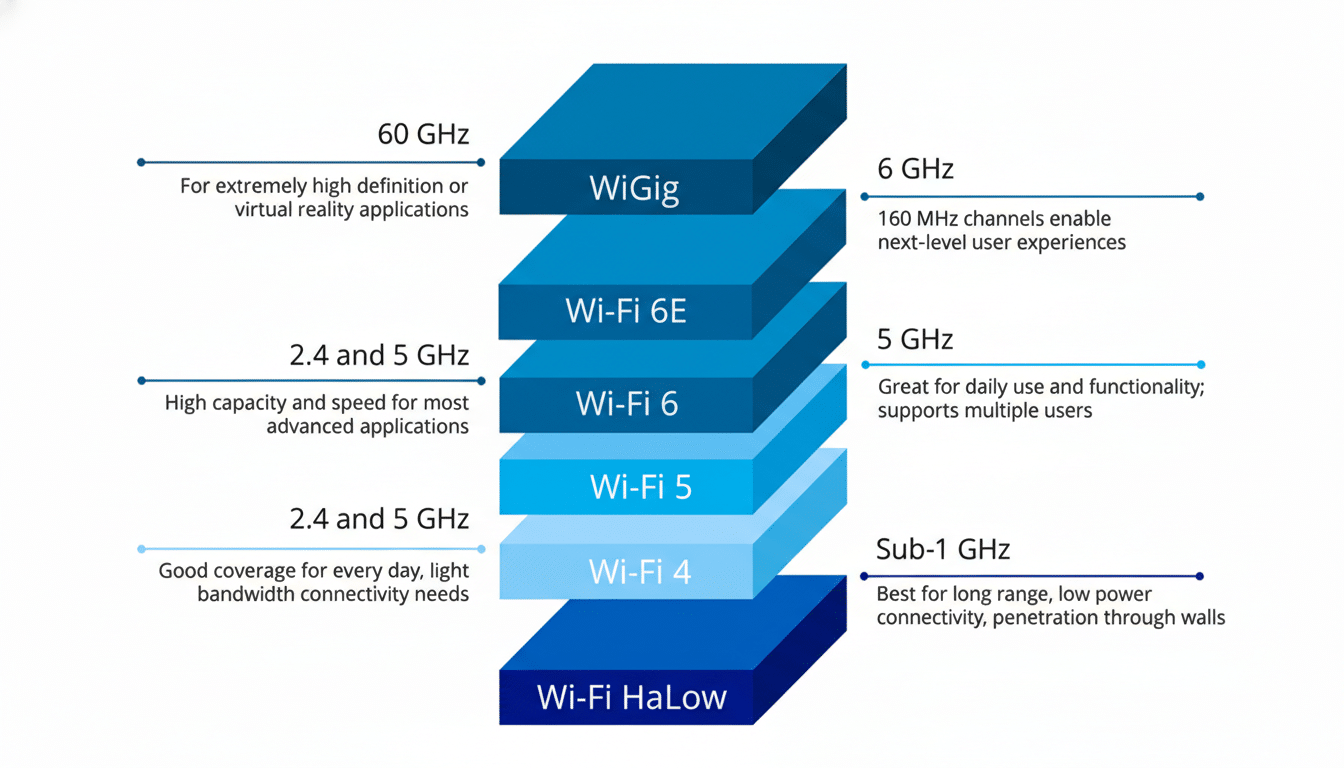
This dovetails with WiFi 7 features like 320 MHz channels and Multi-Link Operation. The 6 GHz band can host up to seven 160 MHz or three 320 MHz non-overlapping channels, enabling multi-gigabit throughput for demanding apps like AR guidance, low-latency gaming, and untethered 4K streaming.
Real-World Gains For Phones, Wearables, And Gadgets
Recent policy shifts already allowed certain smartphones to use 6 GHz for personal hotspots. With GVP, future phones and wearables could maintain higher throughput outdoors or at the edge of a home network, especially when paired with WiFi 7 chipsets from major silicon vendors. Expect smarter power control to show up first in premium routers and enterprise access points, then cascade into consumer devices as software stacks mature.

Battery life may also improve. Stronger, cleaner links typically mean fewer retransmissions and quicker bursts, letting radios go idle sooner. For AR glasses and low-power sensors, that efficiency can be as important as raw speed.
Safeguards And How It Stays Interference-Free
The FCC’s order expects rigorous protections for incumbent users. GVP devices must determine their location with high confidence, apply certified geofencing logic, and obey power ceilings that vary by place and frequency segment. These controls complement the existing automated frequency coordination approach used by standard-power gear, and they give regulators multiple layers of defense against harmful interference.
Stakeholders like the Wi-Fi Alliance, utilities groups, and public safety organizations have spent years hashing out coexistence. A pivotal court decision previously upheld the FCC’s broader 6 GHz framework, and the agency says the new rules build on that foundation with more precise, data-driven safeguards.
When You Will Notice The Difference In Everyday WiFi
Don’t expect overnight miracles. Manufacturers need to certify hardware, validate geofencing software, and push firmware updates. Network vendors have been preparing, though — leading chipset makers already support 6 GHz across WiFi 6E and WiFi 7, and certification programs are in place to verify performance. Analysts anticipate rapid adoption of WiFi 7 access points as enterprises refresh networks, with consumer gear following closely behind.
In the near term, watch for outdoor-capable mesh systems, stronger backyard coverage without add-on extenders, and more consistent phone tethering in 6 GHz when available. Over time, expect wearables, AR devices, and smart cameras to benefit as location-aware power control becomes standard.
The Bottom Line: Smarter 6 GHz Power Brings Better WiFi
The FCC’s geofenced variable power rules bring nuance to 6 GHz: more power where it’s safe, restraint where it’s not. It’s a pragmatic upgrade that should translate into faster, steadier WiFi for future devices without sacrificing the reliability of the services that already live in the band. The pieces are now on the board; the next moves belong to router makers, phone vendors, and software teams ready to turn policy into performance.
