


Fallout just brought some things home that fans have been waiting for. In Season 2, Episode 4, we finally get the Deathclaw — the franchise’s most monstrously enormous apex predator — in two set pieces that pay homage to classic game moments while bumping up the threat of the show very, very quickly.
The hour begins with bombs not yet falling on the Alaskan front of the Sino-American war. Cooper, sealed within that all-too-iconic T-45 power armor, hears an animal growl through the flames as a horned figure bursts forth from enemy lines. The sequence peddles the beast’s ruthless efficiency — all white puffs of dust, raking claws, and hot, fetid breath — without overexplaining what it is. Fans don’t need the intro.
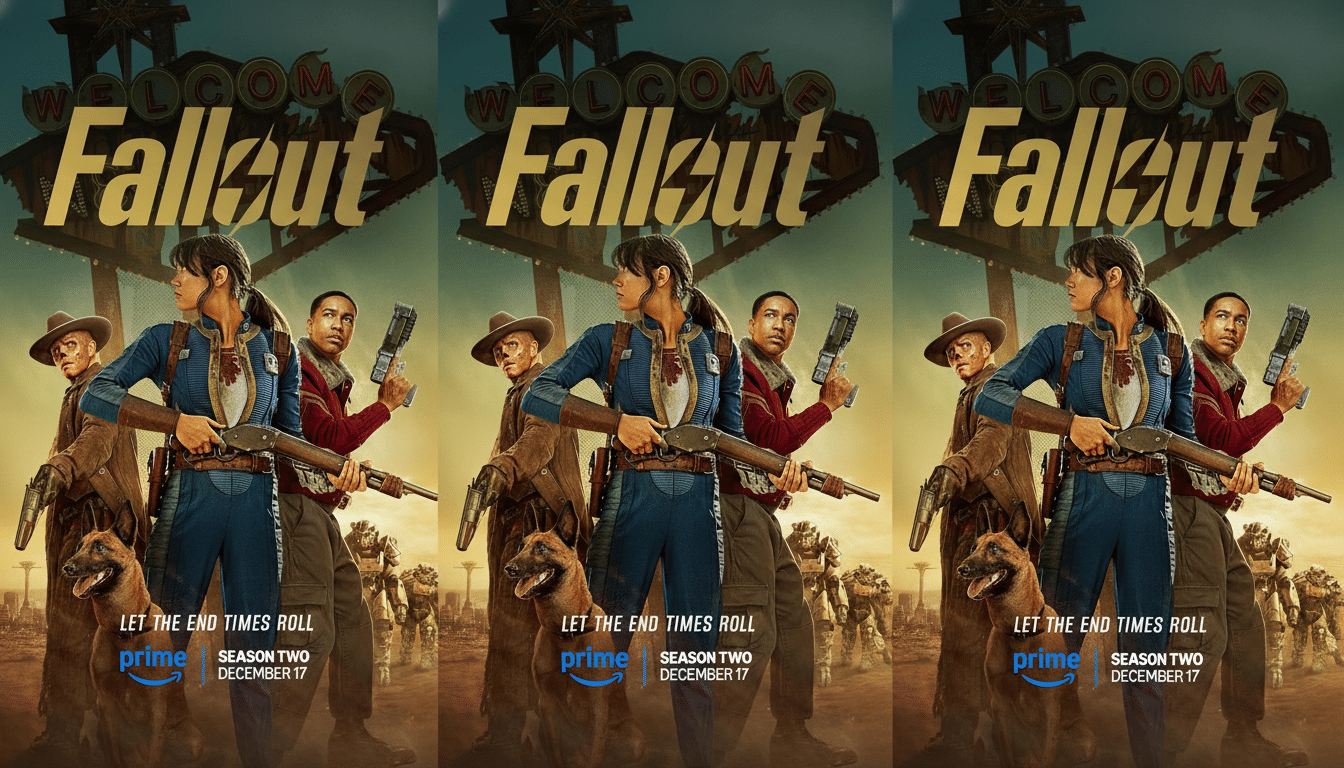
Further on, in New Vegas, Cooper and Lucy come across the eerily deserted Strip’s Gomorrah — mysteriously filled with irradiated eggs that have long since hatched. That visual language will be familiar to anyone who has lived through Quarry Junction in Fallout: New Vegas. Merely moments later, a Deathclaw emerges from the casino’s flaming mural on the wall as if it’s popping out of the game’s loading screen. It’s a joy and a horror at the same time.
Why the Deathclaw is important in Fallout lore
Across the games, the Deathclaw is what hits the reset on your pulse.
It first showed up in Interplay’s original back in 1997, and it has made an appearance in every subsequent mainline entry since — it’s the beast that makes even high-level players think twice before engaging. In Fallout 3 and Fallout 4, several veterans only ventured to take one on with the help of V.A.T.S., the series’ precision targeting system. The characters in the show, of course, do not have that crutch.
Deathclaws are, canonically, bioengineered by the pre-war U.S. military — hybridized from Jackson’s chameleons and then “improved” for shock assaults — before mutation and the post-nuclear environment mutated them into feral, near-ubiquitous monsters. And their nests and eggs aren’t mere set dressing — in Fallout 4’s The Devil’s Due or New Vegas’ Quarry Junction, egg sites signal territorial behavior and the actual likelihood of alpha beasts being nearby. Episode 4’s eggs are not a one-and-done scare; they’re an omen.
How the series humanizes the Deathclaw for live action
The adaptation is threading the proverbial needle of game fidelity and live-action plausibility. Design-wise, it maintains the digitigrade stance, scythe-like foreclaws, and that beefy tail, but hauls everything up for the camera so the creature reads as an actual physical threat next to a fully suited T-45. The cinematography relies on low angles and real-world debris to sell weight while the sound mix layers bone-scrape textures with reptilian hisses to capture that “oh no” recognition players know in their hearts.
Production-wise, the show has skewed toward physical-world worldbuilding, which means built sets, weathered props, and functional power armor, using computer graphics for bits only computer graphics can pull off. In interviews, the creative team has spoken about focusing on game-accurate silhouettes and textures. The Deathclaw takes that to the max: facial animation for threat displays and environment interaction, dust and particulate simulation when it charges. The result is less pixel spectacle, more survival-horror presence.
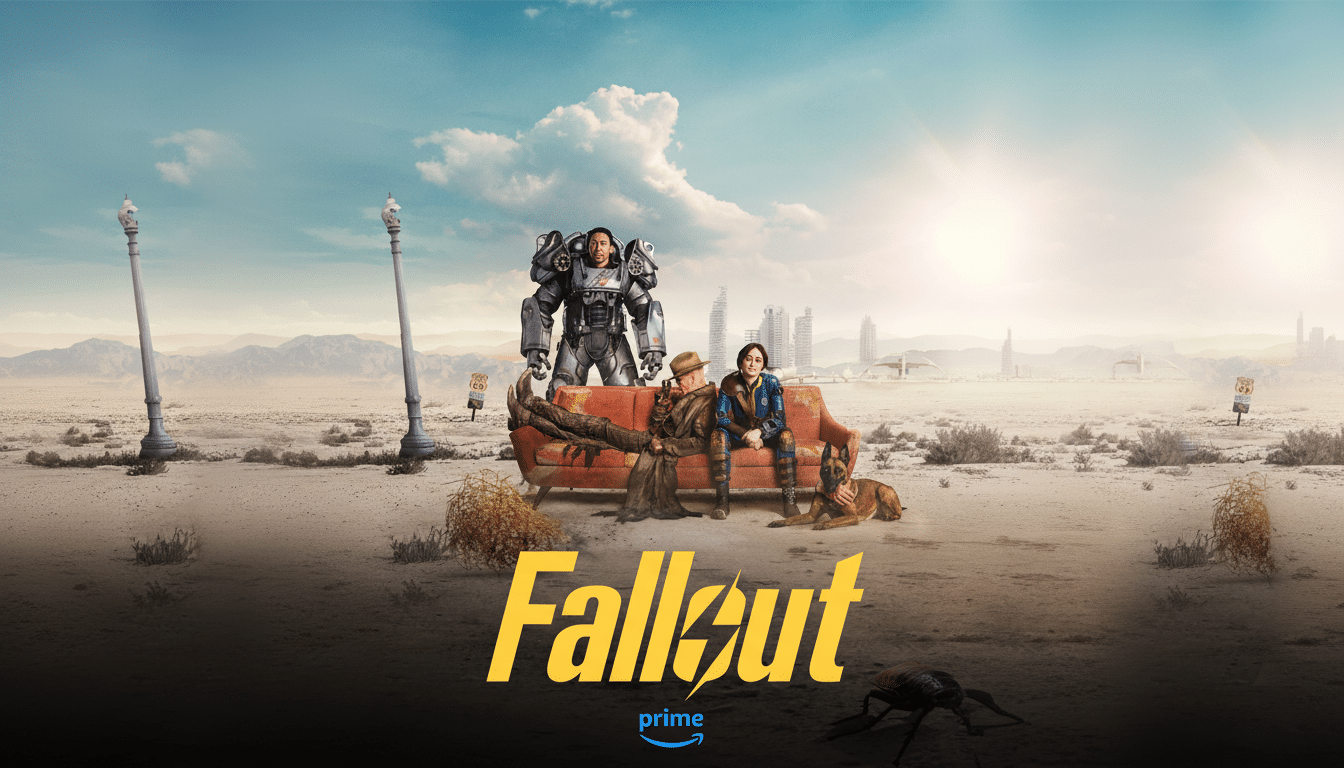
New Vegas connections and what those eggs mean
It’s a shrewd gesture to pick Gomorrah as the revelation site. New Vegas is still one of the most beloved locations in the series, and the Omertas’ casino served as a shining example of just how corrupt The Strip really was. By having a nest land at its doorstep, the show marries thematic decay to ecological peril — the city’s vices are now literally hatching monsters.
In gameplay, what eggs mean is the adult you’re seeing more than likely is not alone. Deathclaws are territorial, and nests regularly indicate patrol routes or ambushes, or a brood matriarch watching over clutches. Without a heads-up display or V.A.T.S., Cooper and Lucy are left only with old-world strategies:
- Decoys
- High ground
- Gunfire
- Retreat
So expect a cat-and-mouse rhythm, rather than a single boss fight.
Fan energy and franchise momentum after the Deathclaw reveal
The arrival of the Deathclaw isn’t just fan service; it is a message that we can pull top-tier threats in and still make them work in this narrative. When Season 1 launched, independent trackers such as Nielsen recorded billions of viewing minutes in its early weeks, and industry watchers observed increases in players revisiting the “Fallout” back catalog on PC platforms tracked by Steam. Bringing the franchise’s most bankable monster to Season 2 helps keep that feedback loop humming.
There’s also a merchandising and community angle. Deathclaws secure some of the series’ most coveted statues and art prints, and Bethesda Game Studios has a history of syncing in-game happenings in games like Fallout 76 with broader franchise beats. If Episode 4 is the midseason peak, that follow-through could determine where the story feels empowered to go next — and how its worshipful fanbase will coalesce around it.
More than anything, the monster works onscreen for the same reason it has worked in the games: because it makes every decision consequential. A wild Deathclaw is all caution, creativity, and sometimes running for your life. Episode 4 gets that, and for Fallout’s world, that fear is the right kind of fear.
