


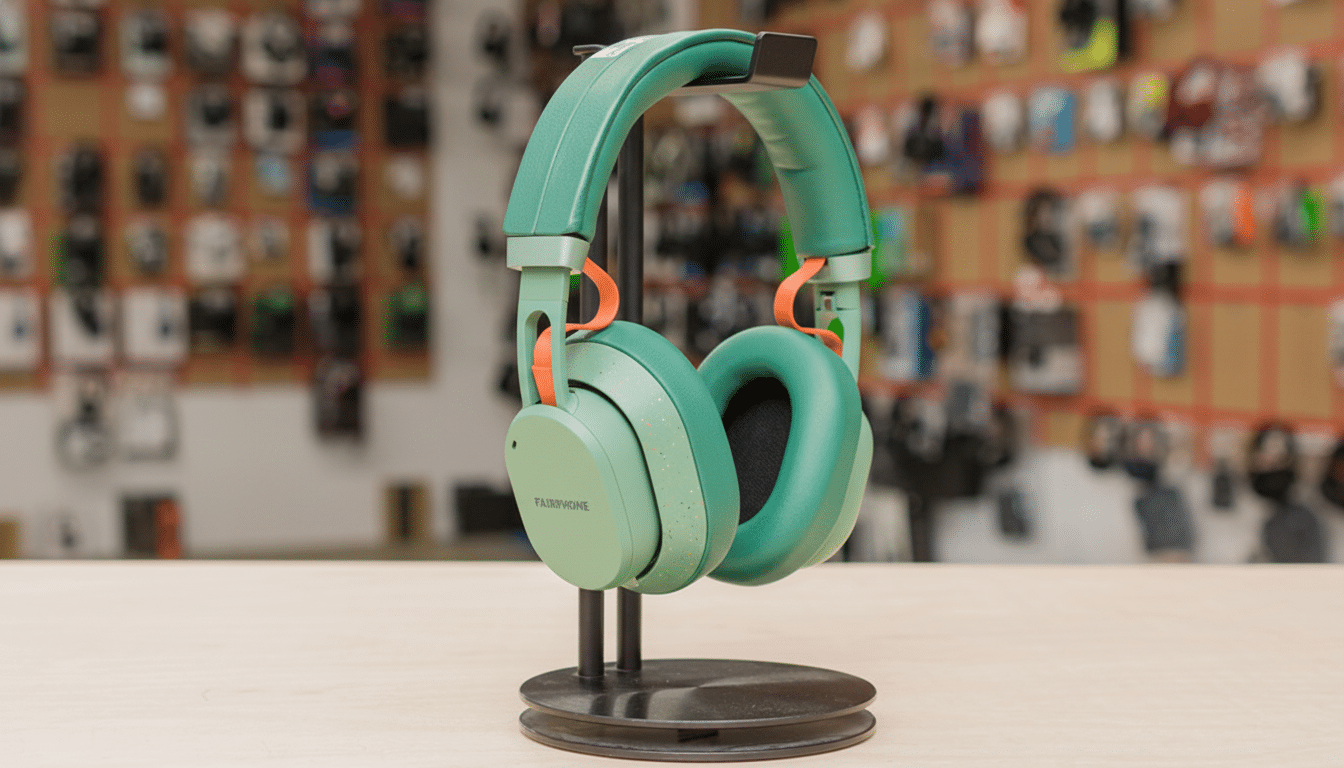
Fairphone has updated its over-ear headphones, the Fairbuds XL, further committing to that unique combination of style and genuine fixability. The new version retains the modular design DNA that set its predecessor apart, upgrades to larger 40mm drivers with more powerful magnets for tighter bass, and presents a more polished look (such as a visually arresting forest green, along with black). At $229, the pitch is simple: buy once, fix often, and listen for years.
What’s new in the refreshed Fairbuds XL headphones
The headline change is inside the earcups: Fairphone says a 40mm driver now sports better magnets for bass that’s a little tighter and better defined across the board. Those early listens back up that argument — the tuning is fairly neutral, with clean mids and forward‑leaning vocals even in songs that have an emphasis on bass. The company also adjusted comfort and styling, swapping the previous orange accents for green cabling and joystick, with new mesh ear cushions aimed at staying cooler during long sessions while making a better passive seal.
Repairability goes from a slogan to a real, listed spec
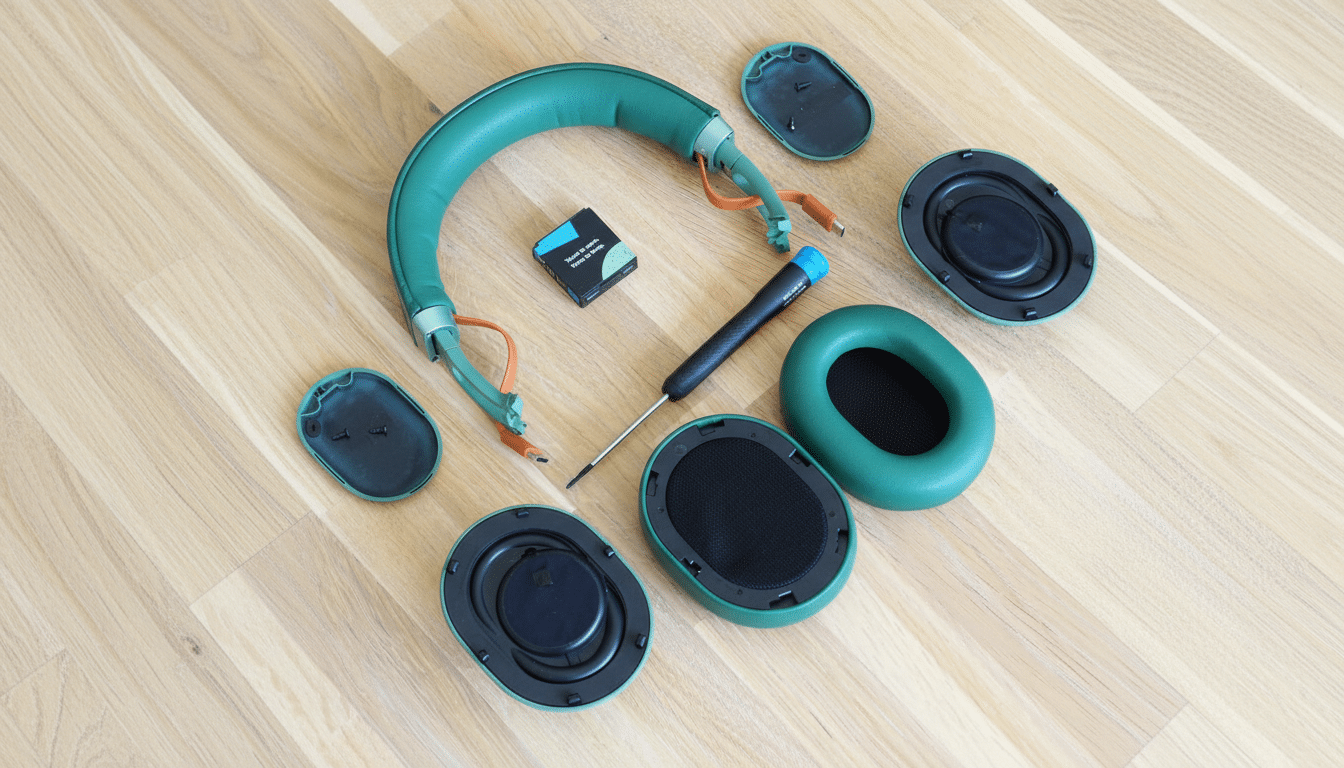
Fairbuds XL are still a proving ground for modular audio components. Owners can replace everything aesthetically external to the headband, including the battery and ear cushions, speaker covers, and even the individual drivers themselves with basic tools (think a small screwdriver and a guitar pick or even a credit card for prying). Fairphone supports this with a series of step‑by‑step video guides and easily obtained spare parts, something few big audio brands can come close to.
And this approach is not merely feel‑good. According to the U.N.’s Global E‑waste Monitor, in 2022 the world produced some 62 million tons of e‑waste, just an estimated 22% of which was formally recycled. It’s one of the most direct levers for pushing back on that trend. A longer lifespan of devices, if properly managed, could save the EU several million tons of CO₂e per year, according to an estimate by the European Environmental Bureau. Fairbuds XL’s user‑replaceable battery also meets the new EU battery ban, which will require consumer‑replaceable portable batteries in a few years.
Sound quality, active noise canceling, and comfort
The active noise canceling is strong enough to fade household clatter and street noise considerably, although it lags behind class leaders from Apple and Sony in terms of silencing. The payoff is natural sound that doesn’t collapse under ANC, and the new pads do indeed help keep a seal without becoming overly warm.
Controls are refreshingly tactile. A joystick manages play/pause, track navigation, and volume more effectively than touch‑sensitive cups, while a separate button scrolls through ANC modes and initiates pairing. With an increasing number of brands re‑adopting physical controls, the way Fairphone has deployed them seems purposeful, rather than merely nostalgic.
Battery life, ports, and the practical trade-offs here
Fairphone says the headphones can last up to 30 hours on a charge, which drops when ANC is switched on — more or less in line with the current crop of mainstream ANC headphones. Charging (and wired listening) goes over USB‑C, so there’s no 3.5mm jack, a compromise that streamlines elements and creates less leakage but might signal frustration among those who like to physically plug in analog cables for low‑latency situations. And the company has a small USB‑C to 3.5mm adapter available for sale if you need one.
The packaging adheres to the brand’s low‑waste playbook: a protective pouch and, inside it, the headphones; plus a sharp quick‑start guide. Materials are sourced with an eye on ethics, featuring Fairmined inputs and recycled content — areas where independent groups (like iFixit and the Responsible Minerals Initiative) have pressured the industry to do better.
Price, warranty details, and wider US availability
At $229, Fairbuds XL outstrip premium flagships — the reason is that they promise something many of them can’t: futureproofing. A three‑year warranty inspires confidence, especially in a category that still commonly offers just one year of coverage in the US. Fairphone says it will continue to honor parts ecosystem coverage as well as the warranty, and this upgrade maintains backward compatibility wherever it can — which is a deliberate approach, according to CTO Chandler Hatton, so that those who already own a Fairphone are not stranded.
Competition is fierce: Sony’s WH‑1000XM5 are a noise‑canceling benchmark, and Sonos Ace aims for home and travel at high‑end pricing. Fairphone isn’t looking to out‑spec those models on absolute ANC or cinematic extras. Instead, it opts for repairability, ethically sourced materials, and a sound profile built to be lived with for years — not tuned for first‑listen fireworks.
The company is also expanding distribution. Fairbuds XL are heading to Amazon in the US as well, in addition to direct sales there and elsewhere, adjacent to the company’s cheaper wireless earbuds. For a brand that has long been associated with Europe‑first launches, wider US availability will serve as an early test of whether the right‑to‑repair ethos can find mass appeal.
Bottom line: It’s not a reinvention of the Fairbuds XL. It shapes them, and that’s the idea. If you appreciate a neutral, pleasant listen and like the idea of fixing what breaks, the updated Fairbuds XL are one of a handful of earphones that transform sustainability from marketing copy into an actual product feature.
