


Indian launch startup EtherealX has surged to a reported $80.5 million valuation after a new funding round, a 5.5x leap that underscores investor conviction in its bid to field a fully reusable rocket and kick off engine hot-fire campaigns in the near term. The company is positioning itself as a high-cadence, cost-competitive alternative in a market where SpaceX’s pricing and schedule reliability have set the bar.
Funding Momentum Signals Appetite For Reuse
Backers are effectively betting that deep reusability can unlock step-change economics for launch. EtherealX’s plan goes beyond first-stage recovery to target return and reuse of the upper stage as well, a formidable technical objective that, if proven, could narrow the cost gap with incumbent providers and increase flight availability for commercial and government customers.
The upsized valuation also reflects a shifting policy and industry landscape in India. A more open regime overseen by IN-SPACe and the Department of Space, along with growing participation from private players working alongside ISRO, has accelerated prototype-to-orbit timelines. Analysts at organizations such as Euroconsult and BryceTech have noted rising global demand for launches, further improving the outlook for new entrants that can deliver predictable cadence.
Engines Near Hot-Fire Campaigns At New Test Sites
EtherealX is developing two engines in-house: the Pegasus upper-stage engine and the Stallion booster engine. Pegasus is rated at 80 kilonewtons and targets 323 seconds of vacuum specific impulse. The company says it uses a proprietary “full-flow segregated cooling cycle,” and it integrates an additively manufactured turbopump designed and produced internally.
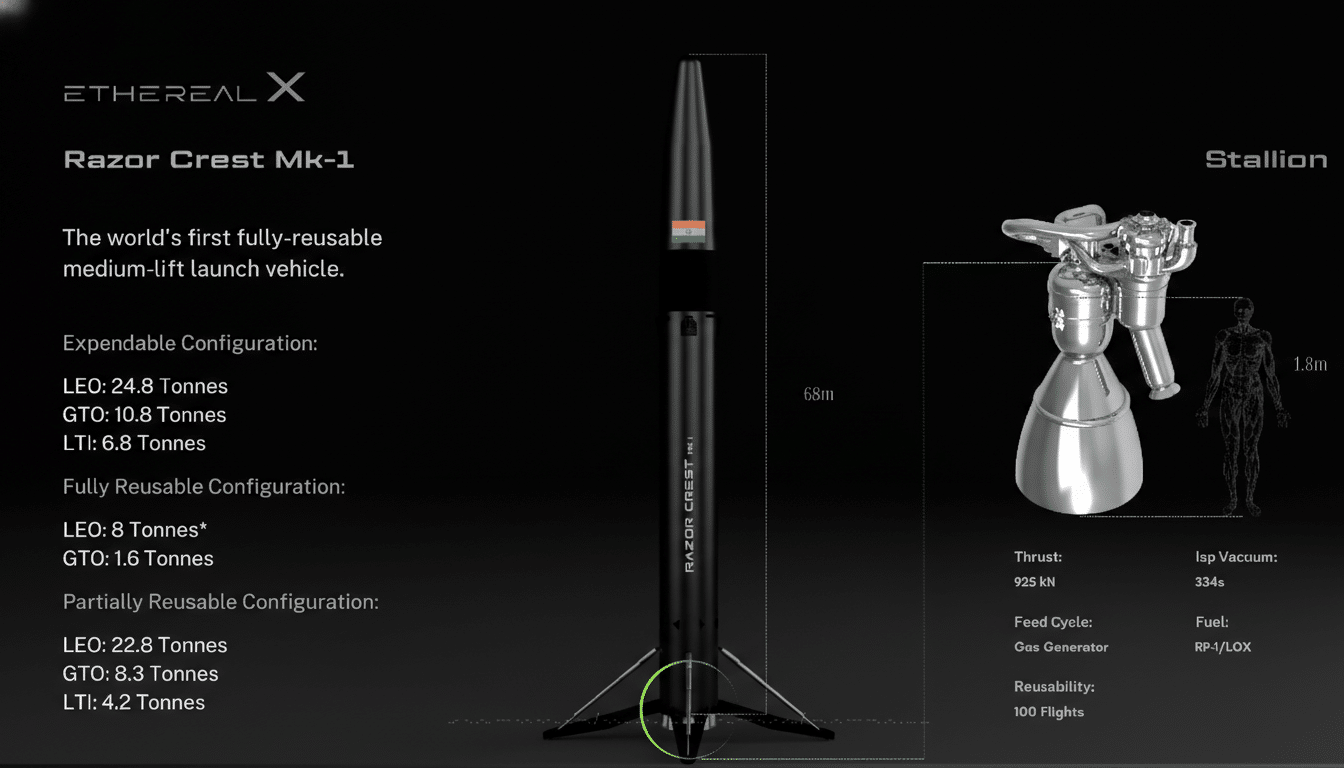
Stallion, the first-stage workhorse, is a 1.2-meganewton-class engine using a gas-generator cycle and aiming for 306 seconds of sea-level specific impulse. Near-term milestones include hot-fire qualification of Stallion and clustered firing of Pegasus units, critical steps before stage integration. EtherealX has established Base 001, an engine test site in Tamil Nadu focused on upper-stage qualification, and secured a 150-acre campus in Andhra Pradesh for manufacturing, integrated engine testing, and eventual stage-level trials.
A Bolder Reusability Bet Than Today’s Norm
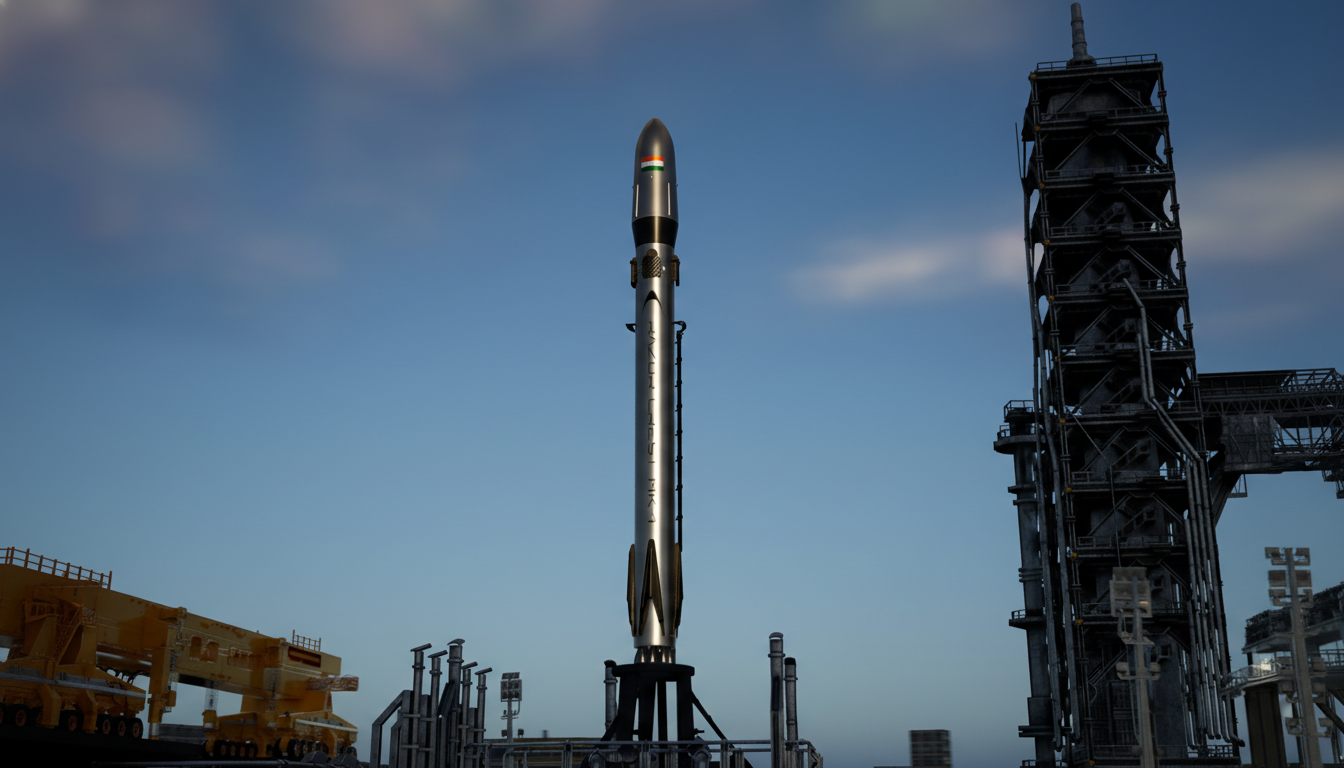
While SpaceX’s Falcon 9 largely reuses only the booster, EtherealX aims to recover both stages. That raises the engineering bar—upper stages face severe thermal loads, tight mass margins for thermal protection and landing systems, and complex restart requirements—but it also opens a path to materially lower costs per kilogram across frequent flights.
The company’s performance targets reflect the trade-offs across recovery modes: up to 24.8 tons to orbit if expended, 22.8 tons with partial reuse, and about 8 tons if both stages are returned. Pricing ambitions range from $350 to $2,000 per kilogram depending on configuration and flight cadence. If achieved at scale, those figures would place EtherealX among the most competitive options globally for medium to heavy payloads.
Customer Pipeline And Market Fit Take Shape
The company says it has signed launch memoranda of understanding totaling around $130 million, including agreements with Japan’s Space BD and Taiwan’s space agency, TASA. These early commitments are a hedge against the launch bottlenecks frequently cited by satellite operators seeking dedicated slots rather than rideshare compromises.
EtherealX’s approach also aligns with the needs of operators looking for flexibility on orbit selection, readiness to launch, and payload integration—areas where vertical integration can pay dividends. ISRO’s heritage with PSLV and LVM3, combined with a growing private supplier base, offers a maturing ecosystem for propulsion components, avionics, and ground systems within India.
Team, Timeline And What To Watch In The Months Ahead
The startup employs 67 people and plans to scale to about 90 as it ramps manufacturing and testing. The near-term agenda centers on Stallion flight qualification and multi-engine Pegasus firings, followed by integrated stage tests at the new campus. A technology demonstration vehicle is on the roadmap ahead of commercial missions, contingent on engine performance, system integration, and regulatory clearances.
Key technical questions remain: durability of the upper-stage thermal protection during return, turnaround times between flights, and whether clustered engine operations maintain stability across multiple cycles. Lessons from industry peers—SpaceX’s iterative testing, Rocket Lab’s evolving recovery methods, and ISRO’s own reusable demonstrator work—suggest that rapid test cadence and data-driven design changes will determine how quickly EtherealX closes the gap between prototype and service-ready vehicle.
If the company hits its engine milestones and locks in repeatable recovery, its cost and cadence targets could make India a manufacturer and operator of a genuinely next-generation reusable launcher. For now, the 5x valuation jump is a vote of confidence that the engines about to fire can ignite a broader shift in how and where high-performance launch systems are built.
