


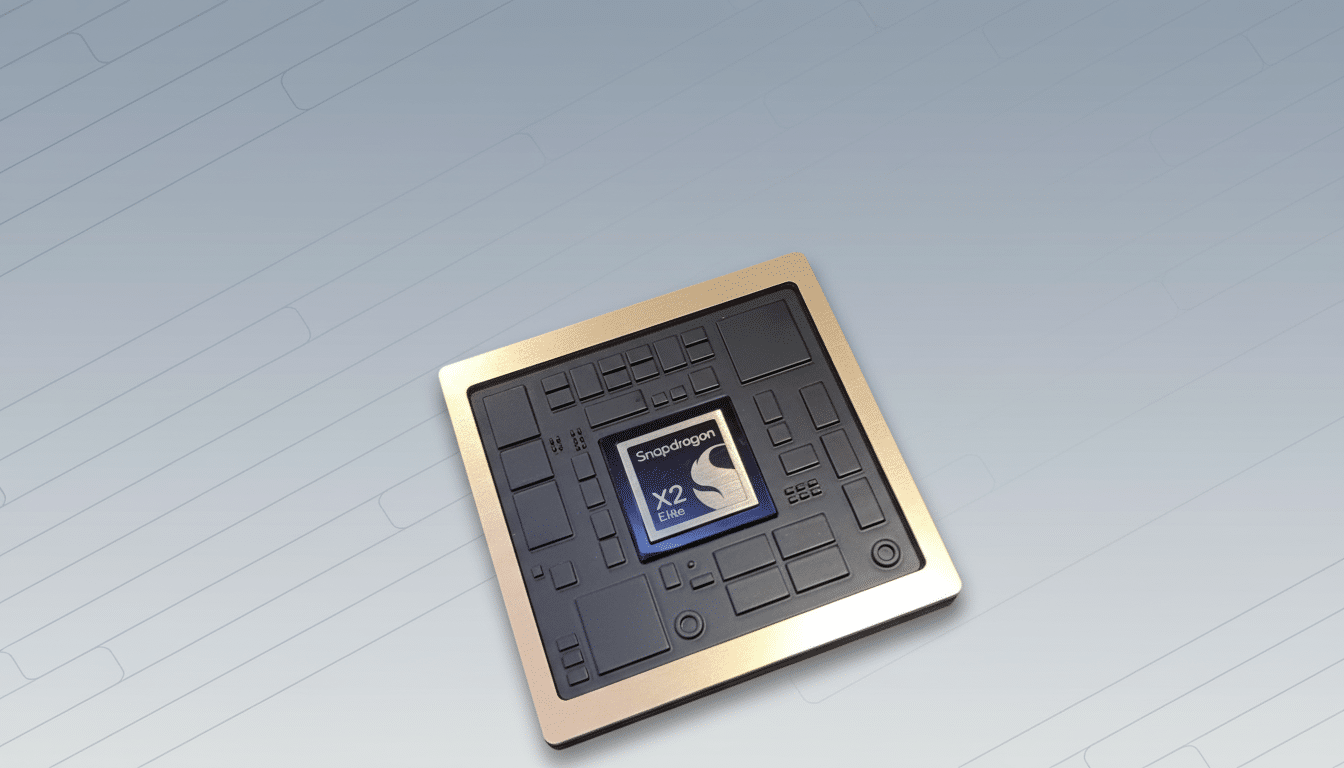
Qualcomm’s newest high-end laptop chip, the Snapdragon X2 Elite Extreme, has kicked down the door. In controlled tests, the 18-core Arm-based SoC had robust CPU, GPU, and NPU benchmark scores that should have incumbents concerned. Independent tests will make the final decision, but today’s early signal is clear: Qualcomm has pushed the conversation on laptop performance — and fast.
What’s Different Inside Qualcomm’s New Flagship
A complete overhaul from the ground up, the X2 Elite Extreme is powered by Qualcomm’s third-gen Oryon CPU cores and its 3nm process technology. Its 18-core arrangement combines 12 speedy “Prime” cores with six efficiency-tuned “Performance” cores. Two of the Prime cores can boost up to 5GHz, a first for an Arm laptop chip that amounts to a direct challenge to high-wattage x86 parts.

On the AI side of the ledger, Qualcomm’s updated Hexagon NPU is listed at 80 TOPS — double that of last year’s Snapdragon X generation’s 45 TOPS — and well north of the 40 TOPS mark that Microsoft has quoted for its Copilot+ class.
Qualcomm also redesigned its Adreno GPU; the chip widens memory bandwidth with a 12-channel setup in some configurations, something that can pay dividends for integrated graphics as well as AI workloads.
Qualcomm is layering in platform extras as well. Snapdragon Guardian includes cloud- and hardware-powered fleet management and security features designed for IT departments but still beneficial for consumers who are looking to locate a device remotely or wipe it.
Early Benchmarks Indicate Serious Performance Pace
In orchestrated-by-the-company tests in front of reporters, the X2 Elite Extreme took the lead in multi-core CPU tests such as Maxon’s Cinebench 2024, beating out top-of-the-line chips from AMD and Intel. Single-core performance was razor close at the top end of the chart, with Apple’s brand-new M‑series silicon literally only Prime cores away from parity. Primate Labs’ Geekbench 6 shared the tune: wide and steady throughput across mixed workloads.
Browser benchmarks (Speedometer and JetStream) also favored the X2 reference laptops. These tests are best interpreted as responsiveness proxies, rather than daily browsing stand-ins, but they do serve to corroborate that Qualcomm’s CPU and memory pipeline improvements are indeed translating into snappy front-end performance.
It was definitely graphics that made the most significant generational leap. In UL’s cross-platform 3DMark Steel Nomad Light and Solar Bay benchmarks, the new Adreno scored (approximately) twice as high as first-generation Snapdragon X Elite scores in competing systems — and also whipped integrated graphics on many competitive designs. That said, AMD’s latest unified-memory Ryzen AI configurations can still trade blows in some GPU-heavy tasks, especially in premium workstations that are designed for long-term graphics power.
AI inference scaled as expected with the beefier NPU. In Geekbench AI and UL Procyon AI (run on Qualcomm’s SNPE), X2 Elite Extreme yielded results that were roughly in line with a doubling of TOPS from 45 to 80, and frequently near 2x. The real-world impact: bigger on-device models, faster vision and language processing, and more headroom for multiple simultaneous AI tasks.
How It Stacks Up Against AMD, Intel and Apple
That puts Qualcomm in the same tier as Intel’s highest-end mobile Core Ultra parts and AMD’s flagship Ryzen AI chips, not to mention the high-value Apple M‑series used in pro laptops. The X2 Elite Extreme’s multi-core performance and AI throughput set a standard for Arm-based Windows systems, while its single-core performance matches Apple’s best. Integrated graphics make meaningful progress — especially in creator workloads that rely on GPU acceleration and memory bandwidth, Qualcomm’s 12-channel setup will be a strategic advantage.
Context matters, though. Some AMD Ryzen AI systems with unified memory can assign large amounts of RAM to graphics, which could alter the calculus for some pro apps. And Intel’s recent designs are already increasing platform efficiency and spitting out integrated graphics drivers at a rapid clip. Look for a close race when retail packs go out, ranging across different thermals and form factors.
The Big Caveats on Power Use and Early Testing
These first looks arrived on Qualcomm’s own reference laptops — 16‑inch models using generous cooling and 48GB of RAM — intended to demonstrate the peak of what’s possible. TDP values weren’t revealed and journos didn’t carry out separate test suites. Translation: Those numbers are best-case snapshots, not averaged real-world results.
There will be a wide range of thermal envelopes in retail devices, from thin fanless designs to performance-tuned clamshells and mini desktops. As with any product, it will be up to independent reviewers to trace the curve of the X2 family across wattages, chassis sizes, and OEM tuning.
Why This Is Important for AI PCs and Creators
But the jump from 45 to 80 TOPS is more than just a spec-sheet flex. It paves the way to running larger local language models, higher-resolution diffusion and video pipelines, and multi-agent workflows without having to ping the cloud. For corporations, this can cut down on latency and help retain control of data. Rebuilt GPU, memory bandwidth, and high-boost Prime cores should translate into faster exports and previews in apps that are optimized for Arm.
All that leaves is software support. Arm-native builds for popular content, CAD, and data tools are arriving more quickly than ever before, but the ecosystem is still as important as raw silicon. Qualcomm’s course suggests that the hardware is going to come to market early in order to drag the software along.
Bottom Line: Snapdragon X2 Elite Extreme raises the bar
Snapdragon X2 Elite Extreme seems like a real step-change for Windows on Arm laptops: faster cores, a much more powerful NPU, and a tangibly improved GPU.
In any case, the performance story is interesting, even with the necessary caveats about controlled demos. If third-party tests substantiate those gains across actual systems, Qualcomm just set a new bar for what an Arm laptop is capable of.
