


Donut Labs arrived at CES with the kind of claim that jolts an industry: a production-ready solid-state battery powering a Verge electric motorcycle, with deliveries slated to begin soon. The Estonian startup says its pack hits 400 Wh/kg, reaches 100% in five minutes, operates from −30°C to 100°C, avoids thermal runaway, outlasts typical EV packs by orders of magnitude, and undercuts lithium-ion on cost from day one. It’s a head-turning pitch—yet the proof is still locked inside the case.
A Flashy Debut with Bold Specs and Sweeping Promises
On paper, Donut’s figures look disruptive. A gravimetric energy density of 400 Wh/kg would leapfrog today’s mainstream lithium-ion cells, which generally land around 180–270 Wh/kg in production vehicles. For context, independent teardown work in 2025 pegged Tesla’s 4680 cell near 241 Wh/kg. Donut also touts a claimed lifespan of 100,000 charge cycles, a broad thermal envelope, and rapid charging to 100%—attributes that would rewrite EV engineering trade-offs from safety systems to pack sizing.
CEO Marko Lehtimäki frames the technology as a full reset, asserting the architecture is cheaper than lithium-ion and scalable from tiny devices to rail applications. He avoids specifics, citing a mix of materials science and manufacturing innovation, while emphasizing that inputs are from broadly available sources and not dominated by geopolitically constrained minerals. The company’s refrain on the gotcha question—what’s the catch—is that there isn’t one.
Verge Motorcycle Puts Claims To The Test
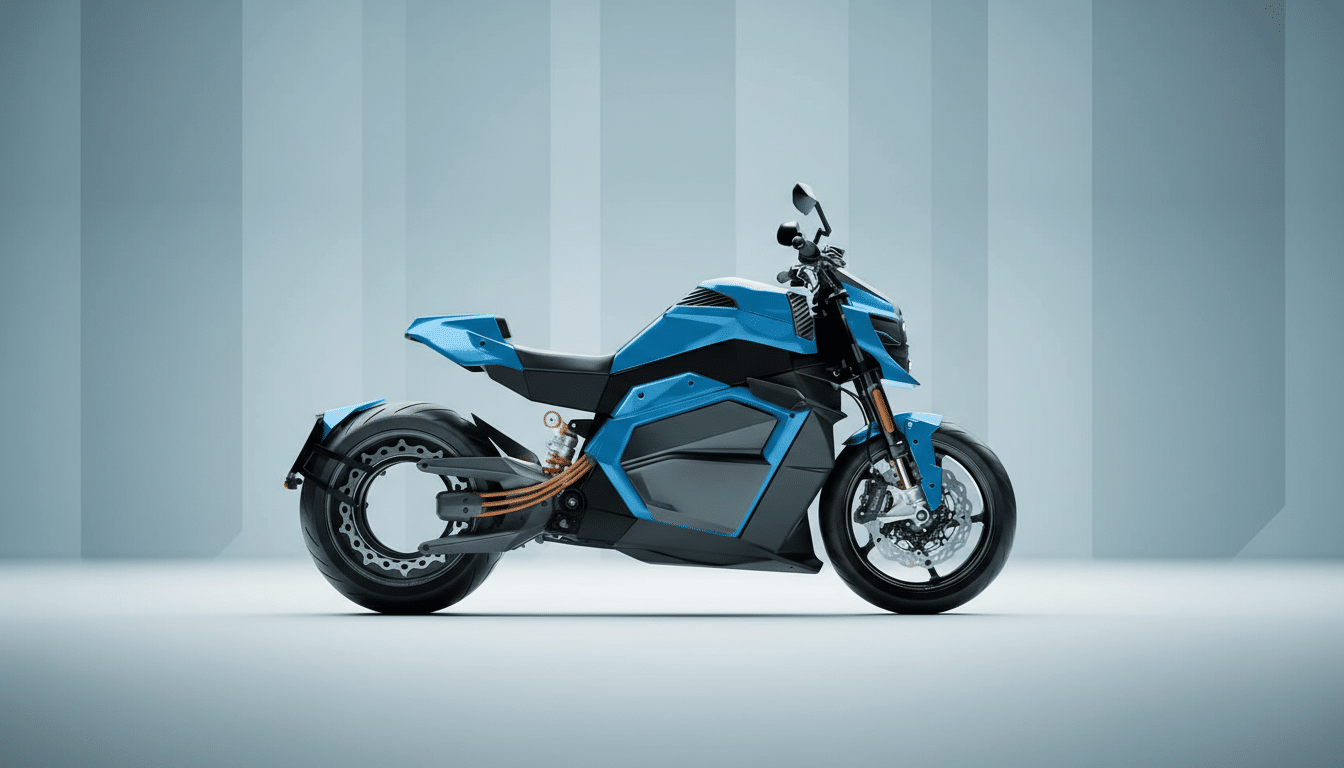
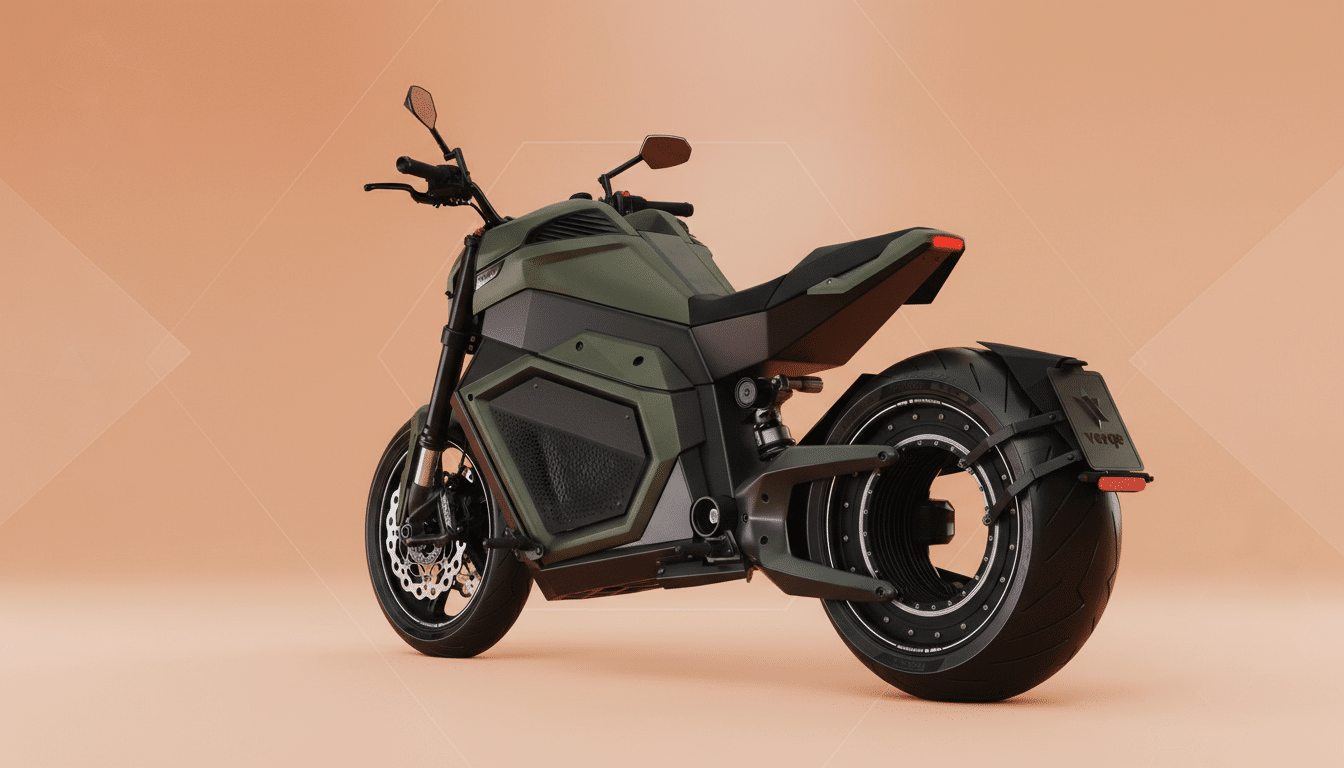
The spotlight product is Verge’s solid-state-powered TS Pro line, positioned at premium prices: a $29,900 model with a 20.2 kWh battery and an advertised 217-mile range, and a $34,900 configuration with 33.3 kWh and a 370-mile claim. An optional California Edition adds $1,000. The bike uses a NACS port compatible with Tesla Superchargers, and Verge quotes 10-minute sessions that can add up to 124 miles on the smaller pack or up to 186 miles on the larger.
Notably, those real-world charging figures are more conservative than Donut’s five-minute-to-100% headline. Likewise, Verge cites 10,000 cycles—still meaningful for two-wheelers and far above the ~1,500 cycles often referenced for conventional EV packs—but a far cry from 100,000. Those discrepancies could stem from system-level constraints such as thermal limits, power electronics, or charging infrastructure, but they also underscore how little the public knows about what’s inside the pack.
Manufacturing And Materials Remain Black Boxes
Donut Labs says its first factory in Finland will have 1 GWh of capacity in 2026, cautioning that output will be tight initially. That scale is small by automotive standards but meaningful if the company can deliver genuine solid-state performance at promised costs. Executives have said the chemistry avoids high-risk supply chains and uses widely available materials, but they have declined to reveal composition or processing details, and no peer-reviewed data or third-party validation has been published.
The Physics Problem Still Looms Over Solid-State Cells
Solid-state advocates have wrestled for years with dendrite formation—metal filaments that can pierce an electrolyte and short a cell—along with interfacial resistance and manufacturing complexity. Some proposed fixes require mechanical pressure, introducing new failure modes and cost. Analysts at Boston Consulting Group note the sector’s history of slipping timelines; they still forecast “real commercialization” to scale in the 2030s and highlight key unknowns, from cost structure to fast-charge performance in extreme temperatures.
Donut says it has solved dendrites without specifying how. The company’s confidence—and its willingness to put hardware in the field—counts for something. But without cell-level data, independent abuse testing, and teardown-grade transparency, the extraordinary claims remain hard to verify.
Industry Context And Credible Skepticism
The broader race is crowded. Incumbents like Toyota and Samsung and startups such as QuantumScape continue pursuing oxide and sulfide solid-state chemistries, while alternatives like silicon-dominant anodes from firms including Group14 aim to deliver big gains within lithium-ion frameworks. Online, engineers have floated theories that Donut’s pack might blend supercapacitive behavior to achieve fast charging, though those remain educated guesses without detailed cell disclosures.
Skeptics point to a long list of missed milestones, from ambitious prototypes that never left labs to high-profile automotive programs that promised solid-state by mid-decade and fell short. At the same time, several well-regarded engineers publicly vouch for colleagues now at Donut, which keeps the door open to a non-obvious breakthrough—or at least a clever integration that edges the state of the art forward.
What Will Prove It When Bikes and Tests Arrive
The moment of truth arrives when Verge bikes hit customer hands and teardown specialists measure the cells. Watch for independent confirmation of the following:
- Gravimetric and volumetric energy densities
- Cycle life under high C-rates
- Charging curves across temperature bands
- Internal resistance growth over time
- Safety results from puncture, crush, and thermal runaway tests
If Donut’s pack delivers even a substantial fraction of its claims, it could reshape two-wheel EVs quickly and ripple into industrial equipment and small EV platforms. If not, it will be another reminder that getting from lab bench to mass production is where battery miracles usually go to die.
