


A surprise four-legged visitor briefly joined the women’s cross-country team sprint at the Winter Olympics, trotting onto the finishing straight and instantly stealing the spotlight without disrupting the race. What started as a tense qualifying heat turned into a moment of pure Olympic levity, with athletes, officials, and spectators united in laughter as the pup bounded through the finish zone.
How the Canine Cameo Unfolded on the Finish Straight
As skiers from Croatia and Australia crossed the line at the end of their qualifying leg, a dog wandered onto the packed snow, paused as if clocking the cameras, then cheerfully scampered toward the athletes. On-course commentators, quoted by People, quipped about a “lost dog” and praised the timing—better during qualifying than a medal-deciding heat. The animal kept safely clear of incoming racers and, once the exhaustion set in and athletes sank to the snow, ambled over with curious sniffs and a wagging tail.
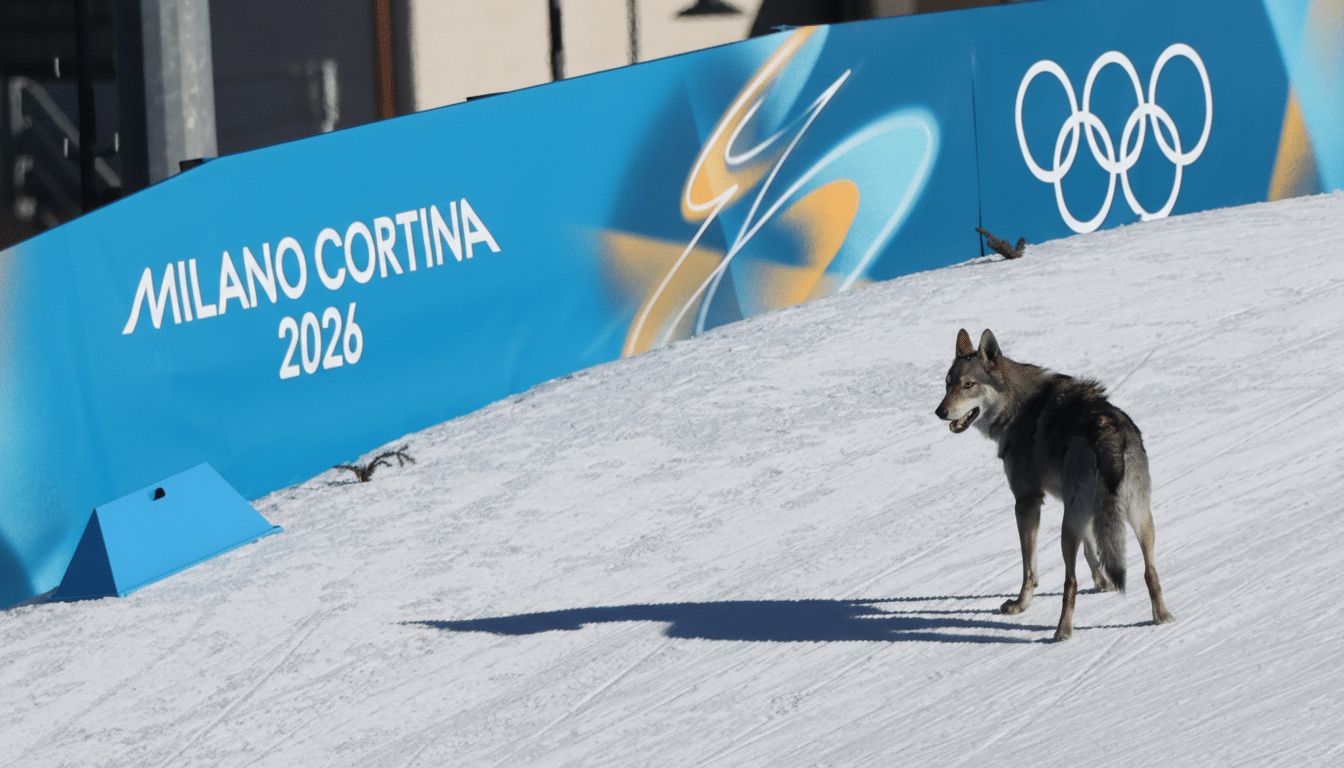
Volunteers quickly guided the dog beyond the finish lanes, offering pats and belly rubs that drew grins from skiers catching their breath. Race officials confirmed there was no interference with results or athlete safety. The episode landed squarely in the sweet spot of Olympic folklore: unexpected, heartwarming, and mercifully uneventful.
Photo Finish for a Four-Legged Fan at the Winter Games
Even the sport’s precision tech got in on the fun. Omega, the Games’ official timekeeper, captured the intruder with its Scan’O’Vision ULTIMATE photo-finish system—the same high-speed camera array used to separate athletes by thousandths in track, cycling, and Nordic finishes. Designed to record a continuous image of the finish line at extreme frame rates, the camera dutifully logged the canine crossing as though it were just another competitor streaking through the beam.
The dog was later identified by NPR as Nazgul, a two-year-old Czechoslovakian Wolfdog who lives with his owners at a nearby bed-and-breakfast. Locals described him as stubborn but sweet—an apt scouting report for a creature that sniffed out the fastest route to viral fame. He was not made available for post-race interviews.
Officials Balance Safety and Spectacle at the Finish Area
While the moment charmed millions, it also offered a real-time stress test of venue control. Outdoor Nordic courses wind through open terrain, where access management requires layers of fencing, marshals, and roving stewards. The International Ski and Snowboard Federation’s event guidelines emphasize securing perimeters and maintaining clear athlete corridors—especially near the finish, where speeds are highest and visibility narrows.
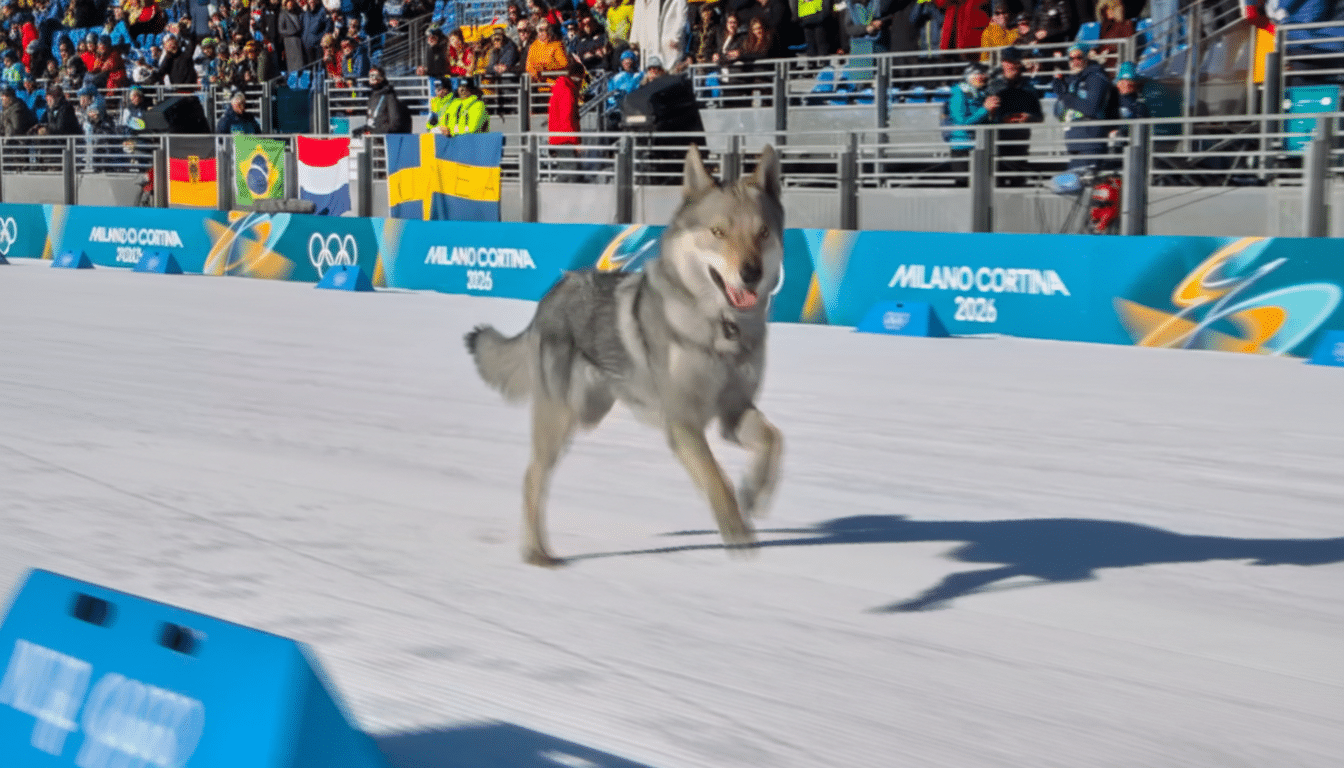
Incursions by animals in outdoor sport aren’t common, but they do happen: wildlife occasionally appears near Nordic venues in Scandinavia, and football and baseball have seen everything from cats to squirrels halt play. The difference here was the setting—an Olympic race with a dense logistical footprint. Quick response by course staff kept Nazgul out of danger and ensured the race’s integrity held, a small but telling win for event operations.
Race Results Still Delivered After the Canine Cameo
Once calm returned, the results held the storylines they deserved. Sweden’s Jonna Sundling and Maja Dahlqvist, among the most feared sprint duo in the world, topped qualifying in 6:29.94 and later closed the show with gold. Switzerland and Germany claimed silver and bronze, respectively, with Team USA’s Jessie Diggins and Julia Kern improving from seventh in qualifying to a solid fifth in the final.
For Sweden, the outcome extends a sprinting tradition built on explosive starts, immaculate exchanges, and top-end speed under pressure. Sundling, already an Olympic sprint champion, has anchored the nation’s surge in the discipline, while Dahlqvist’s top-tier finishing power repeatedly tips close heats their way. None of that changes because a good dog wagged through the frame—but it did make the day feel a little more human.
A Viral Snapshot of Olympic Spirit, Joy, and Surprise
Clips of Nazgul’s cameo ricocheted across social platforms, amplified by athlete reactions and broadcast replays. It’s the kind of micro-moment the Olympics uniquely produce: unscripted, universal, and instantly legible in any language. Broadcasters know these beats matter—research from organizations like Nielsen has long shown that emotional, shareable highlights can lift audience engagement beyond traditional diehard fans.
In the end, nothing about the competition was compromised, yet the incident gave the event a second storyline—one that met the world’s appetite for joy between lung-searing laps. For a brief stretch of snow, Nazgul ran with the best, and reminded everyone why even the most high-performance theater benefits from a touch of unpredictability.
