


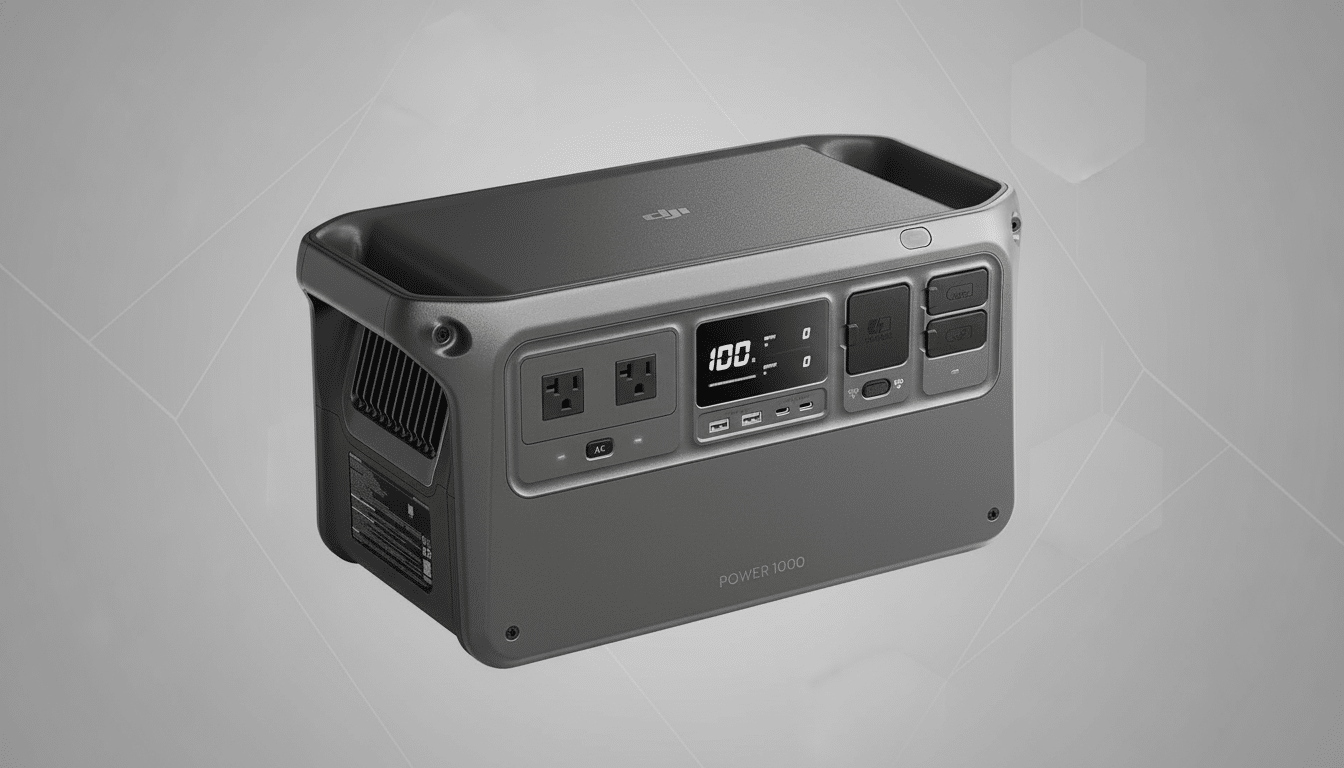
Amazon has a stand-out deal on the DJI Power 1000 portable power station: for $349, you get half off the original price of $699.
Fast charging of the long-life LiFePO4 battery, all packed into a 1kWh-class unit, is available at an extremely competitive price point in this category compared to other comparable models, which usually cost a few hundred dollars more.
- Why this DJI Power 1000 price drop matters now
- Key specs and performance highlights for DJI Power 1000
- Real-world use cases for the DJI Power 1000 portable
- How the DJI Power 1000 compares with similarly sized rivals
- What to know before you buy the DJI Power 1000 unit
- Bottom line on the DJI Power 1000 deal and who should buy
Why this DJI Power 1000 price drop matters now
It’s all priced at $349, and the effective cost per watt-hour lands around $0.34 for a 1,024Wh pack. In today’s portable power space, the majority of popular 1kWh units by name brands run somewhere in the $699 to $999 range before discounts, and sale prices dip to between $499 and $799. That makes this drop substantial for anyone considering emergency backup, camping power or a creator workflow upgrade that won’t leave their wallet in dire straits.
The listing is fulfilled by DJI’s own Amazon store, which eases the (all-too-frequent) fears about gray market resellers. Like with any high-velocity deal, inventory and pricing can change at any time; expect this one to sell out quickly.
Key specs and performance highlights for DJI Power 1000
The Power 1000 houses a 1,024Wh battery with a 2,200W sustained AC output and 2,600W peak, enough overhead for the likes of power tools, kettles, hair dryers, or several devices at once—let us remain reasonable.
The chemistry is LiFePO4, rated by DJI for 4,000 cycles; that means years of daily use before capacity significantly diminishes. Groups like the National Renewable Energy Laboratory have pointed out LiFePO4’s stability and cycle life versus conventional NMC cells for years.
Recharge speed is a headlining feature: the unit goes from 0% to full in around seventy minutes when plugged into the wall, or hits 80% charge in about fifty minutes. That’s fast enough to rival the quickest consumer stations. Rapid top-offs are important during rolling blackouts, or tight production schedules where every minute matters.
Naturally, things are impressively quiet at a quoted 23 dB—which is library-quiet territory—owing to the superb thermal management. For indoor use or a tight studio, needing that near-silence can make all the difference in calls, recordings, or late-night runs.
Real-world use cases for the DJI Power 1000 portable
Backup power no longer just serves a niche need. In recent years, Americans have experienced an average of about five hours a year when the lights go out, according to the U.S. Energy Information Administration; those numbers spiked like thunderheads during severe weather. A 1kWh station won’t power central AC, but it can keep essential loads running—keeping a modem, laptop, lights, and a CPAP or portable fridge on for an average outage length.
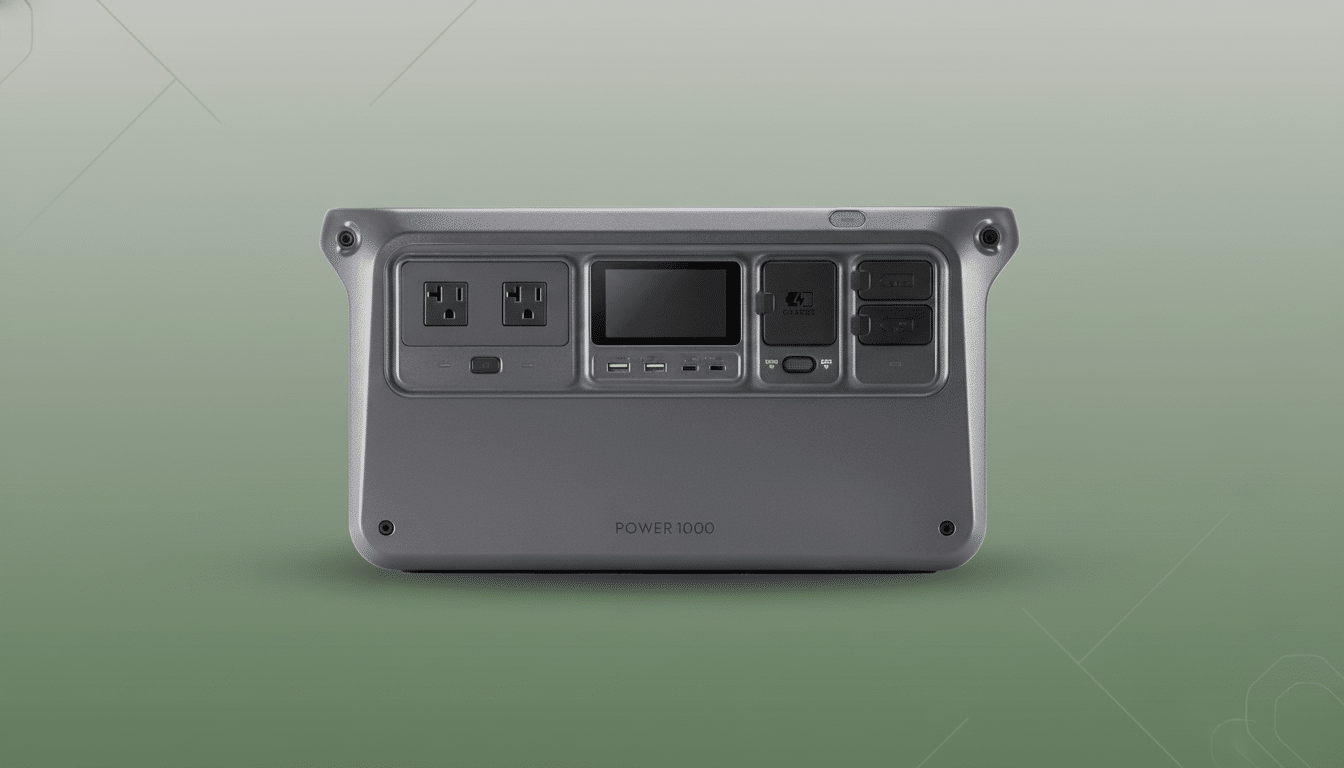
Rough runtime numbers: a 60W laptop should be good for 12–14 hours, a 10W Wi‑Fi router should run for several days, and a ~40W CPAP might last 20 hours or longer (normal inverter efficiency losses apply). You might get 5–6 hours with a TV and streaming box that consumes 150W. For field shooting, those high-wattage AC and USB‑C ports (and quiet fans) mean it’s an excellent base for LED panels, chargers, and camera rigs.
How the DJI Power 1000 compares with similarly sized rivals
The numbers are compelling against incumbents. Eco-friendly 1kWh behemoths, such as the Delta 2, Explorer 1000 Plus and Anker’s 757 series, frequently claim quick AC charging and long battery life but settle for several hundred dollars above $349 when on sale. The DJI’s 70-minute full recharge time is competitive with the speediest chargers, and that 4,000-cycle rating lands it at the top tier for longevity.
Port connectivity, construction quality, and app features also count in daily use. This is a platform built by DJI with creators in mind, and it’s apparent through its quiet operation and fast top-ups that are compatible with on-location workflows. Brand ecosystems vary, but the current equation of price to performance leans strongly in DJI’s favor.
What to know before you buy the DJI Power 1000 unit
Capacity limitations apply: 1,024Wh goes quickly under intense resistive loads like space heaters or kettles. The ceiling of 2,200W would then have a similarly boosting effect: it will kick most appliances in the guts and high-draw items will burrow through its battery within minutes, not hours. Whole-home backup or stretch off-grid excursions might demand modular expansion, or you could decide a bigger unit is better.
If you’re going to work in solar, make sure you find out the panel specs and input limits before buying accessories. And for any crucial medical gear, make sure to check the power requirements of your equipment and pick up a surge protector and the right cabling.
Like all fast-moving deals, the pricing and availability of these items may fluctuate without warning. Find the listing sold by DJI’s authorized Amazon storefront, check return policies, and maybe grab a basic surge-protected power strip for good measure to increase outlet flexibility.
Bottom line on the DJI Power 1000 deal and who should buy
The DJI Power 1000 may offer an unusual combination of advantages—it’s a fair and fast charger with long-life LiFePO4 cells built in, all at a price that beats most name-brand competitors, among whom DJI is one. If you’ve been holding out for a sub-$400 1kWh station from a major car company, this is the rare time in which the math strongly supports finally hitting buy.
