


DJI has mounted a high-stakes pushback in Washington, issuing open letters to senior U.S. officials asking them to conduct an already-promised security review rather than moving ahead with measures that would effectively ban its drones from the American market. The firm casts the move as a quest for due process in a policy battle that may rewrite the nation’s commercial and public safety drone landscape.
What DJI Wants From U.S. Officials Regarding Drone Bans
In its letters, DJI wants federal officials to plan a formal, congressionally mandated audit of its hardware and software — a review the company says it’s offered multiple times to avail itself of. The takeaway: consider tech on its technical merits, not where it came from (and make any decision based on a track record that is transparent).
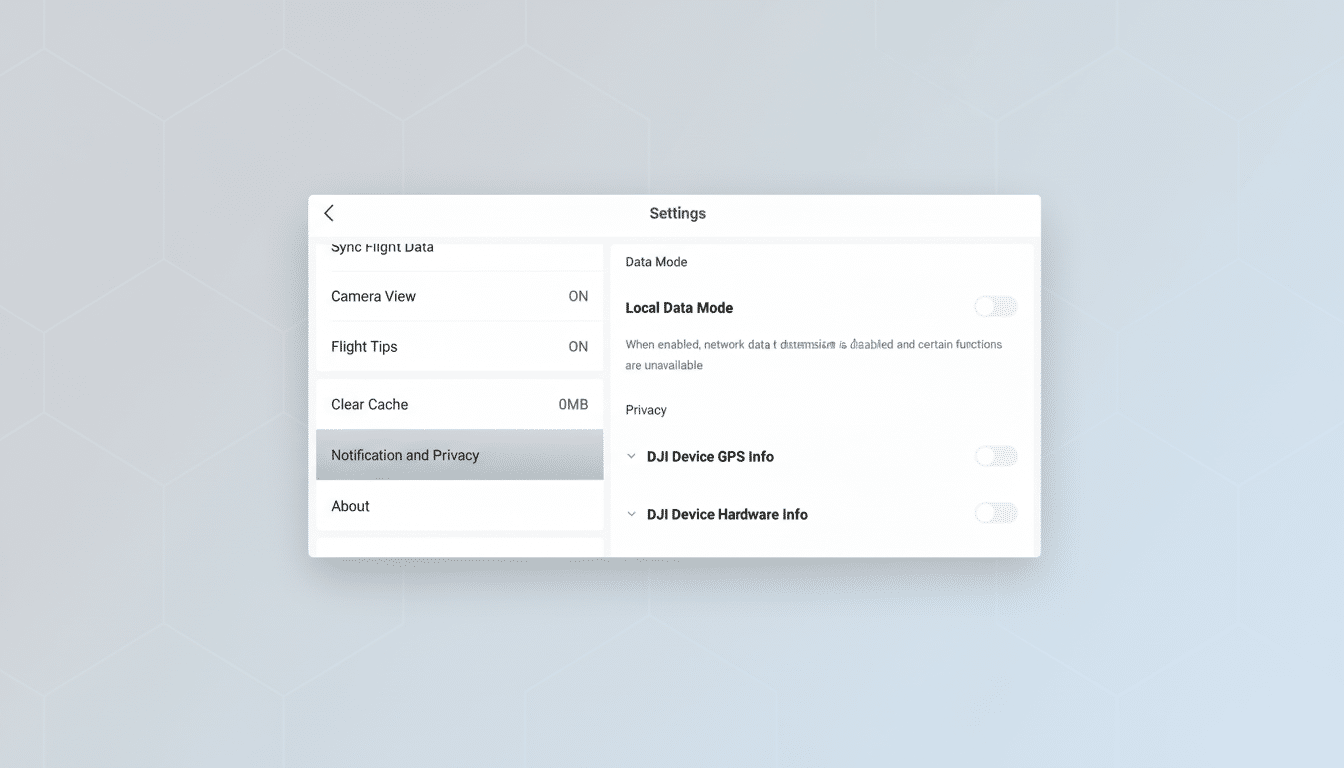
In a statement, Adam Welsh, head of global policy at DJI, notes that the company allows users to store their flight logs and media locally by default unless they opt in to sharing it, deploy “Local Data Mode” to cut off internet connections during missions, and use offline firmware packages. DJI says that these controls, as well as enterprise features like on-premises data management and standardized encryption, address the concerns over data exfiltration behind U.S. scrutiny.
The company notes previous third-party analyses and government evaluations — including testing referenced by the U.S. Department of the Interior — when it says a fresh evaluation would simply confirm what was already discovered, assuming current firmware and supply chain practices were in place.
DJI says it is ready to hand over source code, build logs and test devices that can be put through lab tests under controlled conditions.
What’s at Stake for Drone Users in the U.S.
A prohibition on new sales or software support would reverberate across industries that have come to rely heavily on DJI aircraft. There are over 300,000 FAA-certified remote pilots and more than 800,000 registered UAS in the U.S., and DJI estimates it has upwards of three-quarters of the small UAS market typically used by first responders, surveyors, media companies, utilities and farmers.
Public safety groups like DRONERESPONDERS have recorded thousands of missions — from structure fires to searches for missing persons — that were flown with off-the-shelf quadcopters. Utilities harness micro-drones to inspect transmission lines and assess storm damage; construction companies deploy them to maintain as-built models and quantify earthworks; growers fly them for crop scouting and variable-rate inputs. Turning over fleets at the speed of a network isn’t easy, and agencies say that domestic or non-Chinese alternatives have tended to involve higher acquisition costs, shorter flight times or a smaller ecosystem of accessories so far.
That same language was embraced by the Association for Uncrewed Vehicle Systems International, another industry group that on Thursday called for efforts to “enhance supply chain security” but warned against blanket nationality-based bans that could disrupt critical operations. The industry’s message is uniform: If restrictions move forward, offer a transition plan, funding and clear technical benchmarks.
Security Issues and Data Controls in DJI Drone Systems
U.S. agencies have long had concerns that Chinese legal obligations, along with opaque supply chains, could expose some of the sensitive data collected by drones. Those concerns have formed the basis of proposals to put DJI on federal restricted lists and restrict federal and state purchase of foreign-made systems. The Department of Defense’s Blue UAS program, for instance, channels agencies to vetted platforms that have been deemed to meet certain cybersecurity and component-origin standards.
DJI counters that its consumer and enterprise models are built to function without cloud connectivity, that telemetry details can be saved either locally or on customer-chosen infrastructure, and its enterprise software offers role-based access control. The company says with the latest firmware, it hardens encrypted links, anonymizes optional crash reporting and disables automatic media backups unless users actively turn them on. It also maintains that third-party assessments — including those relied upon by the Department of the Interior — have found configurations that are suitable for sensitive operations in combination with local-only settings.
Trusted researchers say a fair evaluation would test devices against NIST-defined controls, conduct binary and mobile app-level interrogation of unexpected calls/telemetry, and prove out BOM claims for key radio/memory components. That’s the audit DJI says it is demanding — performed by a U.S.-trusted lab, and where data are publishable.
The Policy Landscape Shaping Potential U.S. Drone Bans
There could be many pathways to effective restrictions. The Countering CCP Drones Act aims to put DJI on the FCC’s Covered List, which would prevent authorizations and updates from being granted or updated for the Chinese company’s radio equipment in America. Adding a further layer is that federal procurement rules and state grant policies already discourage or bar agencies from buying some foreign-made drones. The American Security Drone Act, introduced in the U.S. Congress, offers more sweeping federal-purchasing limits and calls for domestic production.
If we go the FCC path, DJI’s consumer footprint could quickly be trimmed overnight and not just in government sales. That’s why the company is advocating for a time-bounded evaluation period and an interim solution — like a U.S.-based software repository, attested firmware, and verifiable secure configurations — that would enable continued support for current owners while it will be up to policymakers to weigh the evidence.
What to Watch Next in the DJI Drone Policy Debate
Three indicators will shape where this battle goes next:
- Whether and when agencies formally respond to DJI’s audit request, and identify a testing authority.
- If the FCC Covered List process progresses with the addition of DJI to the list.
- Whether Congress links any restrictions with a timeline for funding and clear technical standards that prevent stranding public safety and infrastructure operators.
For the time being, DJI’s letters escalate the stakes. The company is betting that a transparent, technical review, rather than a one-size-fits-all classification, can help keep its drones flying in American skies. The result will be a precedent for how the U.S. determines proper security risk evaluation for foreign-made robotics standing at the border of critical infrastructure.
