


Discord is tightening age controls across its platform, introducing a teen-by-default experience that will treat any account as underage unless the company is confident the user is an adult. If YouTube’s recent push for stricter age verification left you stuck behind prompts and blocked content, expect a similar dynamic here — only this time, it will reach deep into servers, channels, and community features.
What Is Changing On Discord With Teen-by-Default Mode
By default, accounts flagged as not definitively adult will face tighter guardrails. Age-restricted servers and channels will be off-limits, sensitive media will be blurred, and speaking in Stage channels will be disabled. Direct messages from unknown users will be diverted into a separate inbox, giving teens an extra buffer from unsolicited pings. Discord says the transition will roll out globally in the coming weeks and most people who don’t interact with adult-only spaces may barely notice a change.
- What Is Changing On Discord With Teen-by-Default Mode
- How The New Age Checks Work On Discord And What They Mean For Users
- Why Platforms Are Tightening Age Gates Across Regions
- Impact On Servers And Communities Under New Defaults
- Privacy Promises And Pushback From Digital Rights Groups
- What Users And Moderators Should Do Now To Prepare

For those who do, the choice will be stark: verify you’re an adult or accept a more limited experience. That mirrors what many users encountered on YouTube when the video giant stepped up age checks, leading some adults to verify and others to walk away rather than submit ID or a face scan.
How The New Age Checks Work On Discord And What They Mean For Users
Discord says users can clear the adult threshold in two primary ways: a video selfie that runs through facial age estimation, or an ID-based check handled by a third-party verification partner. The company frames the system as privacy-conscious — selfie processing is said to happen on-device, verification documents are deleted quickly by the vendor, and your age status isn’t shown to other users.
Not everyone will be asked to verify. In some cases, Discord will rely on internal age-inference signals to determine whether an account should remain in the teen-by-default bucket. That may reduce friction, but it also raises the stakes for false positives that could needlessly lock out adults or false negatives that miss underage users — a known trade-off across the industry.
Why Platforms Are Tightening Age Gates Across Regions
The shift isn’t happening in a vacuum. Policymakers worldwide are pressing platforms to harden protections for younger users. In the UK, the Information Commissioner’s Office enforces the Children’s Code, which pushes services toward high-privacy defaults for minors. Australia’s eSafety Commissioner has set firm expectations around age assurance, and in the EU, the Digital Services Act demands robust risk mitigation from larger platforms, including around minors’ safety. In the US, long-standing COPPA rules and growing state-level laws add more pressure to show due diligence.
Age estimation itself has matured quickly. Vendors in this space publicly report teen-focused accuracy that often lands within roughly a year or two of actual age, depending on conditions and demographics, and many submit to independent audits. But even small error margins can be consequential at legal thresholds like 13 or 18, which is why platforms pair automated estimation with ID checks as a backstop.
Impact On Servers And Communities Under New Defaults
Discord’s community-first design means these changes will be felt at the server level, not just in personal feeds. Moderators who run adult-only channels should expect more users to show up restricted until they verify, potentially shrinking participation in sensitive-topic discussions, NSFW art spaces, or servers dedicated to mature games. Tools like Stage channels — popular for live panels and Q&As — may see fewer voices until users complete checks.
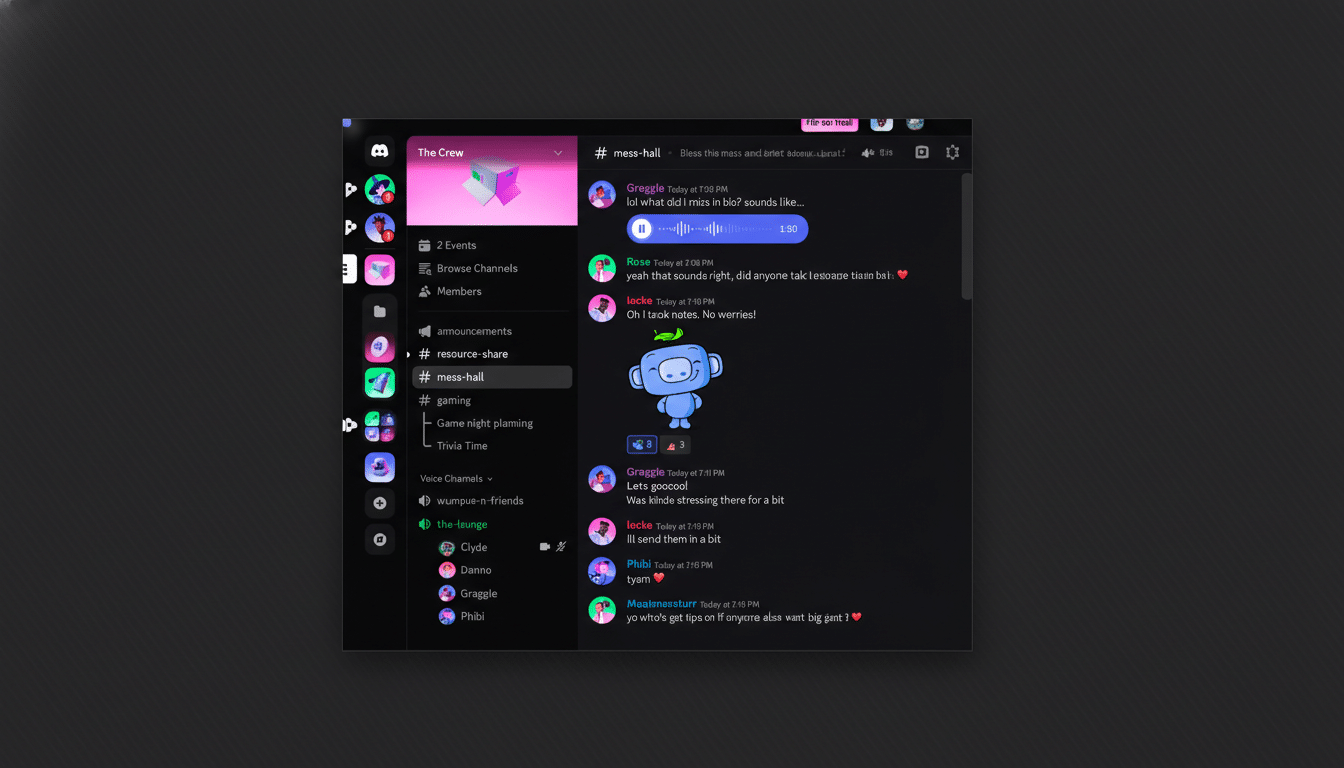
On the flip side, default restrictions could reduce exposure to harassment and explicit content for younger teens who hop between communities. Blurred media and filtered DMs mirror safety steps already embraced by messaging apps and social platforms, offering a baseline of friction that can prevent accidental or unwanted contact.
Privacy Promises And Pushback From Digital Rights Groups
Even with privacy-first messaging, some adults will bristle at face scans or ID uploads. Digital rights groups, including the Electronic Frontier Foundation, have long warned that age verification can expand data collection and create new targets for breaches or misuse. Discord’s assurances — on-device selfie processing, quick deletion of documents, and minimal visibility of verification status — aim to preempt those concerns, but trust will hinge on technical execution and transparency reporting.
Discord’s scale raises the stakes. The service counts well over 150 million monthly active users globally, spanning gaming, education, fandoms, and professional communities. Even a small share encountering friction could translate into millions of verification prompts, a test not only of user patience but also of vendor capacity and false-reject rates.
What Users And Moderators Should Do Now To Prepare
Users who frequent age-restricted spaces should be prepared for a prompt and decide in advance whether they’re comfortable with a video selfie or ID verification. Keep an eye on account notifications and server rules, as admins may update guidelines to reflect the new defaults.
Moderators should audit channel labels, NSFW tags, and onboarding flows before the rollout widens. Clear signage about verification requirements, plus pinned guidance on where to find age-check prompts, can reduce confusion. Communities that host live events may want backup speakers or alternate formats while regulars complete verification.
The bottom line: age assurance is becoming table stakes for large platforms. If YouTube’s shift was the warning shot, Discord’s teen-by-default model confirms the new normal — a safer baseline for teens, at the cost of extra friction for adults who want full access without showing their age.
