


I buckled into Dephy’s new Sidekick, and felt my heels gently pop upward at each step — a soft tailwind from beneath. After a few more steps, the system had figured out my gait and was now kicking in timed boosts at toe-off, magically turning plain walking into something that felt almost unfathomable. At a price of $4,500 and with the approachable silhouette of a pair of pants, this is one of the first robotic exoskeletons you can buy and use in everyday life.
The Sidekick focuses on the foot, the ankle — that unsung engine of forward motion — rather than the hips or knees. That design choice matters, because most of the “go” in your step is danced out by the calf and Achilles tendon during push-off, where a well-timed assist makes for palpable payoff without needing a thick frame.
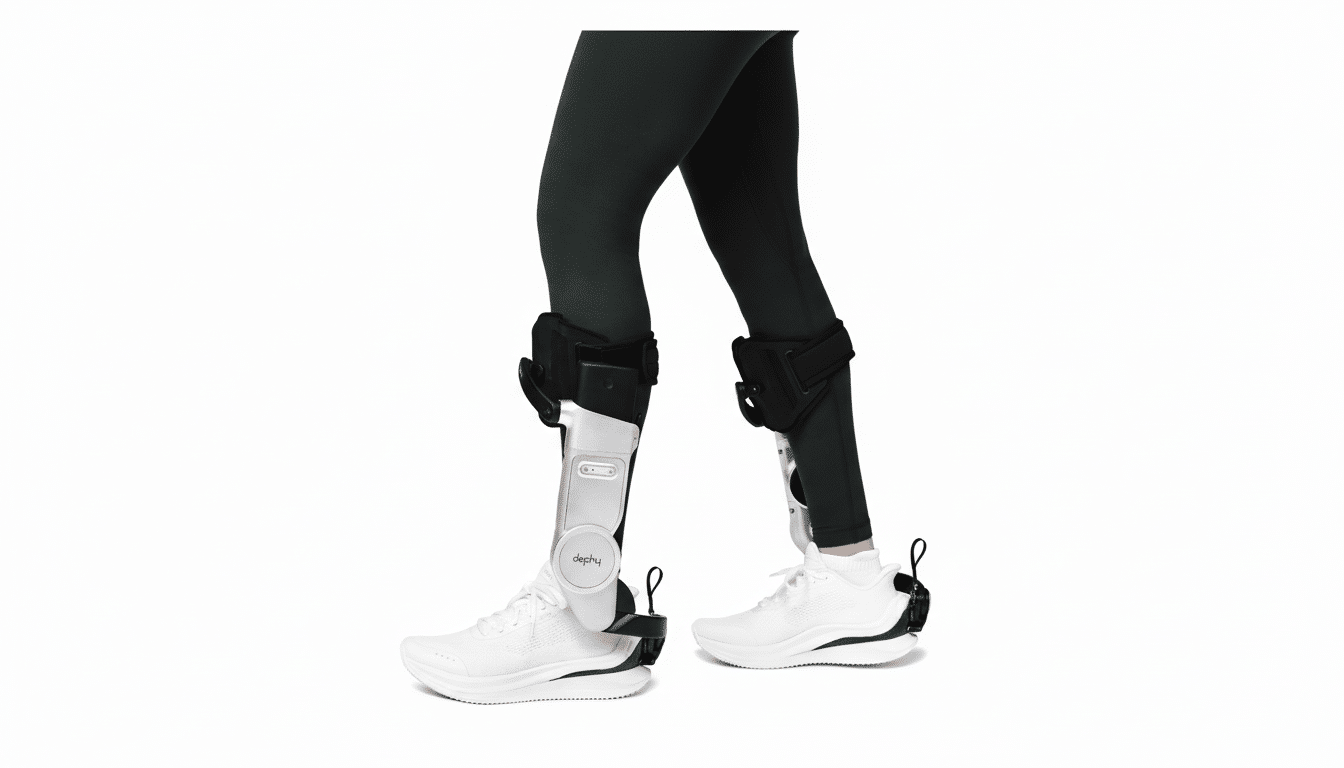
How the Sidekick Is Giving Walkers a Calf Boost
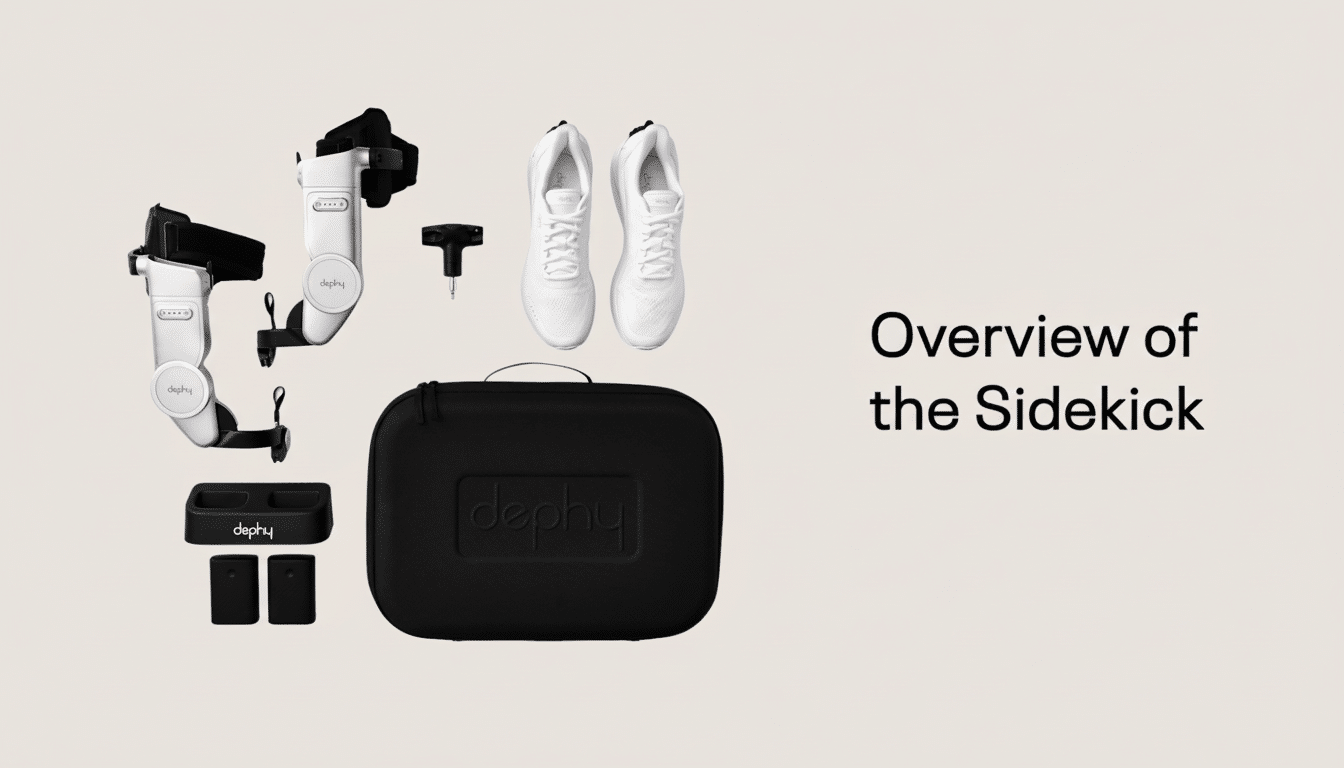
Sidekick combines its own shoe (with a carbon-fiber plate under the heel) with a small, battery-powered module that you strap to your calf. Inside are a brushless motor, an assembly of Inertial Measurement Unit sensors, and an onboard controller that maps your stride in real time. There isn’t a hip harness or knee brace — just a neat little package below the knee that draws far less attention than most exoskeletons.
Power levels can be raised and lowered, similar to an e-bike’s assist modes. Begin in low to feel the timing — support comes around late stance as you load the forefoot — and dial up if you want a little more spring. It’s not meant to help you rise from a chair; it was designed to make walking feel less heavy and slow.
On-Foot Experience and the Learning Curve Explained
The next dozen steps are all analysis as Sidekick deciphers your cadence, footstrike, and the millisecond at which you push off. I felt a subtle, underwhelming nudge from the assist that literally cracked me up. After 15–20 minutes of laps on convention center floors, I noticed how much fresher than I’m used to my calves felt at that pace.
There’s a small learning curve. I did notice a slight wobble when I came to a stop, on a moderate assistance setting; the system lifted a heel once during an abrupt stop. Bracing for sudden stops proved to be the solution, and regular walking was perfectly natural. The device on my leg didn’t feel weighty, and because it is worn at your calf, it didn’t broadcast “robot suit” to everyone around you.
What the Science Says About Ankle Exoskeletons
Academic numbers are in line with what Sidekick is trying to do. Ankle exoskeleton assistance reduced the metabolic cost of walking by approximately 17% and increased preferred walking speed by about 9% in lab studies, said researchers from Stanford University. Harvard’s Biodesign Lab has consistently demonstrated single-digit to low-double-digit energy savings with soft exosuits. Consumer results do vary according to terrain, footwear, and user fitness (and may be hard to quantify when we’re not talking about national parks), but the evidence speaks for itself: timed right, that ankle assistance can make walking quite a bit easier.
Dephy’s method — onboard sensing with personalized, real-time control — aligns with those findings. Rather than a fixed pattern, this Sidekick adjusts itself at every step so the assist torque can be aligned with your own push-off to lower the level of muscular effort.
Price Context and the Emerging Competition Landscape
Selling for $4,500 ($155 per month), Sidekick is an order of magnitude less expensive than conventional medical exoskeletons. Systems from firms such as ReWalk and Ekso Bionics have been cited in the range of $70,000–$85,000 and are designed for clinical rehabilitation. Dephy is positioning to provide healthy mobility augmentation — think long airport treks, campus commutes, or city strolls — as opposed to replacing therapy-grade devices.
There are adjacent players: Research-heavy exosystems typically turn to lab tethers or developer kits, and some consumer attempts concentrate on knees for skiing or hiking support. It’s also rare that there’s a lightweight product centered around the ankle that you can just go buy off the shelf, which gives Sidekick a first-mover advantage in an emerging “everyday exo” category.
Who It’s For and What You Can Expect in Daily Use
If you walk a good amount — urban commuters, campus employees, power walkers, theme-park families — the results are more immediate: fresher calves, an easier step, and less distance fatigue. Older individuals who still lead an active lifestyle might like the support, although Sidekick is not a medical device and does not purport to treat mobility disorders.
It works on flat terrain and gentle gradients. Around crowded areas or when decelerating, begin in lower assist as you synchronize with one another. As with any wearable gadget, you need good footwear fit, and a little orientation can make a world of difference in comfort and safety.
Early Verdict: How the Sidekick Feels in Real Use
Sidekick does what Dephy says it will: It adds smart, ankle-level power where walking needs it most and with a subtlety that allows wearers to go about their daily life.
That experience sits between a supportive shoe and this small, well-timed tug forward — one that feels relatively small on paper but significant over miles.
If e-bikes made assisted biking normal, Sidekick makes a good argument for the idea of assisted walking. It will not make you bionic, but it might change how far you are willing to walk — and how good your legs feel when you get there.
