


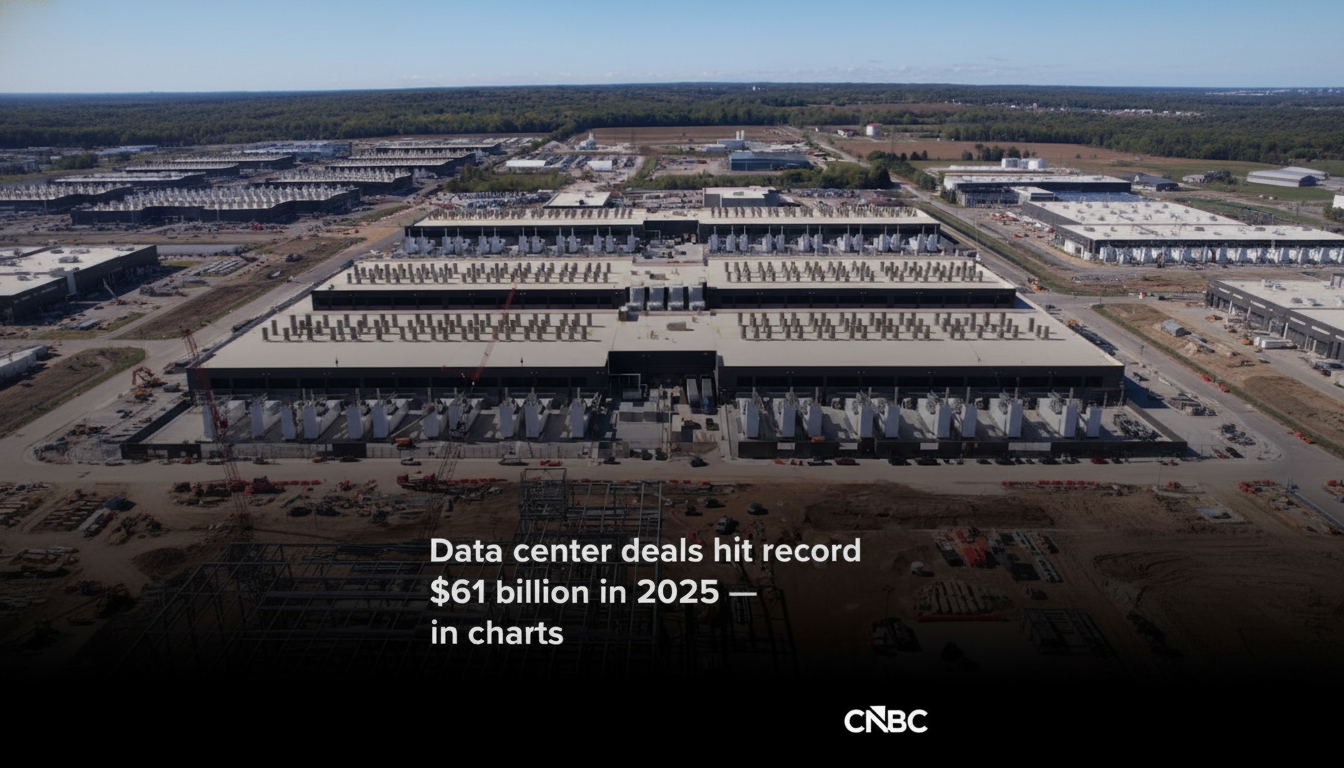
Global data center transactions reached $61 billion in the latest yearly total market value, new analysis from S&P Global shows, highlighting how the race to power generative AI continues collecting capital in servers, substations, and land. It’s another record for the sector, and further evidence that concerns around an AI slowdown haven’t dampened investor enthusiasm.
AI Infrastructure Demand Drives Record Deals
S&P Global credits the increase to hyperscale buildouts intended to service compute-hungry training and inference workloads. Cloud providers and AI platform operators are locking up multi-year capacity, usually pre-leasing entire campuses prior to breaking ground. Sorry, there are no AI applications in the world that prove killer at scale. However, industry consultants speaking to CNBC noted that demand for these kinds of AI workloads is robust in the data center: GPU clusters, high-density racks, and specialized networking still fetch premium prices.
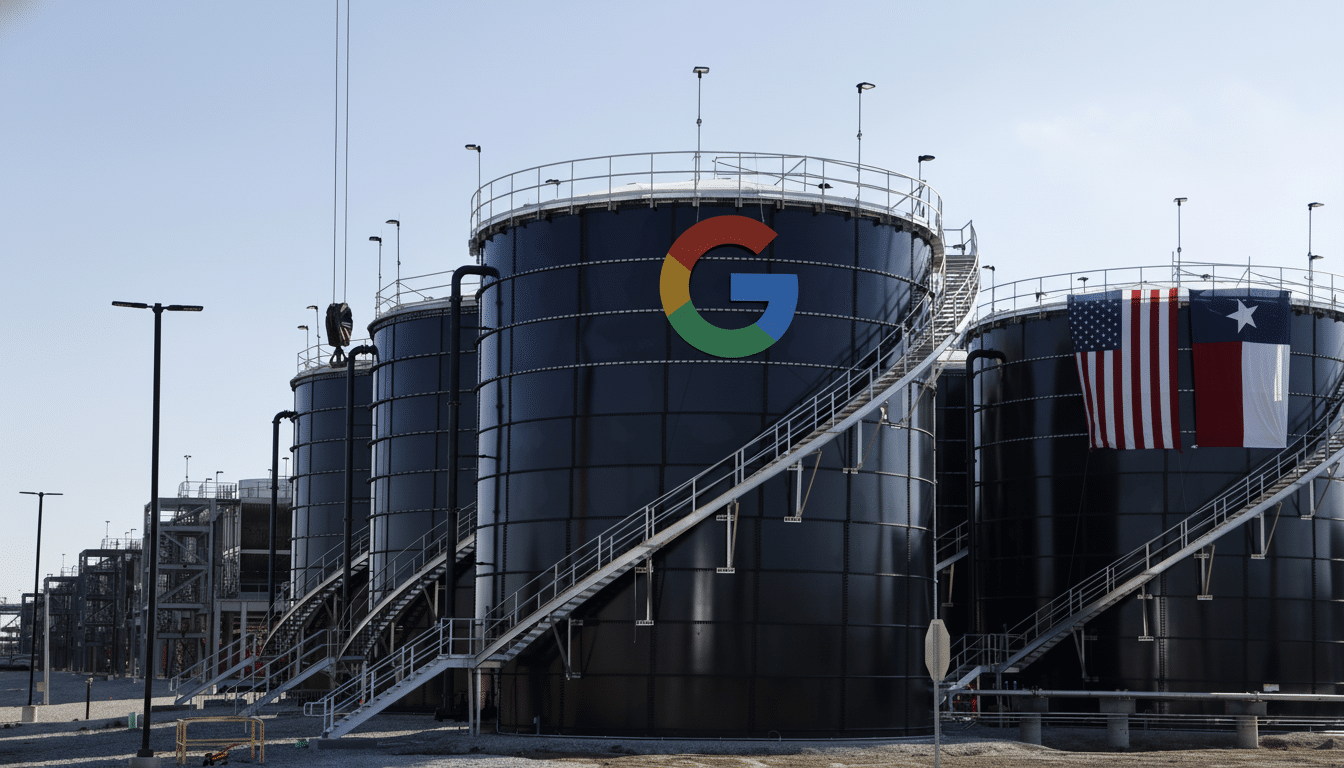
Markets with available power and fiber—such as Northern Virginia’s “Data Center Alley,” Phoenix, Dallas, or parts of Ohio—still attract mega-campuses, while Europe’s main hubs like Frankfurt and Dublin are limited by permitting constraints and grid capacity. Developers are also branching out in so-called second-tier metros where utilities can act more quickly, and combining sites with long-term renewable power contracts to help businesses meet corporate sustainability goals.
Private Equity Drives the Financing Wave
Behind the headline number, a majority of financing is private equity and structured debt, S&P Global notes. That’s partly because of the sheer capital intensity of modern campuses — often billions per site — and rising interest rates, making buyers with cash and flexible balance sheets more attractive. Big infrastructure funds and alternative asset managers have swooped down through platform acquisitions, joint ventures, and sale-leasebacks, exchanging stable, contracted cash flows for more leverage.
The model is not foolproof. These debt-laden structures rely on fast delivery schedules, consistent lease-up, and cheap power. Running behind schedule for utility interconnections, the supply of GPUs, or a halt in AI spending could reduce returns. Yet with committed anchors in place and 10- to 20-year power and land strategies, many operators argue that, at their core, the fundamentals look more like those of infrastructure than cyclical tech.
Power and Land Limits Define Development Strategy
Capacity is as much a question of electricity — no longer just real estate. An S&P Global outlook predicted that data center power draw — currently on pace to grow by around 22% over the planning period, and potentially triple by decade’s end — accounted for roughly 2% of global electricity demand last year. That is in line with trends monitored by the International Energy Agency and Uptime Institute that indicate longer interconnection queues, transformer constraints, and competition with industrial loads.
Operators are adapting with multi-pronged strategies:
- Secure a renewable PPA several years ahead of time
- Design for liquid cooling to support high-density AI nodes
- Co-locate facilities next to generation
- Investigate on-site resources like battery storage or fuel cells to work around grid constraints
In some metros, utilities have made queuing reforms or phased caps a condition for interconnection, which has forced developers to divide campuses between service territories in order to spread risk.
Community Pushback and the Policy Response
As investors rush ahead, local opposition is gaining strength. A coalition of more than 300 environmental and civic groups recently asked governors and state regulators to pause approvals of large-scale data centers until they could demand better assessments of water use, emissions, and grid impacts. In some cases, community challenges have delayed or altered projects in locales like Virginia and Wisconsin, where residents and advocacy organizations have voiced concerns about noise, diesel backup generators, and tax incentives.
Policymakers are pulling in divergent directions. Some state and federal officials are trying to expedite permits for AI infrastructure; others are adding guardrails on siting, water withdrawals, and energy acquisition. European regulators, meanwhile, are raising the bar for efficiency reporting and heat-reuse requirements that might also affect design decisions worldwide.
Investor and Operator Outlook for Data Centers
What follows will depend on three variables: the availability of power, the supply of chips, and the cost of capital. If utilities can add capacity quickly enough, and if buyers of AI maintain multi-year commitments, today’s pipeline may translate into reliable cash flows linked to inflation. If not, the dollars will probably increasingly flow to markets equipped with faster interconnects and modular design, as well as hybrid models that offer wholesale, colocation, and build-to-suit capabilities.
For now, the number that counts is $61 billion. It’s a portrait of an industry in full buildout mode, with capital pursuing compute as AI moves from pilots to production. As the researchers and market analysts of S&P Global point out to CNBC and other outlets, the bottlenecks are real — but so is the demand.
