


Federal judges cleared the way for construction to resume on several East Coast offshore wind projects, handing the Trump administration a notable legal setback and delivering momentum to a grid increasingly hungry for large-scale clean power.
The Department of the Interior had abruptly ordered a 90-day halt to five projects totaling roughly 6 gigawatts, citing national security concerns tied to radar interference. Court orders now allow three developments to restart: Revolution Wind off Rhode Island, Empire Wind off New York, and Coastal Virginia Offshore Wind off Virginia.
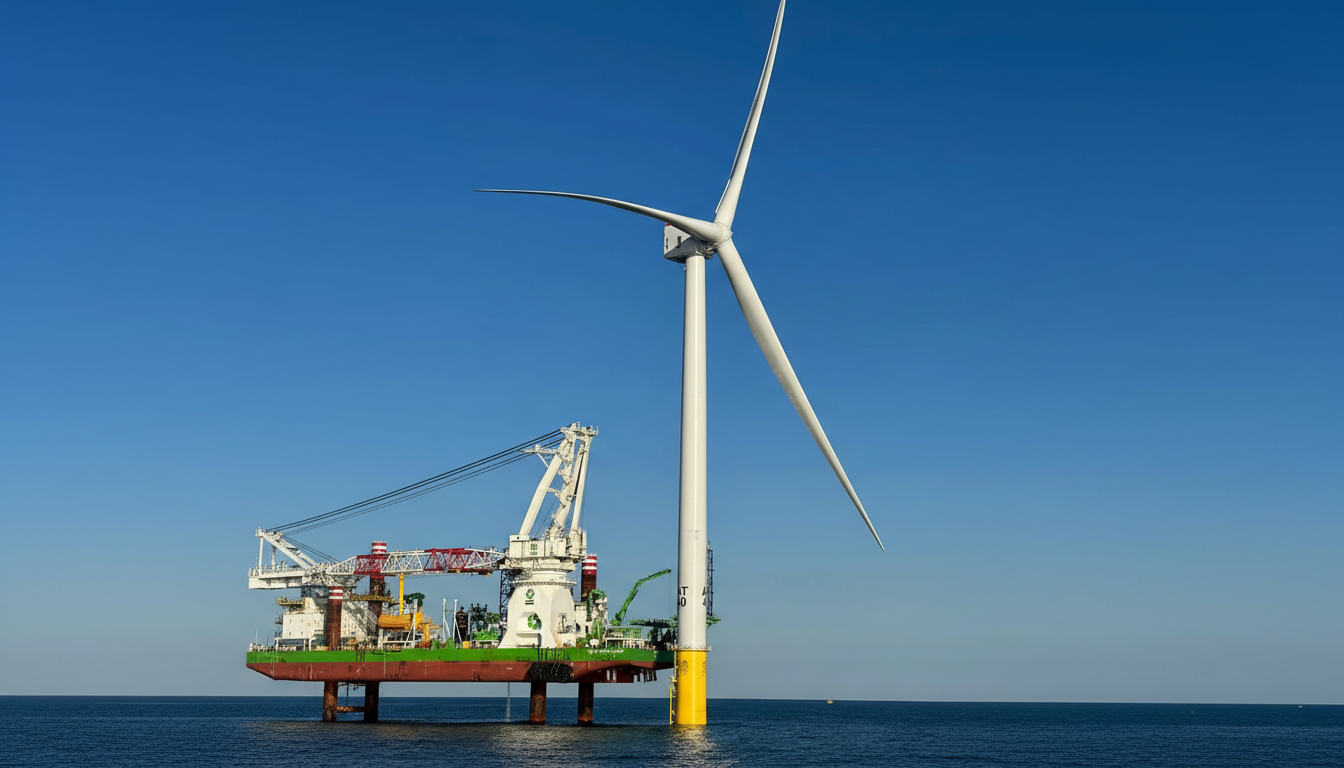
In lawsuits filed by the developers, judges in Washington, D.C., and Virginia questioned the evidence and scope of the pause. One judge noted that the government’s filings did not substantively grapple with claims that the order was arbitrary and capricious, according to Associated Press reporting. Another judge pressed officials on why construction should stop if the asserted risks primarily relate to operations.
Two projects remain sidelined as their cases proceed: Sunrise Wind and Vineyard Wind 1. Rulings in those matters will determine whether the full slate of near-term Atlantic builds can move forward without further interruption.
Why These Rulings Matter For Projects And Prices
Restarting work straightens out a disrupted supply chain and preserves thousands of union construction and port jobs from New Bedford to Hampton Roads. Each month of delay adds cost to vessels, monopile deliveries, grid interconnection work, and financing. Avoided downtime keeps levelized costs closer to earlier bids, a critical factor for ratepayers.
The East Coast’s offshore wind resource sits near dense urban load, meaning fewer long-distance transmission losses and congestion charges. The Department of Energy’s 2024 assessment suggests the Atlantic could host up to 110 gigawatts by mid-century. With modern North Atlantic capacity factors commonly above 45%, that is a material cushion against peak demand and volatile gas prices in ISO-New England, New York ISO, and PJM territory.
NREL’s technology baseline indicates that once supply chain inflation moderates and interconnection is streamlined, new offshore wind can compete with new-build thermal generation on a risk-adjusted basis—especially when credits under current federal incentives are captured. In practice, more diversified generation lowers clearing prices in capacity markets and reduces the need for expensive peaking units.
Parsing The National Security Argument Around Radar
Wind turbines can create clutter on certain radar systems used for aviation, weather, and defense. But the challenge is not novel, and it is technically manageable. The Department of Defense’s wind-radar working groups, the Department of Energy, NOAA, and MIT Lincoln Laboratory have documented mitigation strategies including improved signal processing, gap-filler radars, targeted siting, and operational coordination protocols.

European operators and defense ministries have implemented similar fixes in the North Sea, pairing hardware upgrades with software filters and careful turbine layouts. That experience matters: judges signaled that blanket construction stops are hard to justify when mitigation plans and phased commissioning can address operational risks more precisely than halting pile driving and cable laying.
Grid Reliability And Data Center Demand Stand To Benefit
Offshore wind interconnects close to major load pockets—New York City, Long Island, Boston, and the Mid-Atlantic corridor—where capacity is scarce and rights-of-way for new lines are limited. Injecting clean power at coastal substations can ease bottlenecks, lower congestion costs, and support voltage stability in areas that already rely heavily on aging thermal assets.
That locational value is rising as data center buildouts accelerate from Northern Virginia through New Jersey and New York. Grid planners at PJM and state energy offices have warned that demand growth is outpacing historical norms. Corporate buyers want 24/7 clean energy portfolios; fixed-output offshore wind combined with storage and demand flexibility can anchor those procurement strategies.
Transmission policy is catching up. FERC’s interconnection reforms aim to unclog backlogs, while states are advancing shared, “meshed” offshore grid concepts to cut duplication and improve reliability. New Jersey’s collaboration with PJM on coordinated onshore upgrades and New York’s offshore transmission planning are early examples of how to integrate multi-gigawatt offshore portfolios without overbuilding onshore lines.
What To Watch Next In The Offshore Wind Court Cases
The remaining cases for Sunrise Wind and Vineyard Wind 1 will test whether courts see the Interior order as defensible across different fact patterns. A split outcome is possible, but early rulings suggest agencies will need tighter, evidence-based justifications and narrower remedies if they want to intervene on security grounds.
Developers say they will continue coordinating with DOD, the Coast Guard, and NOAA on radar mitigation, maritime safety, and fisheries engagement. States are pressing ahead with solicitations to keep the supply chain warm, and BOEM’s leasing pipeline remains active. If the legal tailwinds hold, the near-term buildout can restore confidence after a choppy period and provide the grid with new, large-scale capacity where it is needed most.
The broader prize looms beyond the current docket. DOE estimates offshore wind could ultimately deliver around 13,500 terawatt-hours of electricity annually across U.S. waters—several times current consumption. The courts’ message this week was simple: proceed with care, not paralysis. For the grid, that’s welcome news.
