


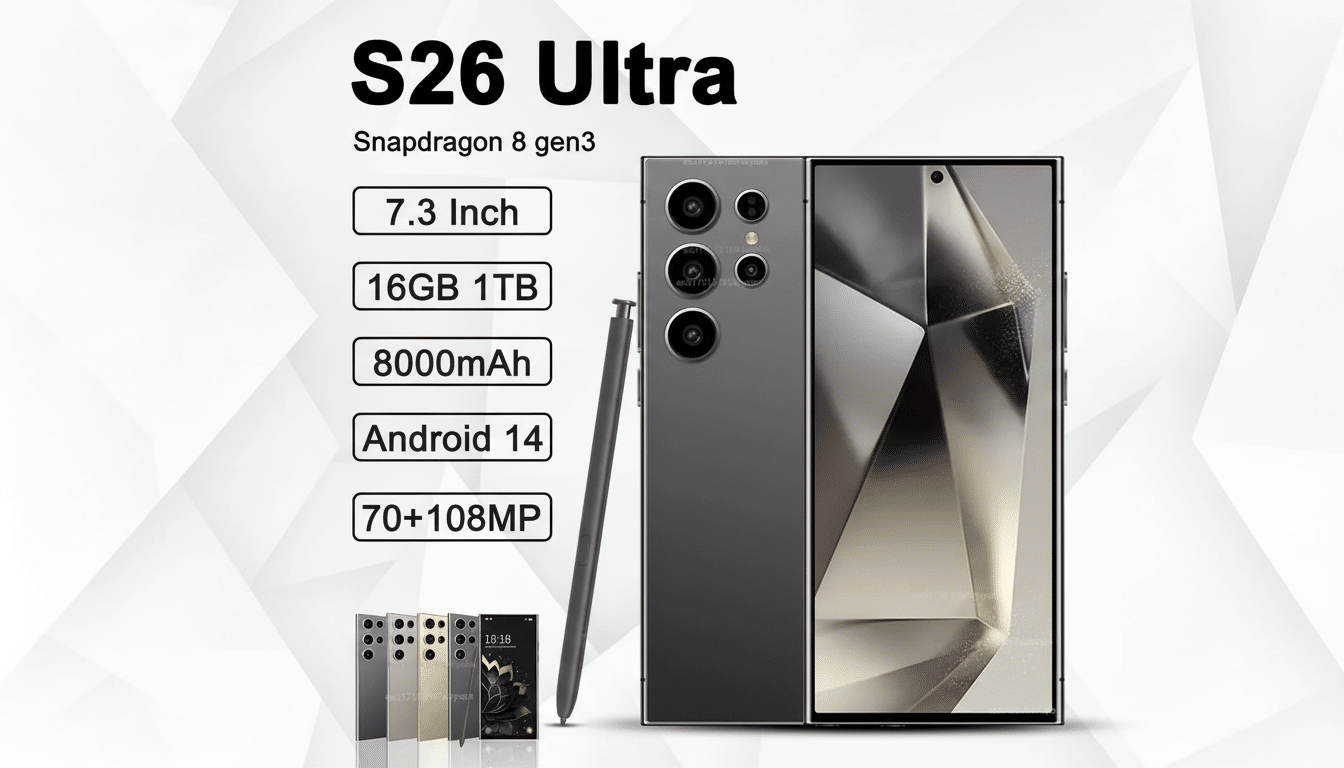
Samsung’s next Ultra flagship just passed its most important test, and the paperwork reveals the big question. FCC certification proves the Galaxy S26 Ultra will run on Qualcomm’s Snapdragon 8 Elite Gen 5 in all regions, indicating that a no-compromise battle for performance is set to play out for power users and mobile gamers.
FCC filing confirms Snapdragon for Galaxy S26 Ultra
The device is listed in the regulator’s database at different model numbers, such as SM-S948U and SM-S948U1 for the US and SM-S948B and SM-S948B/DS for international markets. The codename SM8850 is also shared in these filings as a reference to the Snapdragon 8 Gen 5, aka the Snapdragon 8 Elite Gen 5. It suggests Samsung is sticking with Qualcomm’s highest-end silicon for the Ultra, in all regions.

Documentation referenced by The Tech Outlook also claims that the platform will include support for Qualcomm’s Smart Transmit Plus, an uplink improvement associated with the X85 modem within the Elite Gen 5 platform.
It’s another breadcrumb leading directly to Qualcomm. History indicates Samsung might use an overclocked “For Galaxy” tuning of the chip — as has been the case with recent Ultras — to eke out an extra bit of headroom for CPU and GPU clocks without fundamentally altering the underlying silicon.
Why this confirmation matters for performance and gaming
There are real-world payoffs from silicon uniformity. When the same Snapdragon powers every Ultra, Samsung and partner developers can refine thermals, GPU drivers and camera pipelines once and ship the same results worldwide. That generally translates to more consistent frame rates in demanding titles, more predictable sustained performance and fewer regional quirks in benchmarks or battery life.
The FCC filing also reiterates triple-band Wi‑Fi 7, 5G, NFC and UWB. Wi‑Fi 7’s multi-link operation can combine bands across 2.4, 5 and 6 GHz for harder‑to‑interfere‑with throughput — handy if you’re into cloud gaming with high bitrates as well as transferring large RAW image files. Smart Transmit Plus optimally shifts uplink traffic between Wi‑Fi and cellular antennas for more reliable video uploads or hotspot tethering when you are on the move. UWB allows for accurate device finding and digital car keys, suggesting Samsung is further investing in spatial connectivity.
On-device AI could be another beneficiary. Though Qualcomm hasn’t publicly shared Elite Gen 5’s full metrics in this scenario, the company’s previous‑gen flagship has delivered double‑digit improvements to CPU/GPU efficiency alongside considerable NPU acceleration for generative workloads. Look for speedier text‑to‑image renders, enhanced voice studio processing and faster semantic photo edits — without as heavy a cloud reliance.
One chipset strategy and the lingering Exynos question
Prelaunch gossip indicated that Samsung could again split chipsets by region, resurrecting its in‑house Exynos for some variants. The FCC evidence ends that for the Ultra. This follows the playbook of recent Ultra generations, which have gone all‑in on Snapdragon for the top model, and which has been received very positively by fans who love that predictable performance and broad game optimization worldwide.
That doesn’t mean there’s no Exynos on tap. The Exynos 2600 has been teased by Samsung, and industry expectations suggest that chip will show up in the regular Galaxy S26 and S26 Plus in some regions. If so, then the portfolio would reflect this: Ultra targets maximum uniform performance, while lower tiers bring the features/price/availability matrix into balance.
Design hints and color clues add useful context
Clues contained in recent One UI code hint toward measured design refinements for the Ultra, while a leaked set of wallpapers has hinted at possible colorways.
None of that changes the headline: with Snapdragon 8 Elite Gen 5 confirmed today, the groundwork is laid for a device that can cope with heavier camera loads, more advanced game effects such as hardware‑accelerated ray tracing, and longer sustained time under load.
Outlook and what regulatory filings suggest next
A release date is still unconfirmed, and things could always change before consumer units start to ship. But signs of regulatory certification are a pretty good indicator of whose silicon will ultimately be used. For people thinking of picking up any of the hypothetical phones, the prospects are clear: the Galaxy S26 Ultra is set to bring top‑tier Snapdragon horsepower globally, alongside modern connectivity and polish that’s available across just one optimized platform.
