


I watched LG’s new home robot CLOid, for clothes and android, pick up a shirt from a basket and put it in the dryer — lightly. A croissant later, it softened onto a tray. The crowd loved it. I did too — until the questions came thick and fast as a load of socks CLOid never got around to folding.
What CLOid Really Did There on the Stage
In a densely choreographed demo, CLOid trundled autonomously, oriented its cameras and manipulated soft objects and food using two articulated hands. It communicated through onboard speakers and responded to verbal commands. It was friendly, stable and precise. It also looked slow. The robot took long beats to “think,” and then carried out tasks with careful, microscopically slow movements — good for safety, less so for breakfast-on-a-deadline.
- What CLOid Really Did There on the Stage
- The promise LG is selling with its connected home
- The AI stack powering CLOid behind the demo show
- How CLOid Stacks Up Against Today’s Home Robots
- Safety, reliability, and real homes for helper robots
- Ecosystem and business model questions for CLOid
- Availability remains murky as development continues
- From the demo floor to your bottom line at home
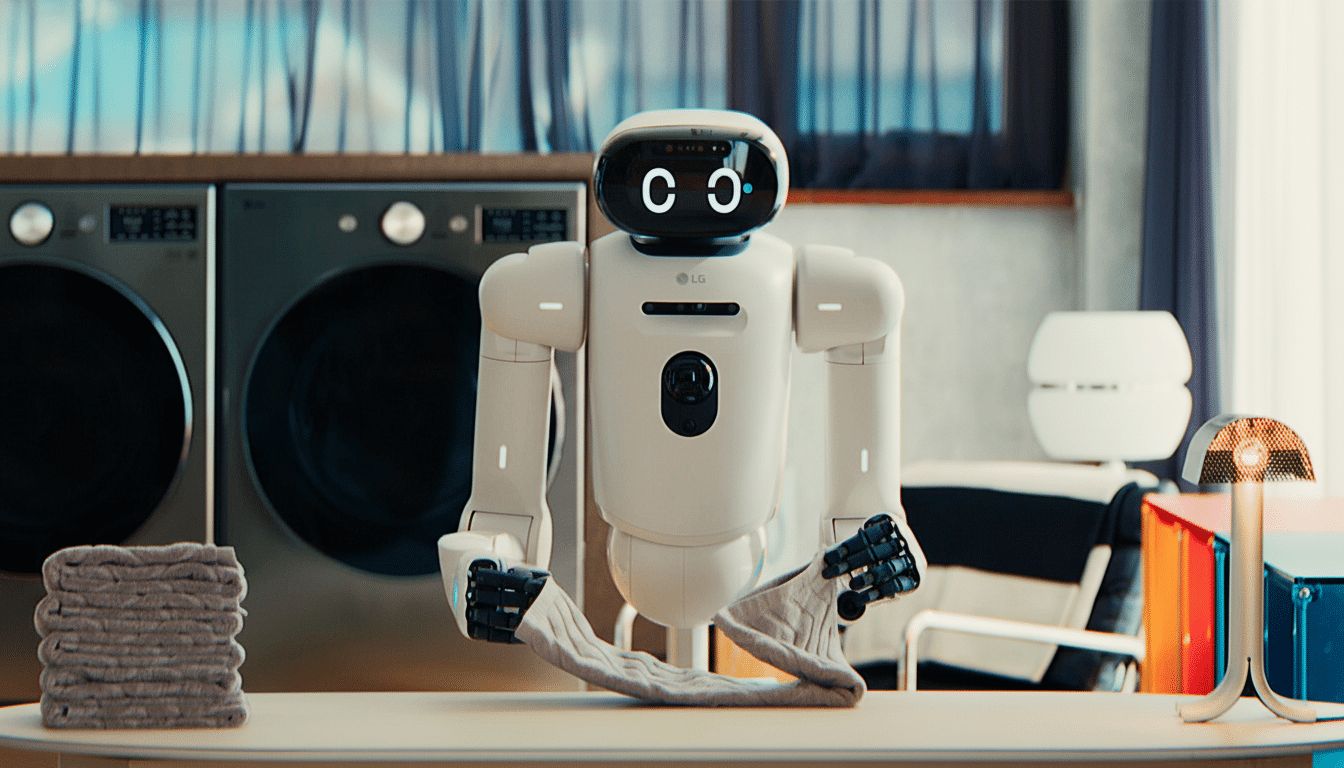
Speed isn’t the only thing that matters in a helper robot; reliability is. But the pace suggested how difficult open-ended home manipulation still is. CLOid’s largest lift today isn’t the shirt, or the pastry — it’s from rehearsed demo to daily life, where nothing stays where the last demo left it.
The promise LG is selling with its connected home
LG positions CLOid as the centerpiece of a “do-it-for-me” home, integrated into ThinQ’s connected appliances ecosystem. The robot sees scenes, thinks of possible courses of action, acts — in theory freeing you from routine chores while your oven, refrigerator and washing machine collaborate. Consider it ambient care, not a one-trick gadget.
That vision appeals to real consumer pain. (During the pandemic, chores have been redefined and put to greater use than ever.) In reasonable times, adults spend hours every week on chores in the household; laundry and meal prep are among those that move toward the top. Even if a robot could make the food for just 20% of that, it would feel transformative. The operative word is reliably.
The AI stack powering CLOid behind the demo show
CLOid uses a vision-language model to transform camera input into a semantically structured scene understanding, and an action model that maps verbal goals to motor commands, according to LG. That’s in line with where the field is headed: systems that unify perception and language to manipulate, including Google’s research into diffusion-based control policies; university work on RT-style; and persuasion.
The challenge is generalization. Houses are a mess, light changes by the hour and new things show up every day. Vision-language policies that ace a lab kitchen can stumble with a wrinkled black T-shirt on dark furniture. On-device processing, network latency, and privacy concerns restrict what can be offloaded to the cloud. A demo indicated very strong scaffolding; the open question is how well CLOid can handle it if you reorganize your pantry or a toddler shifts the laundry basket, mid-task.
How CLOid Stacks Up Against Today’s Home Robots
Consumer robots like Amazon’s Astro and Enabot’s EBO X specialize in patrol, telepresence and reminders — “navigation and cameras without hands.” CLOid’s two arms are a leap from monitoring to manipulation, akin to the difference between telling you that your laundry is done and beginning a load in another machine.
The bar is high. Robotic vacuums have managed to make it by simplifying the work and environment. Both laundry and cooking are multi-step, deformable-object, safety-critical tasks. The International Federation of Robotics has reported steady double-digit growth in domestic service robots, but most of these wins are narrow duties. CLOid aims for breadth, and that’s exciting — and dangerous.
Safety, reliability, and real homes for helper robots
Household manipulation calls for intelligent safety design: compliant joints, force limits, pinch-point avoidance and thermal awareness (when ovens enter the chat). Standards exist, such as ISO 13482 for personal care robots; and appliance certifications from entities like UL are relevant when touching hot cookware. LG did not specify the payload or the grip force, or how efficiently it handles faults; those are going to be vital specifics.
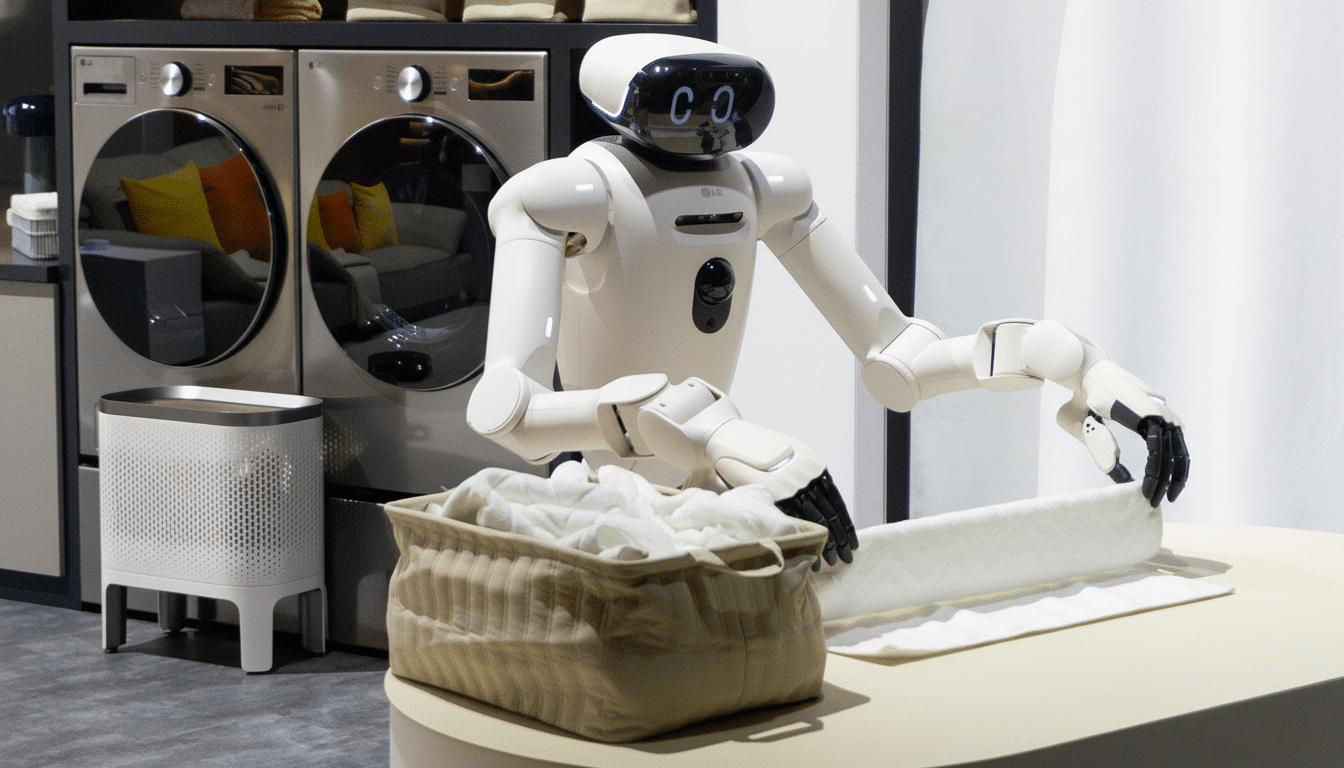
Then there’s reliability. Can CLOid feel damp vs. dry fabric by touch or look for it? Handle slippery glass milk bottles? Work in low light without mistaking shadows for obstacles? How well does it handle pets darting underfoot? Battery life, how often you need to charge, whether or not it can recover from a failure during a run are all real-world considerations.
Privacy deserves equal scrutiny. A mobile camera-rich robot that is not immune to eavesdropping should have local processing as a native priority, explicit data preservation regulation and transparent policy on any cloud inference. The value proposition deteriorates if it ends up with an alarm you can’t fully control in your own home.
Ecosystem and business model questions for CLOid
CLOid’s most pressing role, though, could be as a maestro for LG’s AI appliances — an oven that recognizes what you’re cooking, a fridge that recommends recipes, a washer with its own cycle updates — calling the tune via ThinQ.
Integration can simplify, but it can also lead to lock-in. Adoption will be driven by interoperability with non-LG devices, investment in standards such as Matter and third-party skill development.
Pricing and service are big question marks. If you order the robot as a piece of hardware with a subscription for AI updates and remote diagnostics and repairs, predictability will start to matter more than brute capability. Consumers will measure it against other robots but also by adding a weekly cleaning service or upgrading some appliances. And without an easily understood total cost of ownership, it is difficult to tell the ROI story.
Availability remains murky as development continues
LG positioned CLOid as in development, and its specs might vary. That’s average for ambitious CES reveals, but it does leave timing, regional support and feature completeness up in the air. It’s complex, though, so anticipate cookie-cutter rollouts: slim tasks first, greater autonomy later in the year and close partnerships with compatible kitchens and laundries.
From the demo floor to your bottom line at home
Carefully holding up the shirt and placing the pastry were more than just theatrics; they offered a look at home robotics’ ambition.
The demo was fresh and polished, but also revealed a gulf between a scripted dance and the Saturday morning whirl of laundry, kids and coffee spills. Until CLOid can take tasks from origin to end without stopping — and it gracefully recovers when life’s events don’t go according to plan — it’s a cool prototype, not a competitor for your chore chart.
