


I’ve been getting to know the Clicks Communicator, a petite Android smartphone with a hard QWERTY keyboard built into it, and it took me straight back to the glory days of BlackBerry — minus all of those pesky concessions that ultimately did them in. This isn’t a retro novelty. It’s a single-purpose tool made by people who actually lived and breathed the old keyboard-first phones, and it shows.
A Modern QWERTY Phone Built for Focused Typing
Clicks Technology is co-owned by previously well-known mobile bloggers Michael Fisher (MrMobile) and Kevin Michaluk (CrackBerry.com’s Kevin). Their thesis is straightforward: typing still counts. The unit I played around with was a near-final mockup, not a fully functional sample, but it certainly felt like considered, practical hardware — refreshingly no-nonsense.
- A Modern QWERTY Phone Built for Focused Typing
- The Keyboard Is the Story, With Tactile Precision
- Small Screen, Big Intent for Messaging First
- A World That Throws Today’s Trends Into Reverse
- For Your Two‑Phone Life and Communication Focus
- Hands-On Early Impressions of the Communicator
- Price, Availability, and Outlook for Release
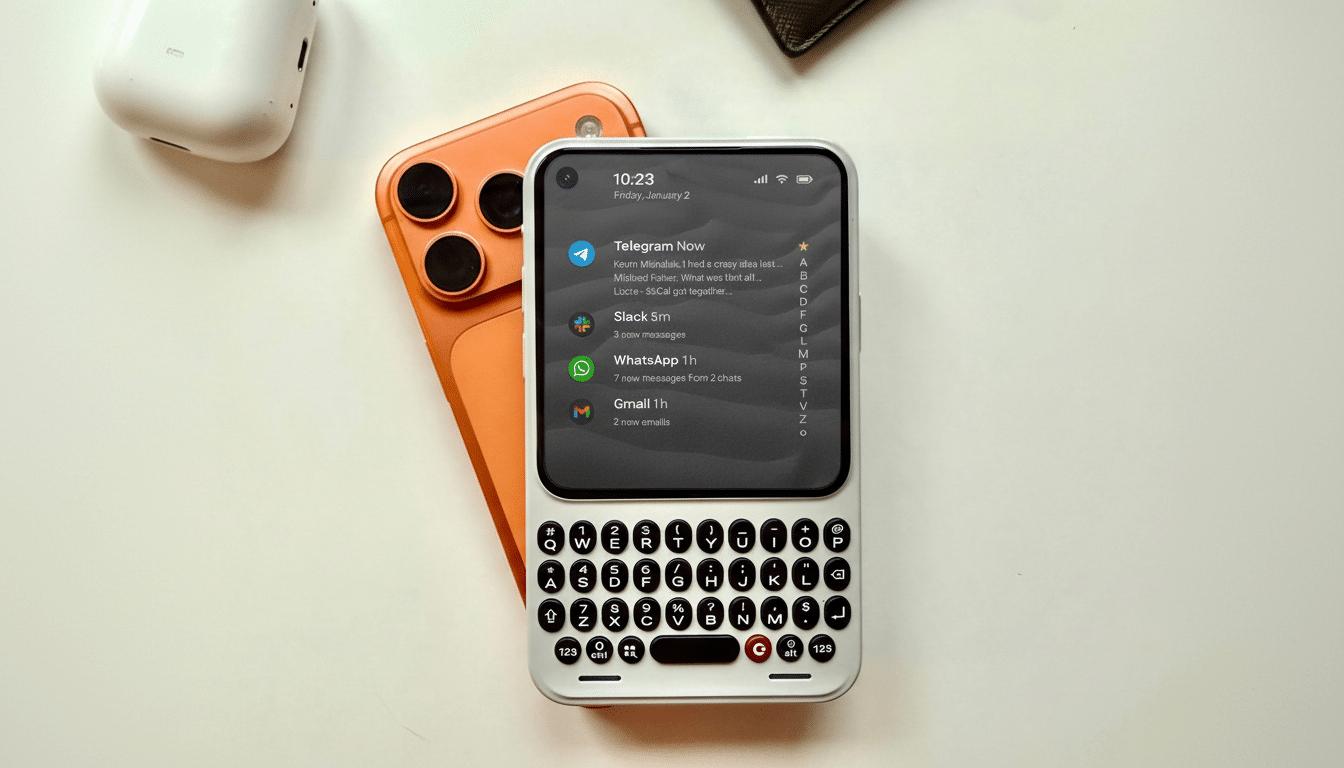
The Keyboard Is the Story, With Tactile Precision
Clicks hired a designer who helped create BlackBerry’s iconic keyboards, and the lineage is obvious. The sculpted keys have distinct ridges, they travel just far enough, and offer an intentional click that imparts just the right resistance to keep you pounding accurately without tiring out your thumbs. The keyboard is capacitive, also — so you can slide a finger across it to scroll up and down lists, or nudge the cursor exactly where you want in your text, a trick once stashed like squirreled-away nuts within the BlackBerry trackpad or touch-supporting keys.
If you’ve ever argued with autocorrect, the muscle memory here is freeing. On newsroom tests over the years, physical keys tend to cut out editing passes for heavy emailers and note-takers even if typing speed may be roughly similar on glass. It is the confidence that there will be another keystroke, and another after that, which affects how you write.
Small Screen, Big Intent for Messaging First
An almost-square, 4-inch display on the Communicator may feel radical in a world of sprawling slabs. One-handed use is effortless. The device is not designed to binge-watch — it’s intended for dispatching messages, triaging inboxes, and remaining reachable without tumbling down an app rabbit hole. It ships with Android 16, and all of the complexities of that operating system, but it uses a custom home screen which is text-first and allows you to see conversations or notifications at a glance; similar in some ways to the old BlackBerry Hub philosophy, but without half so much cruft.
A World That Throws Today’s Trends Into Reverse
Clicks embraces the utilitarian:
- 3.5mm headphone jack
- Physical SIM slot
- MicroSD support up to 2TB
- Removable battery behind a color-swappable shell
All those choices may make us feel old. Those choices may read as throwbacks, but they’re consumer-friendly too. Though the trend with flagship phones has been to ditch removable storage (and headphone jacks), pressure from repairability advocates such as iFixit and policy discussions in the EU have spurred manufacturers to reconsider longevity and user serviceability. The Communicator softly synchronizes with that momentum.
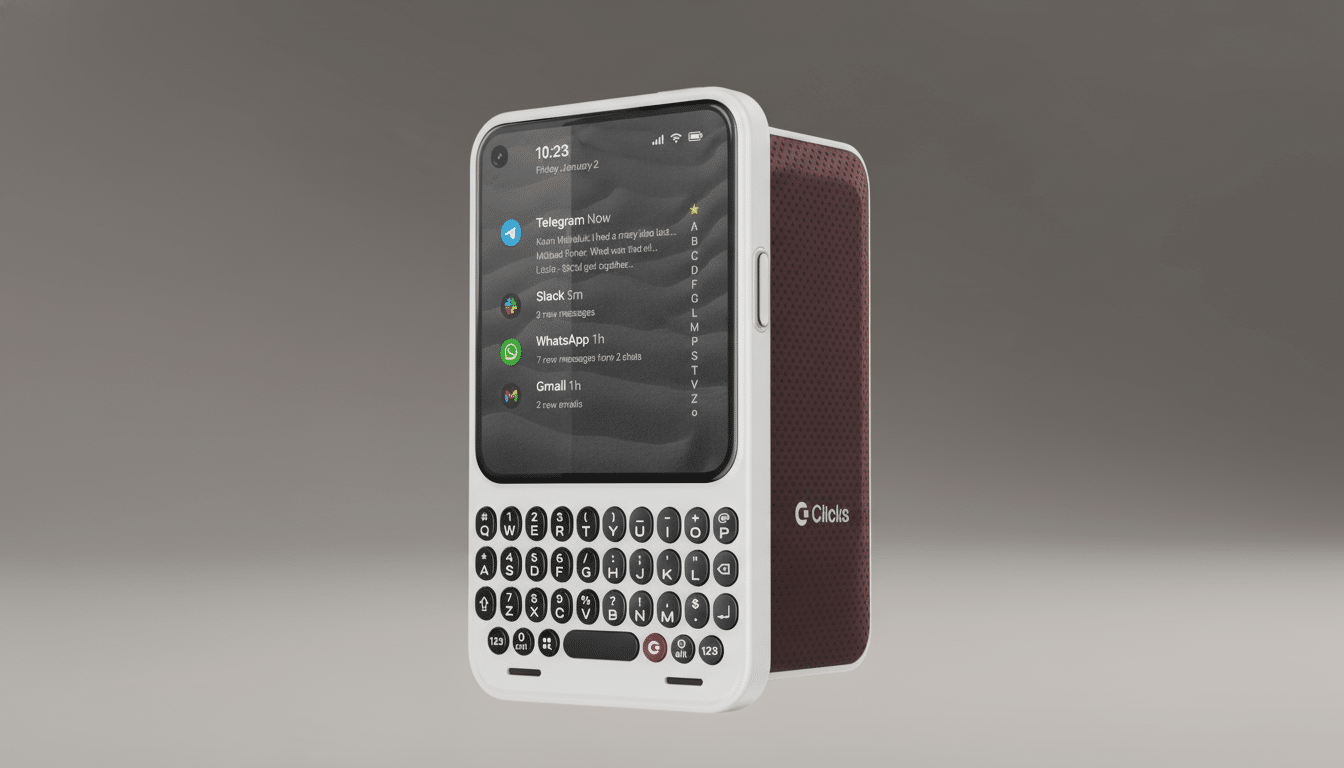
The chassis is plastic, but on purpose — it’s lightweight, grippy, and less breakable than mirrored glass. The sample units I saw were in polished silver and a forest green that wouldn’t be out of place alongside a vintage field jacket.
For Your Two‑Phone Life and Communication Focus
Clicks isn’t selling this as a do‑everything device. It’s a communications terminal, first and foremost, intended to augment rather than replace a camera-driven flagship. That’s an astute take on contemporary life. The premium slabs all aim for similar specs, as Counterpoint Research observed — experience being the differentiator. The Communicator’s differentiator is discipline: less distraction, faster response, and intentional flow for people living in email, chats, and docs.
There are also attachable keyboards for those who want a taste without changing phones, but the Communicator feels different because the whole OS experience is designed around typing rather than just tacking on keys to a touchscreen-first UI.
Hands-On Early Impressions of the Communicator
Even as a non-final unit, the ergonomics felt spot-on: well balanced in the hand, keys that encourage velocity without errors, and sensible extras such as a shortcut key and dedicated volume/power buttons. A near-square display means less scrolling to scan a thread, and the keyboard’s capacitive gestures allow for surprisingly fluid navigation through long chats. It’s the closest to effortless inbox control I’ve felt since BlackBerry was essential for executives, reporters, and field teams alike.
Price, Availability, and Outlook for Release
Clicks claims the Communicator will be available for $499, offering a special preorder price of $399 and an anticipated release date of “Q3” this year. That puts it well below premium flagships and above minimalist “dumbphone” options. To a niche audience — people who appreciate typing accuracy, battery swaps, local storage, and a UI that prioritizes messages over memes — it’s alluring.
The smartphone market does not have much place for ideas that veer from the all-screen script. But the Communicator isn’t chasing spec-sheet fights; it’s bringing back one that was lost. If you’re pining for the satisfying staccato of actual keys and the productive silence they provide, this dainty phone could be one of the most refreshing changes of pace in mobile at the moment.
