


ChatGPT is now showing ads to free and ChatGPT Go users, and the first wave looks far from the “useful, entertaining” placements OpenAI promised. The ads are clearly labeled as Sponsored, but in practice they’re jarring, sometimes overwhelming the chat interface and missing the mark on relevance.
In hands-on use, the mobile experience is the roughest: an ad can expand to nearly fill the screen, pushing recent messages out of view once the keyboard appears. On desktop, placements are smaller but still feel disconnected from the conversation—more billboard than assistant.
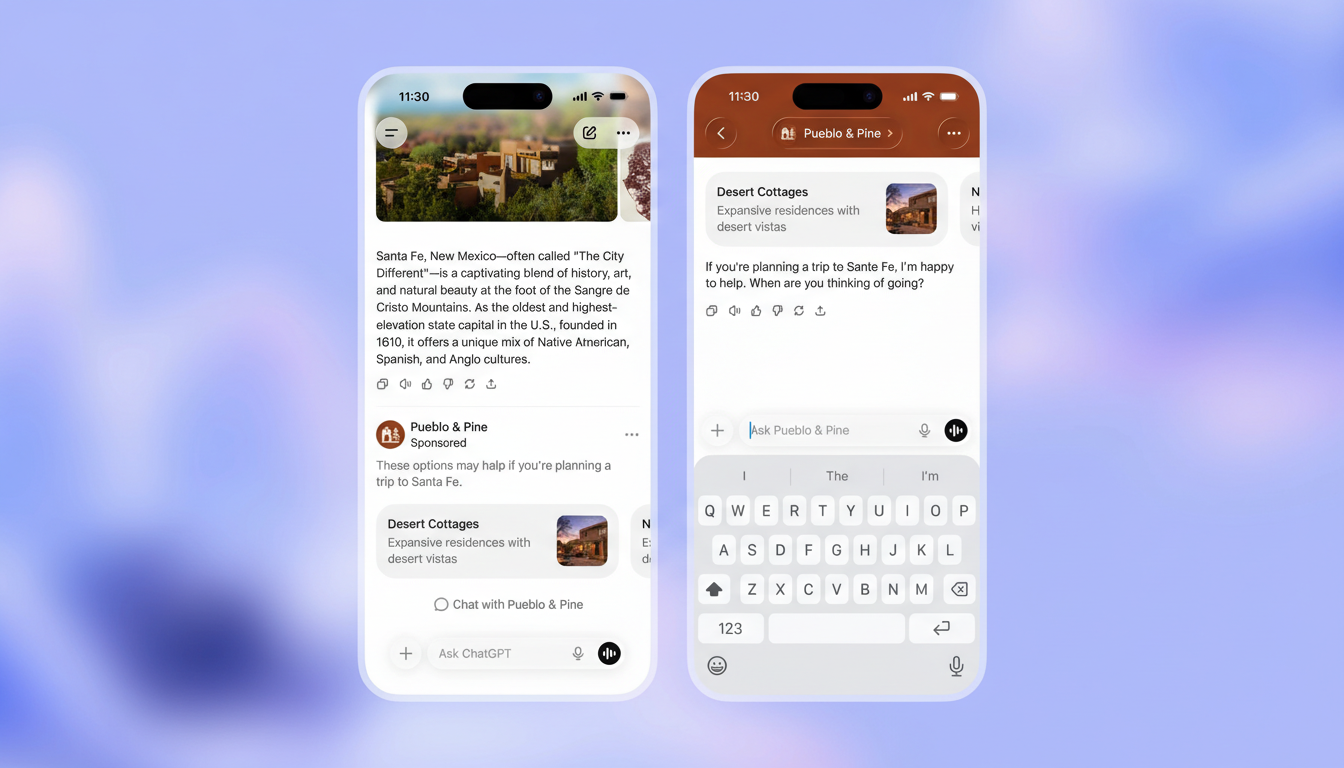
What the New ChatGPT Ads Look Like Across Devices
OpenAI’s mockups previewed compact units at the end of an assistant response with a Sponsored tag, an image, and a call-to-action link. In reality, formats vary. On mobile, some units balloon to dominate the viewport, interrupting the flow of a back-and-forth chat. On desktop, ads appear more like inline tiles or banners tucked beneath a response.
The label is consistent—ads are marked—but their size and placement can make them hard to ignore. That may be by design in early testing, as companies routinely A/B test attention-grabbing layouts before refining for elegance. Here, the trade-off is clear: visibility comes at the expense of conversation continuity.
Relevance Misses and Real Examples From Early Tests
Ad relevance remains hit-or-miss. During a discussion about design principles, a Canva ad surfaced—loosely related, but not requested, and it derailed the flow. In a separate thread about an industry update in AI, a StubHub ad appeared, which felt fully off-topic. Asking about the origin of a person’s name triggered an Ancestry ad—arguably closer, yet still not what the user sought.
Early chatter on social platforms shows screenshots of large tiles and pop-up-like units that force extra scrolling. The common refrain: these placements don’t feel blended into the assistant experience. If OpenAI is counting on ad discovery that mirrors personalized feeds, the current targeting granularity isn’t there yet.
What OpenAI Promised and What Changed Post-Rollout
OpenAI said ads wouldn’t influence answers and that responses remain optimized for what’s “most helpful.” It pledged clear labels, promised it would not share conversation transcripts with advertisers, and offered controls to turn off personalization and clear ad data. It also emphasized there would always be an ad-free option via paid tiers.
The vision was ambitious: ads that are helpful, maybe even fun—more like a smart suggestion than an interruption. CEO Sam Altman told Stratechery he appreciates Instagram ads because they can surface genuinely useful products. That’s the bar. Today’s reality is more blunt: conspicuous units that neither entertain nor meaningfully assist.
Who Sees Ads and How to Avoid Them on ChatGPT
Ads appear for Free and ChatGPT Go users. ChatGPT Go costs $8 per month and offers higher message limits, image creation, file uploads, and memory, but it still includes ads. OpenAI says Plus ($20) and Business/Enterprise remain ad-free. Users not logged in reportedly don’t see ads, at least for now.
Go has already launched in 171 countries, and the ad-supported approach is rolling out broadly. Personalization toggles exist, and users can clear data used for ads, though turning off personalization may change the targeting more than the volume. For a guaranteed ad-free experience, upgrading is the surest path.
Why the Rollout Matters for Trust and Usability
Generative AI is expensive to run, and ads are the most familiar way to subsidize free access. But there’s a delicate balance: intrusive formats can erode trust in an assistant meant to feel neutral and focused. OpenAI has already seen user backlash to “app suggestions” that nudged integrations with retail and media partners; ads risk the same perception problem if they feel like upsells embedded in answers.
The stakes are high at ChatGPT’s scale—OpenAI previously cited more than 100M weekly users—which means even a light ad load reaches a massive audience. What happens next will likely hinge on three levers:
- Relevance
- Frequency
- Creative rules
If targeting sharpens and units shrink, the model can coexist with utility. If not, expect more churn to paid tiers—or drop-offs from casual users.
The Bottom Line on ChatGPT Ads and User Experience
ChatGPT ads have arrived, they’re labeled, and they work—but they’re also bulky on mobile and often off-topic, falling short of OpenAI’s promise to make ads useful and entertaining. This first iteration looks like a revenue switch flipped on before the experience was fully tuned. If you want to avoid them today, log out or pay; otherwise, prepare for a moving target as OpenAI tweaks formats and targeting in the weeks ahead.
