


I tried on Dephy’s Sidekick robotic exoskeleton, and every step meant I would get a surprise — not jolted, but there was a little surge forward, like an extra calf muscle discreetly waking up with every step. It was not flashy and certainly not sci-fi cosplay. It was a subtle, ground-level assist that made walking feel bouncier and springier, and yes — most unexpectedly of all — fun.
What Sidekick Is and How the Exoskeleton Works
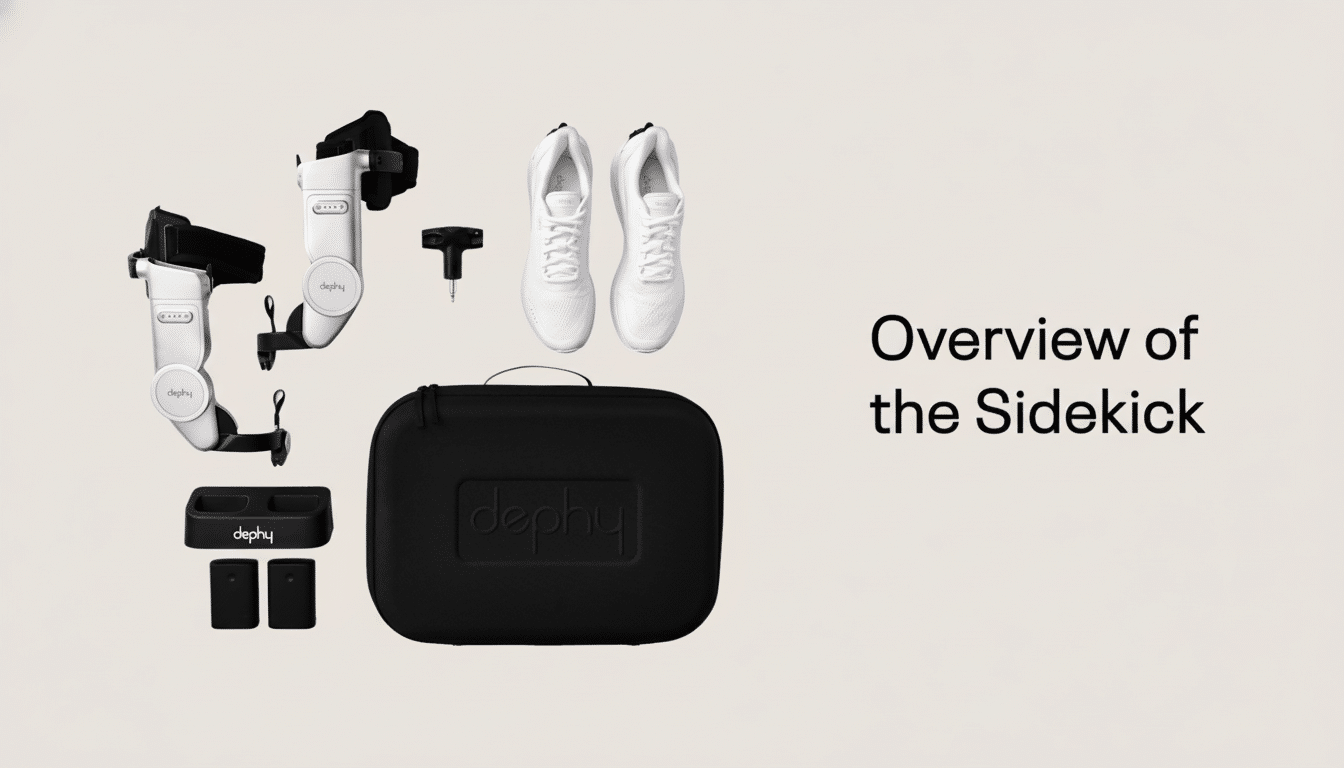
Sidekick marries a proprietary shoe with a carbon-fiber rear plate and small, battery-powered module that gets strapped to the back of your calf. Inside are IMU sensors, a brushless motor and a controller that simulates your gait in real time. After just a couple of steps of observation, it times a push-off assist directly at plantarflexion, emulating the power your calves usually provide when your heel comes off the ground.
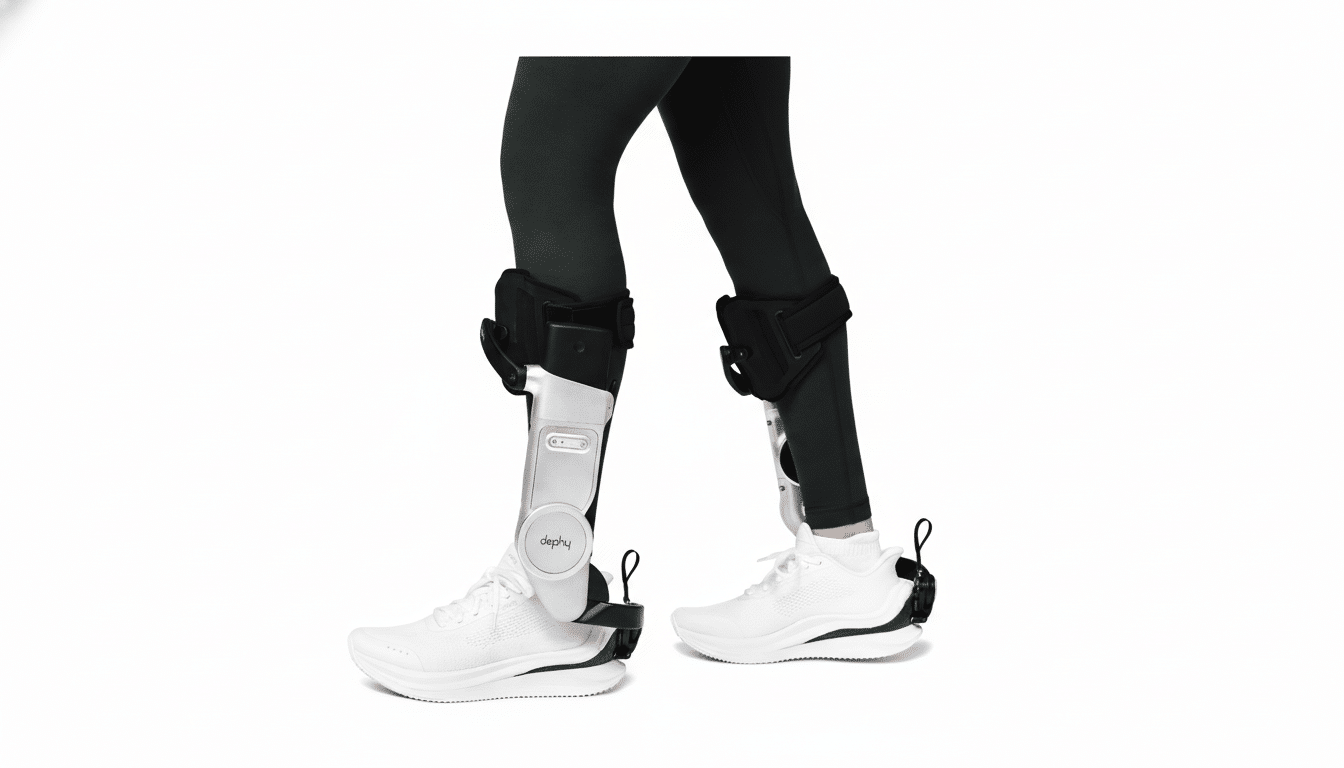
You feel it somewhere between imperceptible and unmistakable: a subtle push-off at toe-off that makes every stride feel more efficient. Think of it as an e-bike for your ankles — the hardware doesn’t move you itself, but rather cleverly magnifies what you’re already doing. The goal here, Dephy had told me, was not clinical rehab but day-to-day mobility, as in walks with the dog and running errands or long concourses where fatigue sets in.
The consumer framing applies to setup as well. It took about 15 seconds for the gear to be put on by each person. At the press of a button, after being turned on, it went through a short learning phase prior to engaging the aid. The shoe felt like a forward-leaning max-cushion trainer (there’s considerable arch support, a cordially bouncy midsole and a stable platform that didn’t draw attention to the built-in hardware).
On-Foot Impressions of Sidekick Exoskeleton at CES
Walking in a circle around the venue, I sampled several assist levels. The medium setting uncannily hit the sweet spot: noticeable help without any sense that it was pushing. I did make one stray heel-lift when I stopped suddenly, but didn’t have another after I began to anticipate halts like a cyclist feathering the brakes into a turn. The weight balance is clever — since the module sits on your calf and not your knee or hip, it keeps mass low and movement natural.
The Sidekick doesn’t assist you in standing from a dead stop, nor does it transform you into a power walker. What it does accomplish, however, is mitigate the grind in your steps. After 20 or so minutes, I experienced a slight increase in my cadence without extra effort and felt like my stride was being given more support — just what the device promises to provide.
Selling for $4,500 and now available, it’s currently on sale with the first shipments coming soon, with consumer customers being Sidekick’s focus.
That is less than a tenth of the cost of clinical lower-limb exoskeletons from companies like ReWalk and Ekso Bionics, which can cost more than $70,000. It also undermines many industry-oriented systems and is significantly more compact.
Understanding the How and Why Behind Sidekick’s Boost
There is good evidence that ankle assistance is the right bet. Stanford’s Biomechatronics Lab published the results in Nature on Tuesday, demonstrating that a custom ankle exoskeleton controller decreased the metabolic cost of walking by 24% over normal walking. “In study after study, Harvard’s Wyss Institute has demonstrated that we are able to drive double-digit benefits in energy economy when enabling machine wearers to walk or march,” said David L. Cohen, a leader of Lockheed Martin’s exoskeleton team.
That, functionally, makes the calf a power player — often overlooked next to the quad or glute. The ankle does provide a substantial fraction of positive work during walking, and well-timed torque at push-off gives disproportionate returns. That is consistent with the findings of Dephy’s end-to-end approach: keep the hardware lightweight, direct assistance at its target and adapt timing to a user’s gait in real time.
The macro trends help explain why consumer exoskeletons are having a moment. According to the U.S. Bureau of Labor Statistics, approximately 30 percent of days-away-from-work cases can be traced back to musculoskeletal disorders and lower-limb fatigue is a continual concern whether it’s tied to work or travel. One of the great recurring problems for people is the burden on human wearers’ energy and strength, which Defense-backed programs like DARPA’s Warrior Web helped to speed up research on that front, but where universities honed controllers so it feels natural rather than a nuisance.
Usability and Safety Considerations for Daily Sidekick Use
The learning curve of Sidekick is shallow but exists. The system adjusts to you but also, in a way, you adjust to it without even realizing and that bidirectional calibration happens over your first few minutes. It felt surefooted on smooth floors; I’d still be careful scampering around corners or tight stairwells the way you might with new, undiminished cushioning. Situational awareness works the same here as it does with any powered assistance.
Battery life, durability for weather resistance and how the shoe holds up over hundreds of miles will be key in long-term testing. Much as e-bikes helped democratize mobility, a dependable ankle-assist wearable will come down to day-to-day toughness, predictable operation and easy charging habits.
Early Verdict on Dephy’s Sidekick Consumer Exoskeleton
Sidekick doesn’t shout. It subtly adds capability where it matters, making walking feel fresher without asking for your notice. After a few laps around the convention center, my mind kept returning to missed connections and infinite airport hallways — no better than the moment this sort of assist dissolves friction.
Dephy, if it can hold onto the tuned naturalness that I felt and remain reliable even after extended use, feels like a worthy first consumer exoskeleton in Sidekick. It’s a little nudge at precisely the right time — and for many people, that could be the difference between jumping in an Uber and walking the final half-mile with a literal pep in their step.
Supporting references: Stanford University Biomechatronics Lab, Harvard Wyss Institute, U.S. Bureau of Labor Statistics and government-funded programs such as DARPA’s Warrior Web, which drove advances in lower extremity assistive research.
