


Bluesky is announcing a new way to discover people you know that uses none of the aggressive invite spam on which so many social apps depend. It’s an opt-in feature that only pairs you with contacts who have also opted in, and it eliminates automated invitations. The result is a discovery tool designed to expand networks without compromising privacy or trust.
How Bluesky’s privacy-first contact discovery works
When you start, you must verify your phone number with a one-time SMS code, a measure to prevent scammers from uploading random lists of contacts to see whose numbers are active. You then have the option to upload your address book, and matching will begin. Importantly, a match is only made when two people have added each other as contacts and opted in to the same database of contacts, minimizing one-way lookups and diminishing the risk of harassment.
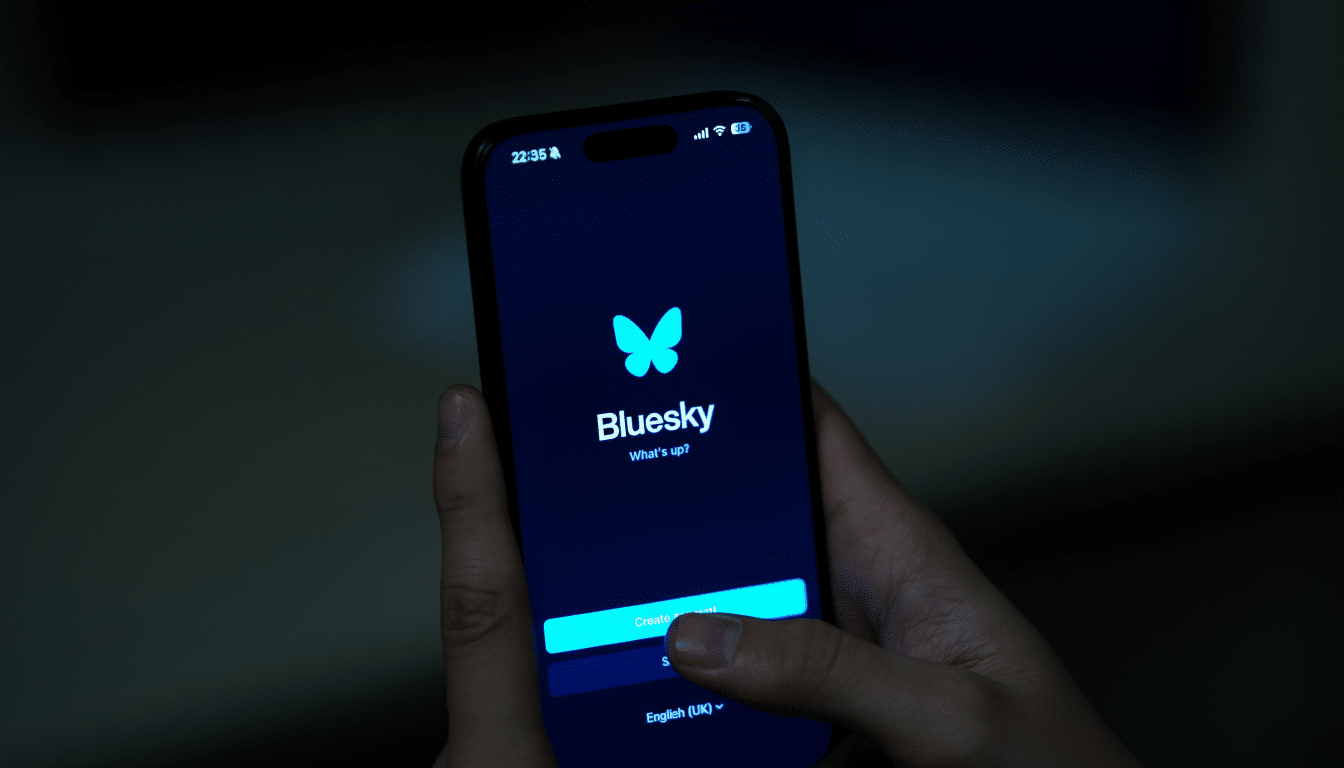
Unlike the industry’s growth-at-all-costs strategy, Bluesky does not blast automated texts or emails to people who are not on the service. If you wish to invite somebody, it is done on a manual basis. That eliminates the icky “you’ve been invited” vomit pool that taught users never to trust contact permissions in social apps. And if you don’t want coworkers or acquaintances to track you, just don’t enable the feature.
Early users may find that matches appear slowly, but the system will become more effective as more people opt in. The feature is being rolled out to Australia, Brazil, Canada, France, Germany, Italy, Japan, the Netherlands, South Korea, Spain, and Sweden, as well as the U.K. and U.S.
Privacy by design, not growth hacks and spam invites
Contact matching is a known onboarding engine — many platforms have used it to blast invites to non-users or silently mine phone books for growth. It’s that approach that has continued to come under attack from both advocates and regulators. The Electronic Frontier Foundation has long cautioned that contact uploads can leak sensitive social graphs, and the U.S. Federal Trade Commission has sanctioned apps that misuse address book data in the past. The backlash led mobile platforms to clamp down on permissions, and it reset consumer expectations for what consent meant.
Bluesky’s effort is interesting specifically because it exchanges viral accelerants for a tighter grip. It reflects a broader change in consumer behavior: Surveys conducted by Pew Research Center show overwhelming majorities of people worry about how companies use their data, including 79 percent who are concerned about such practices. In that world, “growth without spam” is more than a product position—it’s a trust strategy.

Technical approach and security trade-offs explained
Under the hood, Bluesky says it holds on to contact information in hashed pairs—your number with each of your contacts’ numbers—instead of keeping a plain list. The encryption key is locked into the hardware and separated away from the main database, a model that feels similar to hardware security modules in use within financial services. Such segmentation makes wholesale compromise more difficult and limits the blast radius if a database snapshot is exposed.
The mutual-match constraint and the phone verification are both designed to protect against typical scraping/enumeration attacks. Releasing the design to the security community as an RFC means that it can be reviewed by outsiders, a practice followed by standards bodies and academic cryptography groups. The company hasn’t identified it as such, but the approach draws on concepts from private set intersection — techniques developed by researchers at Stanford and Cornell to allow two parties to learn where their sets overlap without revealing their full data sets.
No matching system is risk-free. Phone numbers are small, guessable spaces; this is why salts/keyed hashing, and tight access controls matter. Even with hashing, contact discovery might generate metadata on relationships. Privacy groups advise reducing retention windows and providing clear paths for deletion — with Bluesky, users can delete contacts that have been uploaded and opt out at any time, responding to a key lifecycle concern.
Why It Matters For Social Media Platforms
Among new networks, the competing demands of ease of onboarding and data stewardship are especially salient. X and Threads both offer contact-based discovery, but their tactics and defaults have been scrutinized by watchdogs in the U.S. and Europe. Bluesky’s model, which includes explicit consent from both parties, manual invites, and a security-forward design, makes it a test case for how to grow responsibly while preserving against spam and leakage.
If it becomes widely adopted, this model could reset users’ expectations around the “find friends” feature in social apps. It also jibes with the network’s larger focus on user control and portability, bolstering a message that user acquisition doesn’t have to mean sacrificing privacy. The immediate upside is small but significant: more meaningful connections, less unsolicited messaging, and a discovery flow that is human-centered rather than growth-hacked.
