


For its part, Blue Origin has been awarded a NASA contract to send the VIPER rover to the south pole of the Moon — a notable return for an ambitious mission designed to scout lunar resources and place Blue Origin’s Blue Moon MK1 lander right in the scientific spotlight. The award, part of NASA’s Commercial Lunar Payload Services initiative, is worth about $190 million and reveals new endorsement for the company’s uncrewed cargo lander as well as its separate work on a human landing system.
For NASA, it puts a near-term path back on the books for VIPER — short for Volatiles Investigating Polar Exploration Rover — after development of the program was previously paused amid delays and rising costs. For Blue Origin, it fills the cargo lander’s first marquee science payload slot and positions the company’s lunar roadmap in concert with NASA’s resource-utilization goals.
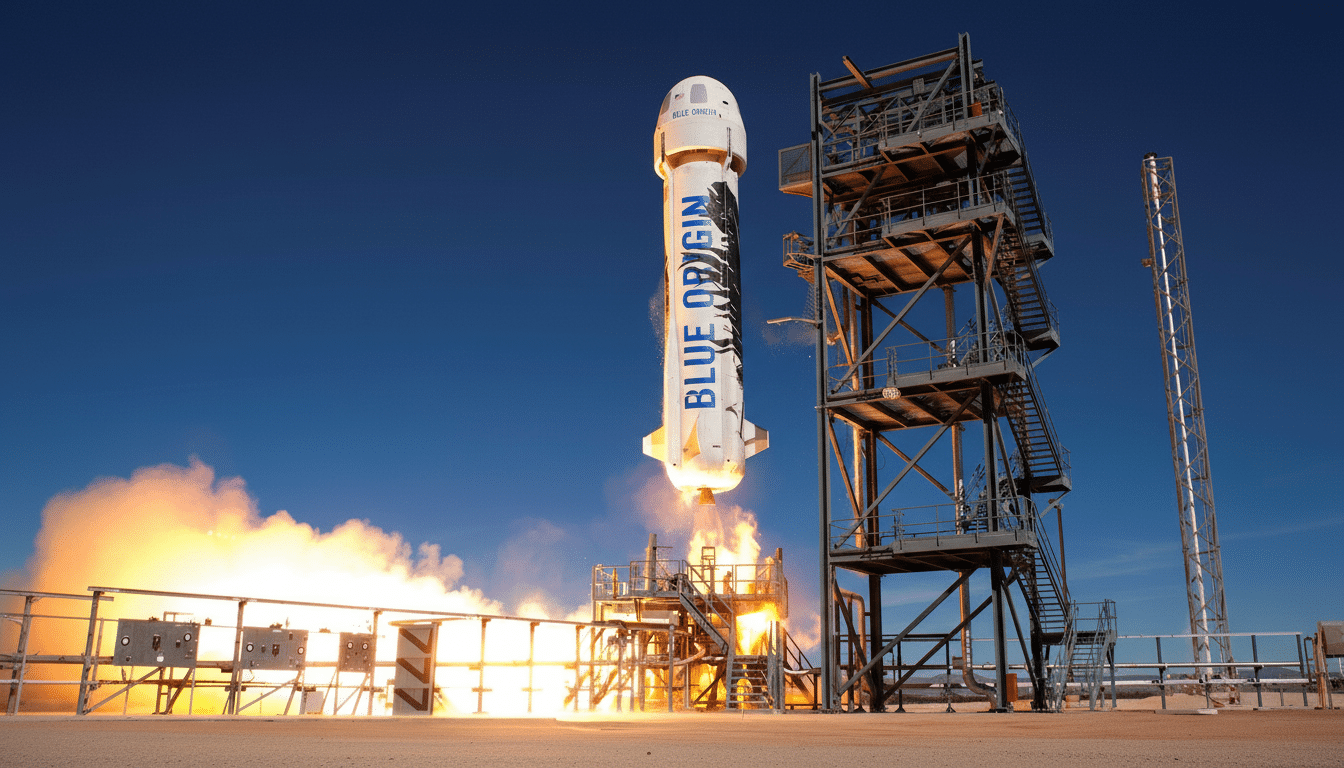
Why This Award Matters for Blue Origin and NASA’s Plans
CLPS is intended to buy lunar delivery as a commercial service, passing risk and schedule discipline on to providers and greatly reducing costs compared with traditional missions. Giving the delivery of VIPER to Blue Origin extends the number of companies that meet the test for a complex south pole landing, one of planetary exploration’s most difficult tasks because of extreme lighting conditions, steep terrain, and communications limits.
The decision also provides NASA with redundancy and competition in the emerging lunar delivery market. A second major vote of confidence in Blue Origin — in addition to being selected for a human-rated lander contract — after previous disappointments on the commercial lander front indicates that NASA is hedging its bets and developing multiple platforms for precision polar operations rather than putting all its lunar landing eggs into one basket.
VIPER’s Mission: Map Ice, Where It Matters
Similar in size to a golf cart, VIPER has been developed to work for about 100 Earth days trundling over crater rims and diving into permanently shadowed pockets to locate and characterize water ice. The rover will retrieve regolith samples at depths of a few centimeters with the TRIDENT drill, and analyze volatiles and hydrogen signatures using three complementary tools:
- MSolo mass spectrometer
- NIRVSS near-infrared spectrometer
- NSS neutron spectrometer
This ground truth is essential. While observations and measurements by (for example) the Lunar Reconnaissance Orbiter (LRO) and LCROSS reveal water ice lying in the south polar region, what we don’t know is how accessible that ice actually is — how pure it is, how deep it strikes into the surface, and how much of an abundance of it exists across terrains. VIPER’s traverse and subsurface measurements will improve models used to decide whether, and how, future astronauts can extract water for life support and convert it into oxygen and hydrogen for propellant — a key component of in-situ resource utilization.
A Comeback After Cancellation for NASA’s VIPER
VIPER has not had an easy trip to the launch pad. The rocket agency selected an Astrobotic Griffin lander to ferry the rover under CLPS in a fixed-price task order worth $199.5 million. Schedule slips for both the rover and lander, along with escalating costs associated with integration, forced the agency to mothball the mission even in the face of significant progress on major hardware that has now elicited sharp criticism from lunar scientists and some lawmakers.
NASA later invited industry for ideas to put the already-built rover on a mission without running up the government’s tab. Blue Origin’s answer — attaching VIPER to the Blue Moon MK1 cargo lander — qualified. The shift represents a pragmatic turn in CLPS: prioritize providers that can assume risk, adhere to realistic schedules and yield precision landings in scientifically rich sites.
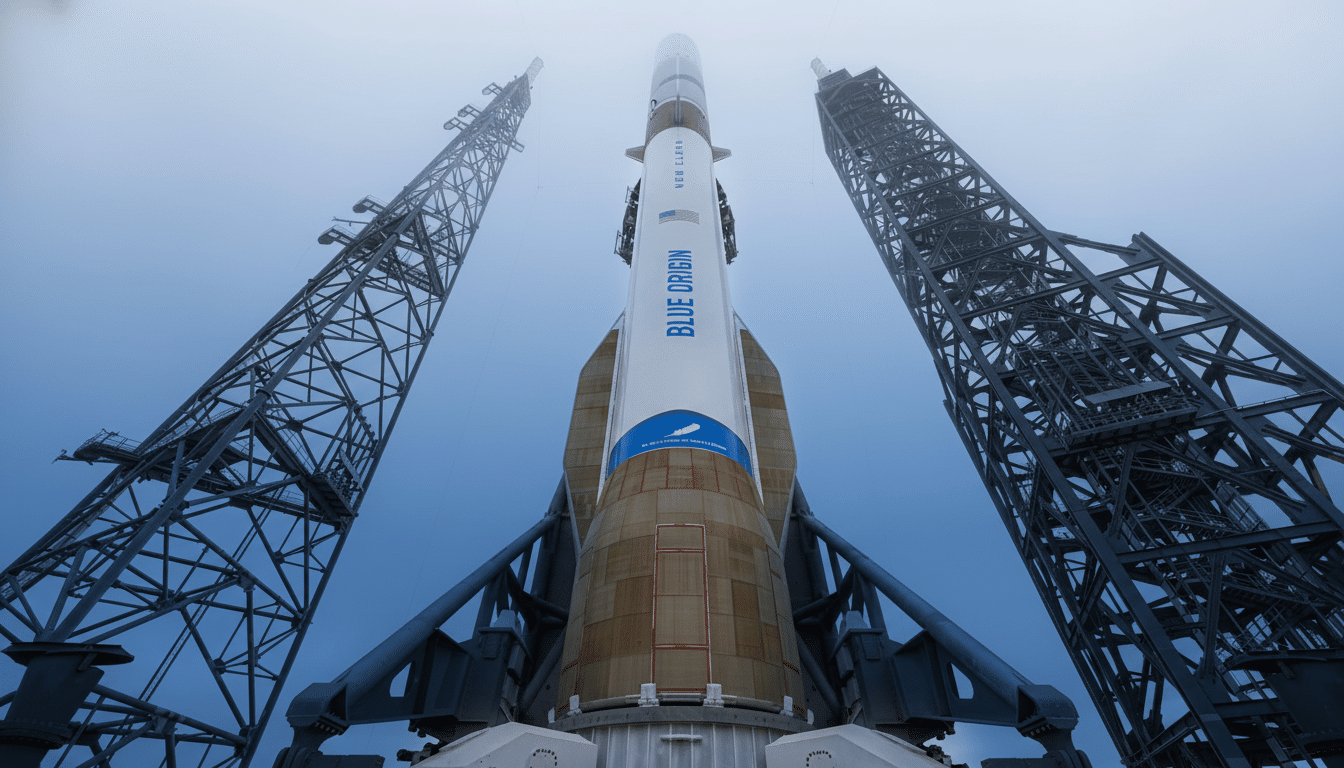
Blue Moon MK1 and the South Pole Challenge
Polar missions require precise navigation, as a small margin of propellant and thermal tolerance is available. “The Blue Moon MK1 is capable of precision landing and we can accurately say to the centimeter based on LIDAR — Light Detection and Ranging — which is much more accurate than GPS, so it’s a whole new system,” Bezos said. The lander would use cryogenic propulsion with the BE-7 engine, a high-performance, additively manufactured system optimized for lunar operations and be operable in a deep throttle regime to support a broad range of vehicle concepts.
In addition to landing accuracy, MK1 must provide reliable power, communications back to Earth during long shadow periods and thermal control while VIPER roams diverse temperature extremes.
These are precisely the skill sets NASA requires to eliminate uncertainty on future south pole cargo drops and crewed sorties.
What Success Would Unlock for Lunar Exploration
VIPER’s readings would inform a decade’s worth of orbital observations with on-the-ground validation, a top priority singled out by the National Academies’ planetary science decadal survey. Assuming the rover finds accessible ice deposits, it feeds a business case for continued lunar infrastructure: in-situ propellant production, power stations at peaks of near-eternal light and logistical networks servicing an Artemis base camp.
It would also serve as a proof point for the CLPS model. Lunar delivery at a fixed price is a risky business, of course, but it is also the kind of challenge that spurs innovation and cost discipline. A successful landing and operational mission would demonstrate that commercial landers can accommodate complex science payloads, paving the way for follow-on missions from NASA, international partners and industry.
The Journey to the Regolith for NASA’s VIPER Rover
The next steps are payload integration, environmental testing to mimic the harsh polar environment and end-to-end rehearsals for traverse planning and comms. NASA’s project teams will make the final decisions about the rover’s route to spend longer times in areas with good lighting while making short visits into cold traps where ice could still exist. Blue Origin, for its part, will demonstrate landing capabilities, guidance software and ground operations necessary for a sustained multi-week surface campaign.
If all goes well, VIPER’s journey may elevate our perception of lunar water from a tantalizing signal in orbit to a practical resource map. That’s the fulcrum between exploration and infrastructure — and why this is also more than just a delivery order. It’s an advance for living off the land somewhere other than Earth.
