


Blue Origin is shelving ticketed New Shepard flights for at least two years as it concentrates staff, funding, and factory time on getting its human-rated lunar lander ready for NASA’s Artemis program. The company framed the move as a strategic shift from suborbital joyrides to sustained lunar operations, a pivot aligned with its long-stated goal of building a cislunar economy.
Why New Shepard Is Going On Ice For The Near Term
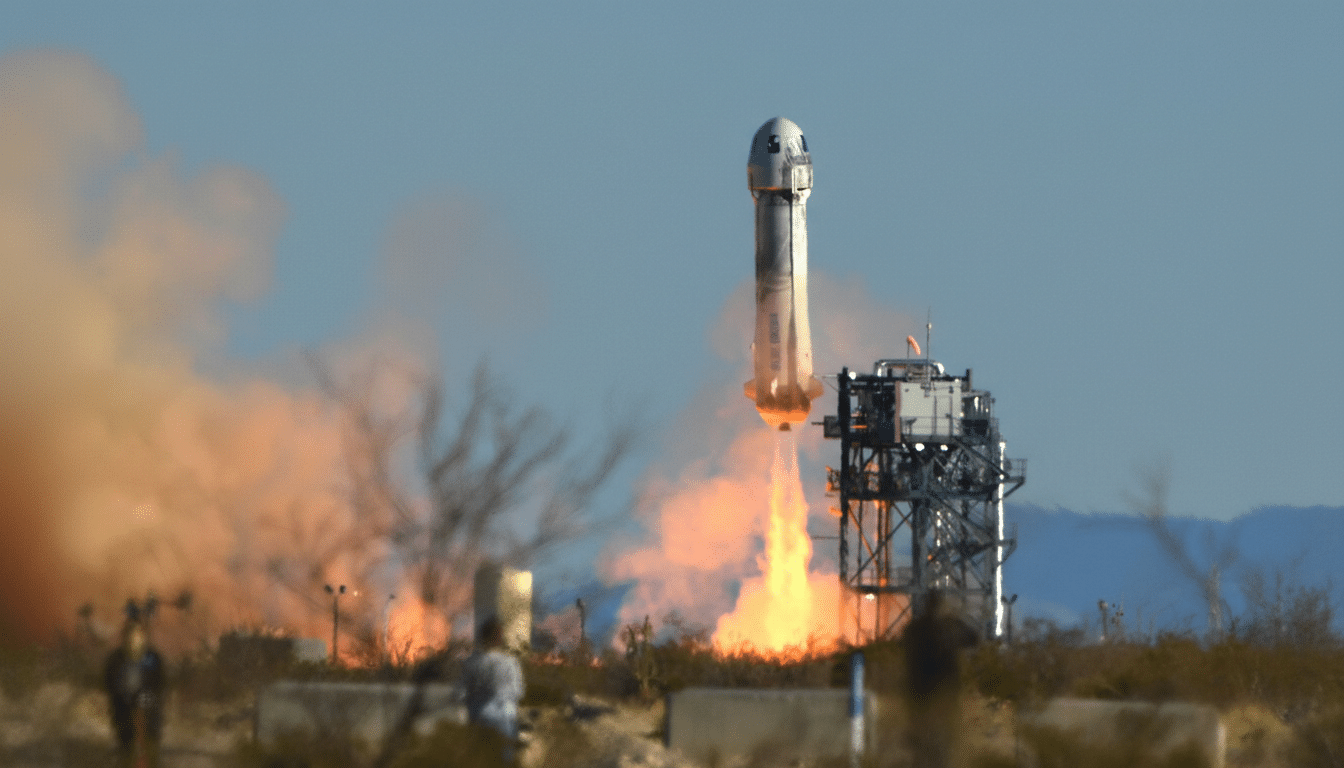
New Shepard has been a reliable suborbital workhorse, flying more than two dozen missions and carrying 38 people above the Kármán line across seven crewed flights. Beyond tourism, it has lofted over 200 research and technology payloads for universities, NASA, and private labs. After an uncrewed 2022 anomaly, New Shepard returned to service with a successful payload flight in late 2023 and a crewed mission in 2024, following FAA oversight and corrective actions.
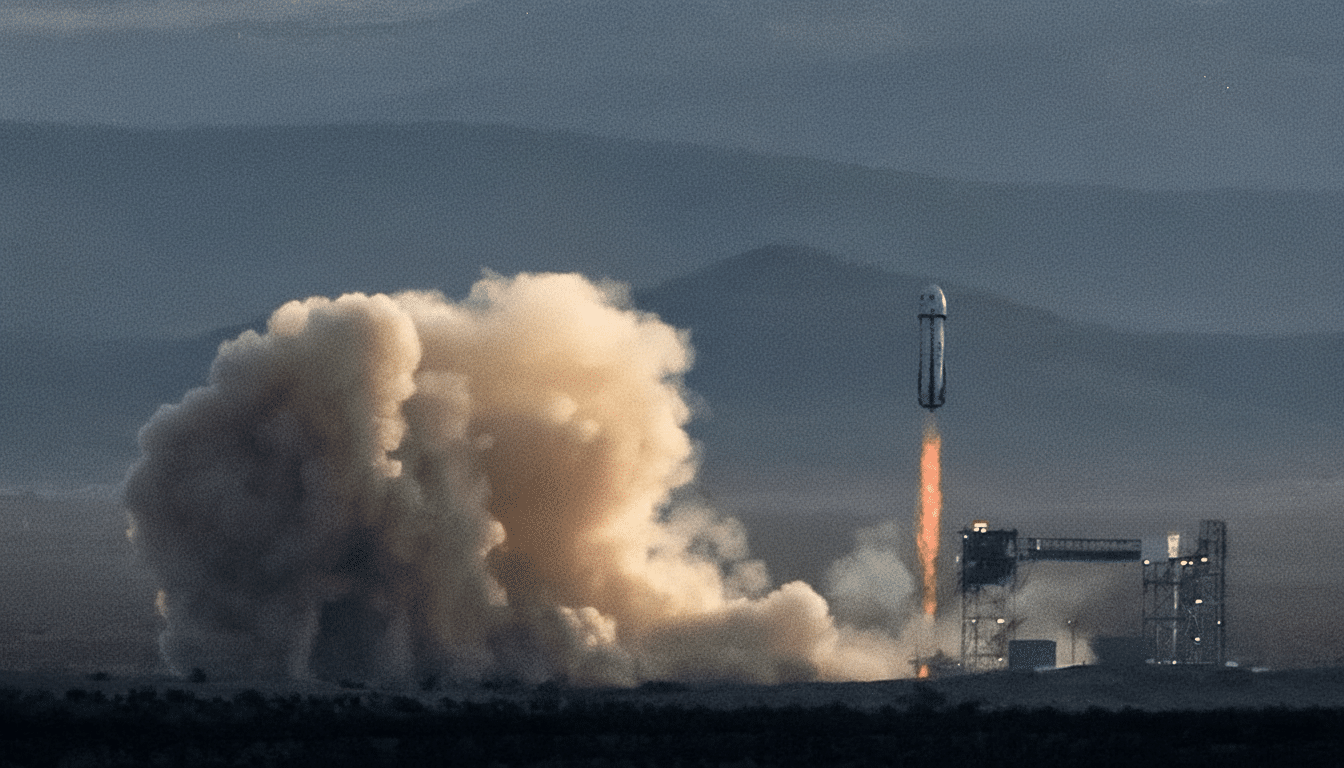
Pausing now frees engineering talent and test range capacity just as Blue Origin ramps qualification for its Blue Moon human landing system and supporting infrastructure. Company leaders have been explicit: the next big milestone is helping return astronauts to the lunar surface and enabling a sustained presence there, not incrementally adding suborbital customer flights.
A Bet on Lunar Contracts and the New Glenn Rocket
The center of gravity is Blue Moon, the multi-element lander architecture Blue Origin is developing under a multibillion-dollar NASA award for a future Artemis mission. NASA selected the team in 2023 for a roughly $3.4 billion contract to provide a crewed lander for Artemis V, complementing SpaceX’s Starship lander for earlier missions. That program drives a cascade of dependencies: cryogenic propellant transfer, precision landing sensors, and mission operations that demand deep focus and extensive testing.
Parallel to the lunar work is New Glenn, Blue Origin’s heavy-lift rocket intended to carry large payloads to orbit and, eventually, lunar transfer stages. The vehicle’s BE-4 engines—already flying on United Launch Alliance’s Vulcan—are central to both programs. Coordinating engine production, New Glenn launch readiness, and Blue Moon development is a complex choreography that benefits from reducing distractions, including commercial suborbital sorties.
What It Means For Would-Be Space Tourists
For the near term, the suborbital marketplace thins out. Virgin Galactic halted commercial flights in 2024 to build its higher-rate Delta-class vehicles, targeting a return around 2026. With Blue Origin stepping back for at least two years, industry analysts at BryceTech note the practical result: few, if any, suborbital seats available until late 2026.
Orbital tourism persists via private missions on SpaceX Crew Dragon—Axiom’s ISS trips and other chartered flights—but those seats are priced well into eight figures, widely reported at more than $50 million per astronaut. By contrast, suborbital tickets have historically been a small fraction of that cost, making the pause a tangible setback for accessibility even as it advances national exploration priorities.
Artemis Pressure and the Reality of Schedules Ahead
NASA’s Artemis cadence remains fluid. The Government Accountability Office and the Aerospace Safety Advisory Panel have repeatedly cautioned that lunar schedules are aggressive given the parallel development of multiple first-of-a-kind systems: heavy launchers, deep-space suits, lunar landers, and ground systems. Blue Origin’s decision reflects that reality. Concentrated effort may reduce integration risk later, when lander readiness, docking, and surface ops must align with NASA timelines.
This is also a strategic posture in a high-stakes contest. SpaceX is racing through Starship test flights to support Artemis, while Blue Origin is building the alternative path the agency wants for redundancy. Success for either contractor strengthens NASA’s hand; success for both increases resilience and reduces single-point failure risk for returning humans to the Moon.
What To Watch Next As Blue Origin Shifts To The Moon
Key markers to track include:
- Blue Moon system ground tests
- Cryogenic propellant demonstrations
- Hazard-avoidance sensor flights
- New Glenn’s early launch campaign
NASA milestone reviews will offer the clearest signals on readiness. On the tourism side, expect New Shepard to continue flying science payloads as needed, but not paying passengers, until the lunar push clears critical gates.
The pause underscores a broader shift: 2020s commercial space is converging on infrastructure—landers, heavy launch, in-space servicing—over headline-grabbing jaunts. If the bet pays off, the tradeoff could open a Moon era where suborbital sightseeing is just the gateway, not the destination.
