


Beeple has just made the uncanny valley a gated kennel. At Art Basel Miami Beach, the digital artist Mike Winkelmann — who goes by Beeple as an online creative persona — exhibited Regular Animals, a slinking pack of robot dogs with uncannily human faces: Elon Musk has one like this; so do Mark Zuckerberg and Jeff Bezos (who appeared to be wearing pancake makeup); Andy Warhol and Pablo Picasso look-alikes trot along behind. The creatures wander, snap audience photos, algorithmically remix the photos and then “defecate” the prints out for the crowd. It’s grotesque, it’s comic and it is anything but subtle — tech wealth, surveillance of both the voyeuristic and state varieties, spectacle all coagulating into one animatronic shiver.
Inside Regular Animals, Beeple’s Animatronic Dog Pack
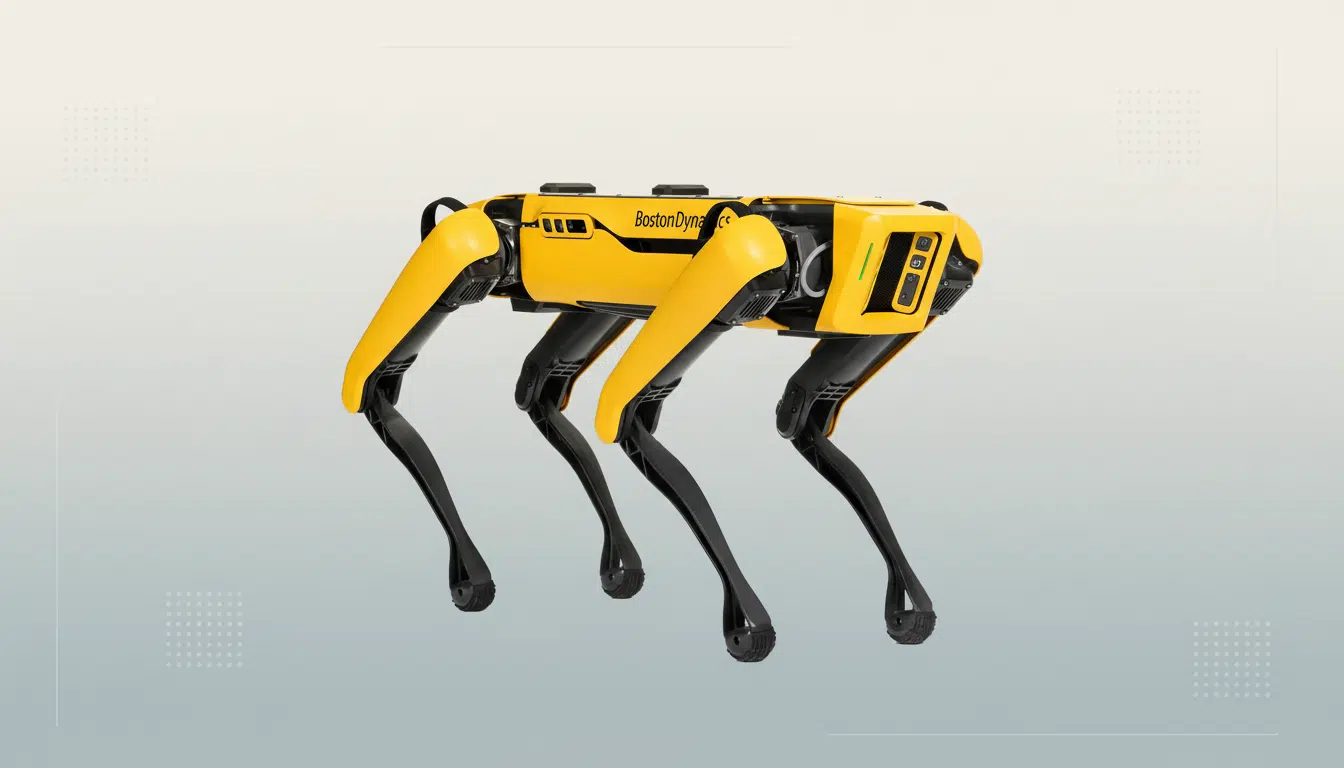
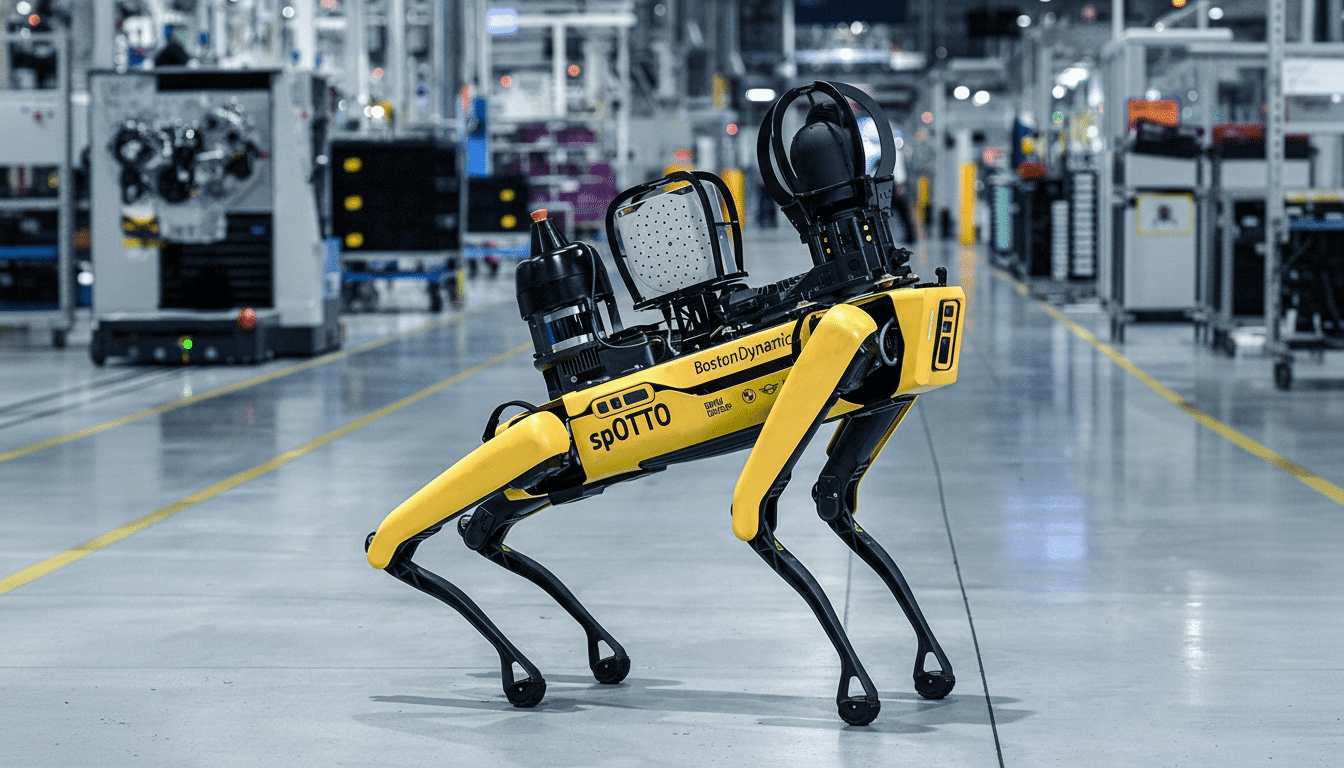
The installation relies on quadruped robots — Boston Dynamics’ Spot, which you’ve likely encountered — to carry hyper-real masks it secures in place for viewers with glassy eyes and half-smiles that manage to follow them as they move. Per videos and attendees’ accounts, the dogs trundle over to spectators, snap their faces, produce stylized portraits via AI pipelines and excrete a printout of said “art” onto a conveyor-like tail chute. Some of the prints, it’s been reported, also come with QR codes that lead to digital collectibles, a cheeky throwback to Beeple himself and his part in the NFT surge.
Beeple has always leaned toward maximalism with a moral. In 2021, he sold Everydays: The First 5000 Days at Christie’s for $69 million, an auction-house record for work by a living artist and the NFT market’s coming-out party. Regular Animals comes after the speculative mania subsided, and industry reports indicated that both trading volumes and prices are way down from their peak; one analysis for 2023 by dappGambl estimated that something like 95% of NFT collections had almost zero value. To put billionaire-faced robodogs into the most VIP art fair on earth is a post-bubble mirror being held up to money, status and attention.
Why These Robot Dogs Struck a Nerve With Audiences
It’s not just the masks. It’s the choreography. The dogs see, capture, turn into data and magnify; output: an uncomfortable feedback loop in tune with broader public anxiety about AI and the biometric dragnet. According to Pew Research Center, 52% of Americans have more negative feelings than positive ones about AI, a feeling installations like this appear designed to solidify. By affixing the faces of a handful of megabillionaires to the machines, Beeple connects everyday anxieties to tech leaders making decisions about what the near future will be.
The form factor is another offense. Quadruped robots have gone from viral demos to actual deployments: Municipal agencies have tried them out for dangerous inspections, and police departments in major cities have tested “digidog” units. Civil liberties organizations, including the Electronic Frontier Foundation, caution that marrying mobile robots with cameras and analytics could make always-on monitoring a fact of daily life. The grotesque spectacle is the message in Regular Animals — you don’t have to read a wall label to sense you are being surveilled.
Art Basel as Stage and Target for Beeple’s Critique
Art Basel Miami Beach attracts tens of thousands of visitors every year, from blue-chip collectors to pop culture tourists. It’s a marketplace, and a mood ring for the art world. Beeple’s art lands here with double-edged timing: the fair feasts on a show, while the marketplace still feeds off the crypto comedown and the AI takeoff. In turning spectators into fodder and then product, Regular Animals also skewers the transactional nature of a scene where access and hype can be as valuable as the art itself.
According to reports coming in from the fair, several of the installation’s paper “excrement samples” have been sold at eye-watering prices — numbers as high as $100,000 were thrown around by attendees and video posts. Whether these numbers are a provocation, a performance, or a price list is almost beside the point. Beeple, however, knows that at a fair full of seven- and eight-figure works, the price can be part of the punchline.
A Post-NFT Reckoning Rendered in Vivid, Living Color
Regular Animals feels like a referendum on the last five years of techno-culture: the founder worship, the platform-optimized-aggressive-extraction-of-attention and digital-scarcity gold rush. The subjects themselves — Musk, Zuckerberg and Bezos compared to canonical modernists — make the lineage explicit. Tech titans now exert a kind of cultural gravity that many artists don’t; Beeple literally puts them on all fours, rendering his gleaming brands as hounding discomfort you can walk around.
There’s a sly media critique as well. In an age where generative systems can conjure a portrait in milliseconds, authenticity becomes performative. Here, the “genuine” artifact is a print produced by the backside of a robot and including the ritual of onlookers recording it to share with others. The loop from capture to export to social proof is industrial and the viewer is subject and accomplice.
The Takeaway: Why These Billionaire Robot Dogs Matter
You don’t have to be in love with the gag — or the gag reflex — to understand why Regular Animals is the fair’s gimlet-eyed conversation magnet. It condenses various tensions in the 2020s into one, disquieting image: power with a perma-smile, machines that stare while they entertain and an art economy that is good at monetizing both. Beeple’s billionaire robot dogs are designed as nightmare fuel, and the nightmare they seem to attend just feels too close for comfort.
