


Bad Bunny promised a party. He delivered a layered thesis. In about 13 minutes, the Super Bowl halftime show doubled as a cultural scrapbook, crisscrossing Puerto Rico, the diaspora, and reggaetón history with a flurry of blink-and-you-miss-it signals. If you were dazzled by the pyrotechnics and choreography, here are the hidden references that quietly reshaped the spectacle’s meaning.
From visual callbacks to political symbolism, the production was meticulously coded for those who know where to look. It was less a medley than a narrative: a reminder that Benito Antonio Martínez Ocasio didn’t just bring hits; he brought context, memory, and community.
Puerto Rican roots and cultural history onstage
- The opening in a sunlit sugarcane field grounded the show in Puerto Rico’s agricultural past, invoking the labor of generations and the island’s colonial economy. Starting here reframed the night as a journey from field to stadium, from origin to global megaphone.
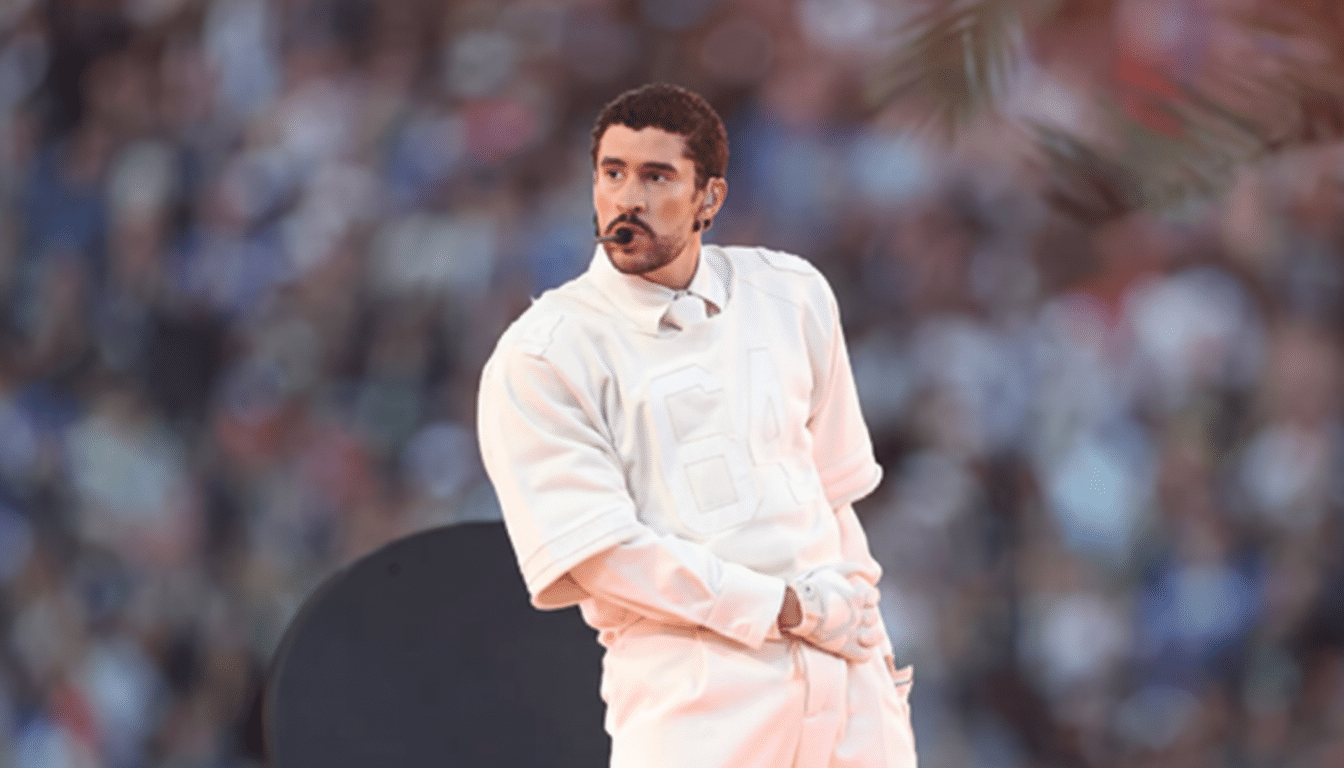
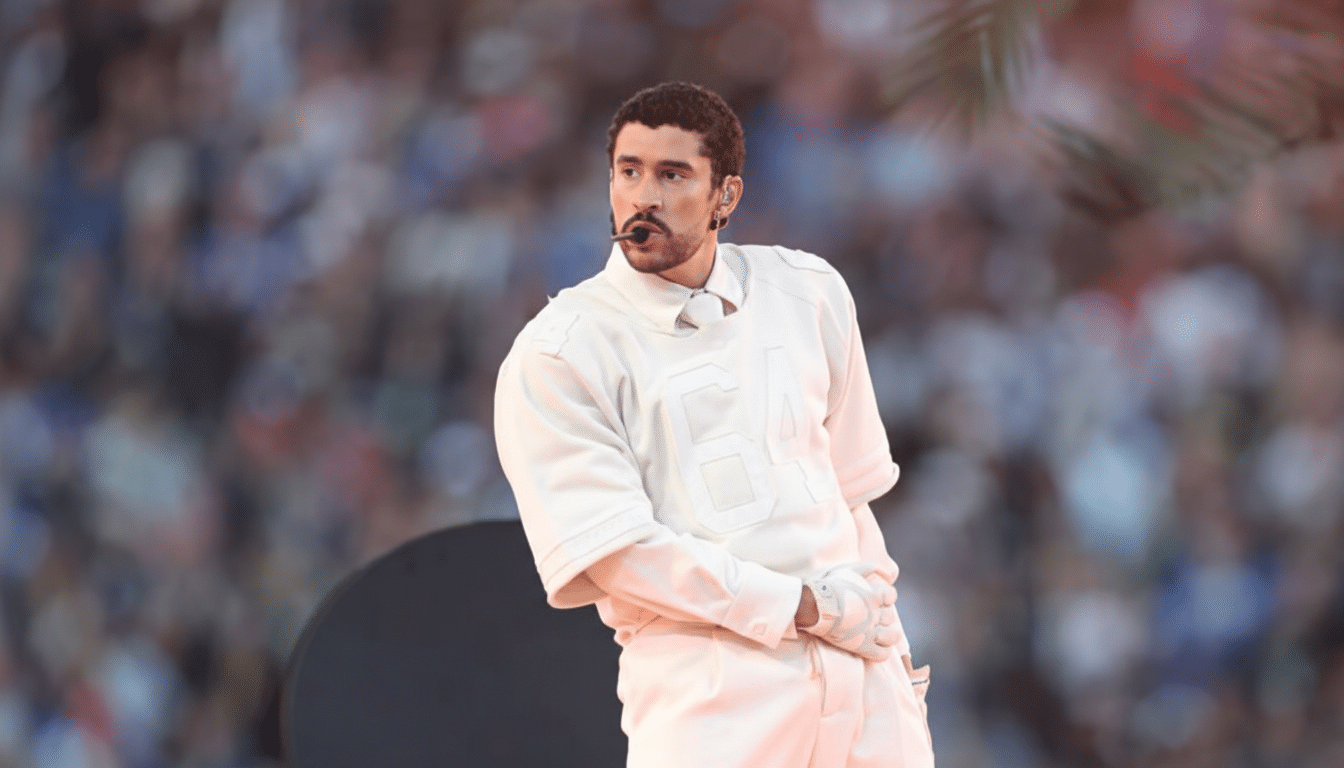
- His custom jersey reading “Ocasio” with the number “64” worked on two levels: a family nod tied to his surname and a sharper critique of the early official death count after Hurricane Maria. That initial 64 was later superseded by an independent George Washington University study estimating 2,975 fatalities, a figure that has since shaped public understanding of the disaster’s toll.
- Crashing through a casita roof into a cool blue living room echoed the color palette and domestic vignettes from the YHLQMDLG era, a period fans largely experienced through screens after live plans were derailed. The Super Bowl finally gave that aesthetic the arena-scale staging it never got.
Cameos that center community and everyday culture
- A cameo by María Antonia “Toñita” Cay, the force behind Williamsburg’s Caribbean Social Club, spotlighted community matriarchs who keep culture alive. Her inclusion emphasized everyday institutions over VIP gloss.
- The quick pass by a Villa’s Tacos truck nodded to founder Victor Villa’s street-to-storefront ascent — a mirror to Bad Bunny’s own bottom-up rise. It read as a love letter to immigrant hustle and small business grit.
- A humble coco frío cart — the island’s classic fresh coconut water stop — became a stage prop, elevating a familiar street ritual into a symbol of home you can carry anywhere.
Reggaetón lineage and musical quotes across eras
- A deft pivot into Daddy Yankee’s “Gasolina” — with winks to Tego Calderón’s “Pa’ Que Retozen” and Don Omar’s “Dale Don Dale” — stitched the set into a living lineage. “Gasolina” sits in the Library of Congress’ National Recording Registry, a formal recognition of the genre’s global footprint.
- Bringing Ricky Martin on for a Spanish-language turn, instead of revisiting English crossover smashes, quietly flexed how far Latin music’s center of gravity has shifted. Industry tallies from organizations like the RIAA show Latin’s momentum in the U.S. market, and this choice matched that reality: no translation required.
Symbols, flags, and fashion with layered meaning
- The cartoon amphibian flashed on screen — a character styled after Puerto Rico’s crested toad — doubled as environmental commentary. With habitat loss threatening native species, the mascot underscored that cultural and ecological survival are entwined.
- Dancers dressed as jíbaros — straw hats, white linens — scaled power lines, fusing folk imagery with broken infrastructure. It was a pointed reference to privatization and rolling blackouts under LUMA Energy. The Puerto Rico Energy Bureau has documented a surge in outage-related complaints, making the tableau feel ripped from daily life.
- Bad Bunny raised the light-blue Puerto Rican flag, or azul celeste, a shade long associated with pro-sovereignty movements. On the sport’s biggest stage, it signaled identity and self-determination without a speech.
- A woman waving Haiti’s flag wore a green-and-orange ribbed top that echoed the composition and palette of Jay Maisel’s Haiti series, particularly “Haiti No. 59.” The styling cue linked Caribbean stories across borders — and across eras of photography and pop spectacle.
- Lady Gaga’s powder-blue gown, created by Luar’s Raúl López and accented with a red bloom resembling Puerto Rico’s maga flower, wove national symbols into couture. Fashion became subtext: pride as ornament and statement.
Diaspora Landmarks And The Closing Message
- A storefront labeled “La Marqueta” nodded to the East Harlem marketplace that anchored generations of Latino migrants. By rebuilding it inside a football cathedral, the show mapped a straight line from bodegas and market stalls to the mainstream.
- Near the finale, he said “God Bless America,” then widened the lens to every country in the Americas. A football lettered “Together We Are America” made the thesis legible; the Spanish kicker — “seguimos aquí” — made it unmistakable. Presence as resistance, and a reminder that the hemisphere’s story is bigger than any one flag.
Taken together, the Easter eggs tell a coherent story: Puerto Rico’s past and present, the diaspora’s everyday heroes, the architects of reggaetón, and a continent-spanning identity that doesn’t wait for permission to be seen. The spectacle was built for virality; the subtext was built to last.
