


Ayaneo has offered its clearest look yet at Pocket Play, a gaming-focused smartphone that revives the long-lost slide-out gamepad concept made famous by the Sony Ericsson Xperia Play. A new company video showcases the hardware from multiple angles, confirming a purposeful design that prioritizes controls and sustained performance over ultra-thin aesthetics.
A Closer Look at the Slide-Out Gamepad Design
The headline feature is the horizontal slider, revealing a full gamepad layout beneath the display. Instead of conventional analog sticks, Pocket Play uses dual trackpads flanking transparent face buttons and a classic D-pad. The approach echoes the Steam Deck’s philosophy, enabling mouse-like precision for shooters and strategy titles while still accommodating traditional console-style inputs.
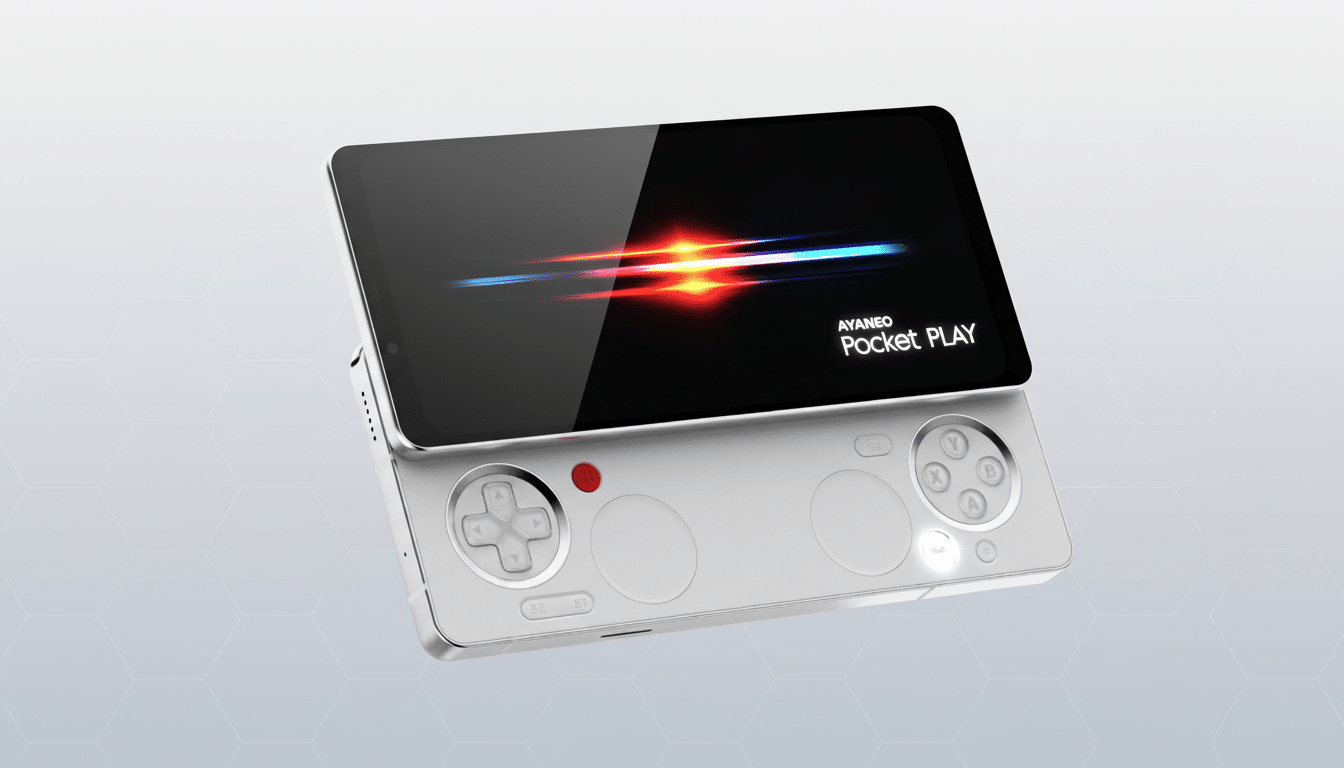
Shoulder inputs are present as digital keys rather than analog triggers. That choice should please action and platformer fans but may leave sim racers wishing for variable input. The video also spotlights a flat front panel, a dual-camera housing on the rear, and a noticeably thicker chassis than mainstream flagships—a trade-off that likely supports cooling, battery headroom, and the sliding rail mechanism.
High-Refresh OLED Display and Flagship Silicon
Ayaneo confirms a 6.8-inch OLED running at 165Hz, putting Pocket Play in the same refresh-rate tier as dedicated gaming phones from brands like RedMagic. The display choice should reduce input latency and improve motion clarity in fast-paced games, and OLED’s per-pixel lighting remains a strong fit for HDR content and deep contrast scenes.
Under the hood sits MediaTek’s Dimensity 9300 with active cooling. MediaTek’s flagship uses a big-core-heavy CPU configuration and Immortalis-G720 graphics on an advanced TSMC process, with early deployments in phones like the Vivo X100 series demonstrating strong sustained performance under load. Active cooling is particularly noteworthy on a smartphone; by moving heat off the SoC more efficiently, it can maintain higher clocks for longer play sessions than passive solutions typically allow.
Color options include Void Black and Silver White, and Ayaneo’s footage suggests a robust internal structure to support the slider assembly. Final RAM and storage tiers, battery capacity, weight, and charging speeds remain unannounced, but the platform choice and cooling strategy signal a device built expressly for long gaming stints rather than short bursts.
Why Built-In Controls Could Reshape Mobile Play
Mobile’s software library has outpaced its hardware ergonomics for years. According to Newzoo’s most recent market outlooks, mobile games account for roughly 49% of global video game revenue, yet the most common hardware setup is still a slab phone and virtual controls. Slide-out gamepads eliminate clumsy on-screen buttons, reduce finger occlusion, and unlock precise physical input without requiring a separate accessory.
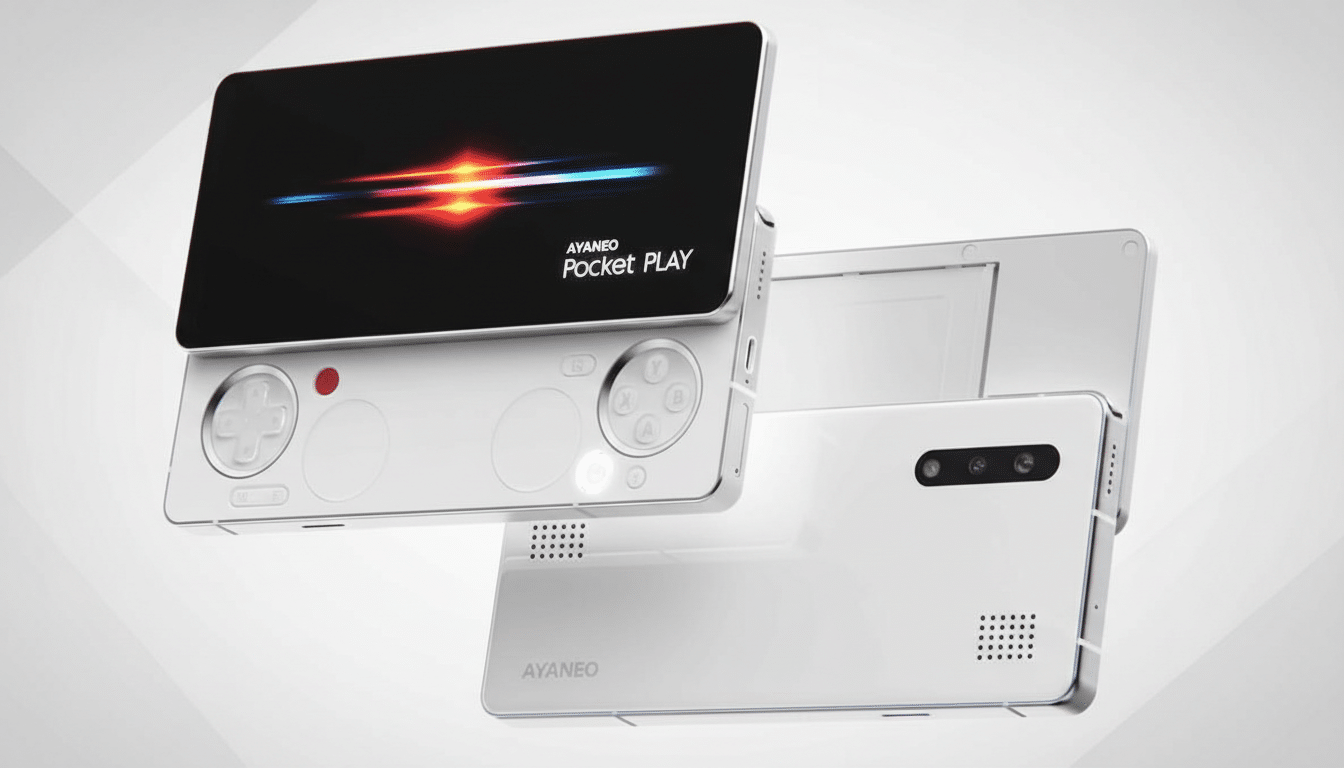
For emulation, cloud streaming, and controller-first indies, an integrated deck solves practical pain points: there’s no clip to attach, no Bluetooth lag to manage, and no awkward bulk once you stop playing. Dual trackpads also broaden input possibilities—navigating PC-oriented interfaces or implementing gyro-plus-trackpad aiming—capabilities that attachable pads often lack.
Positioning Against Current Gaming Phones
Recent gaming flagships such as the ROG Phone line and RedMagic 9 series lean on high-refresh displays, large vapor chambers, and capacitive shoulder triggers, with controller accessories sold separately. Pocket Play attempts something different: it bakes the controller into the hardware so the phone stays pocketable when closed yet game-ready the moment it slides open. The last mainstream attempt at this form factor was the Xperia Play in 2011; since then, the market has seen modular add-ons and niche sliders, but not a purpose-built gaming slider with current-gen silicon and trackpads.
Ayaneo also brings credibility from the handheld PC scene, where it has shipped multiple x86-based portables. That background shows in choices like trackpads and active cooling—features more common in handheld PCs than phones—suggesting Pocket Play aims to bridge mobile and PC-like control schemes.
What We Still Need to Know About Pocket Play
Key questions remain. Battery size and endurance will determine whether the 165Hz OLED and Dimensity 9300 can be enjoyed untethered for long sessions. Storage tiers, microSD support, and thermal performance under stress tests will matter to power users. Software polish is equally important: controller mapping, per-game profiles, and robust haptics could make or break the everyday experience.
Ayaneo says Pocket Play will debut through Kickstarter. As always, crowdfunding carries risk—delivery timelines and final specs can shift—though the company has a track record of shipping complex handhelds. If the retail model lands close to what the video shows, Pocket Play could become the most credible modern take on the Xperia Play concept, offering physical controls without sacrificing the convenience of a phone you can actually carry.
