


Autolane is debuting an “air traffic control” layer for self-driving vehicles, designed to choreograph where and how robotaxis and delivery bots pull in, line up and take off from private properties. The Palo Alto start-up has raised $7.4 million from investors such as Draper Associates and Hyperplane and struck a pilot with Simon Property Group to run driverless arrivals at shopping centers in Austin, Texas, and San Francisco.
Why Robotaxis Need an Authorization-to-Drive Service
Autonomous vehicles are getting good at driving from Point A to B in public spaces, but the handoff at Point B is a disaster zone: Curb zones are crowded and uncivilized, signage varies widely and private lots were not designed for software-guided fleets that require centimeter-perfect paths. A viral incident in which a robotaxi got stuck in a fast-food drive-through underscored the point: Without site-specific training, even the most advanced autonomy blunders into clumsy dead-ends.
- Why Robotaxis Need an Authorization-to-Drive Service
- How Autolane’s System Works Across Private Properties
- Early Partners and Deployment Plan for Pilot Programs
- The Standards Puzzle and the Integration Effort
- Why Property Owners Care About Autonomy-Ready Curbs
- Risks, Timelines and What to Watch in Early Pilots
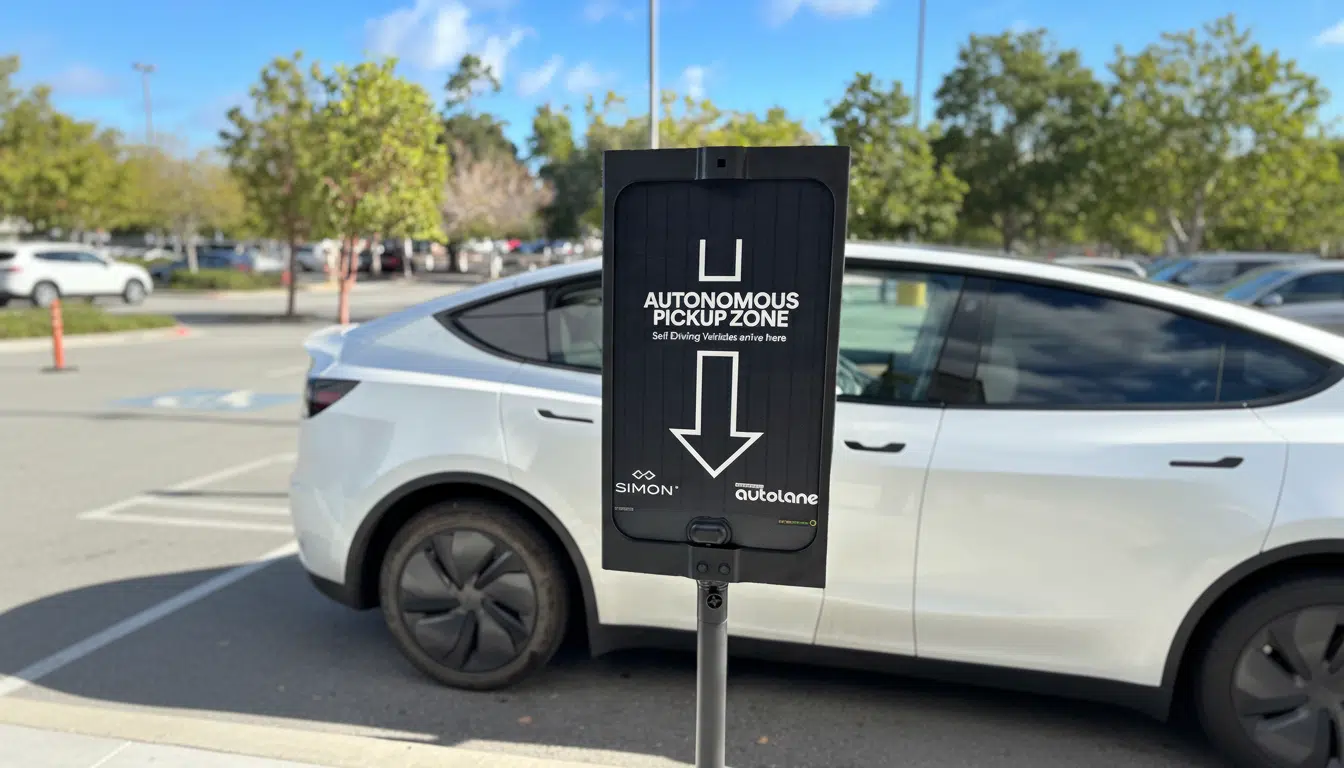
Airports worked out a similar problem decades ago with slot controls, ground markings and tower clearances. Now Autolane is trying to extend that logic to malls, big-box stores, hospitals, stadiums and corporate campuses: Define precisely where vehicles stop, how they form a line, who has priority and when drivers must yield. The goal is to turn murky curbside moments into clear and predictable activities that machines can replicate, over and over again.
How Autolane’s System Works Across Private Properties
The company is developing hardware-enabled software that pairs plain physical markers (standard pick-up and drop-off signs, pavement decals) with a cloud platform that encodes precise geolocations, approach vectors and operational guidelines for every site. Property owners can draw digital site maps, assign robotaxi-safe zones, implement time-of-day policies and establish service-level priorities based on which fleet or tenant needs priority for a ride.
The company’s APIs are set up to deliver these commands directly to autonomous vehicle providers and logistics platforms. That provides fleets with a machine-readable “clearance” to go through before entering private property, and pre-coordinated instructions for where to stop, wait or reroute. The system can also prioritize a sequence of arrivals to stop fire lanes and loading docks from being blocked, or ADA spaces too, and can enforce dwell-time limits to keep high-demand areas in motion.
Crucially, the company emphasizes that it’s targeting private property, not municipal curbs or public streets. That B2B stance allows retailers, real estate operators and quick-service chains to establish their own rules across portfolios without waiting on citywide regulations to follow suit.
Early Partners and Deployment Plan for Pilot Programs
Simon Property Group, among the biggest retail REITs, has agreed to test out Autolane’s system at some shopping centers in Austin and San Francisco — two markets where robotaxi services are gaining traction. The pilot will include the identification of exact pick-up and drop-off locations, the creation of safe routes for vehicles approaching and docking, and connection to participating autonomous fleets so that vehicles are lined up upon arrival or departure.
Outside of robotaxis, Autolane is looking at delivery and service bots — groceries, pharmacy, dry cleaning, parcel returns — where the reliability and repeatability of handoffs can make or break the consumer experience. Buildings will soon require autonomy-ready “curb ops,” just as they added Wi-Fi and EV charging in earlier technology waves, the company argues.
The Standards Puzzle and the Integration Effort
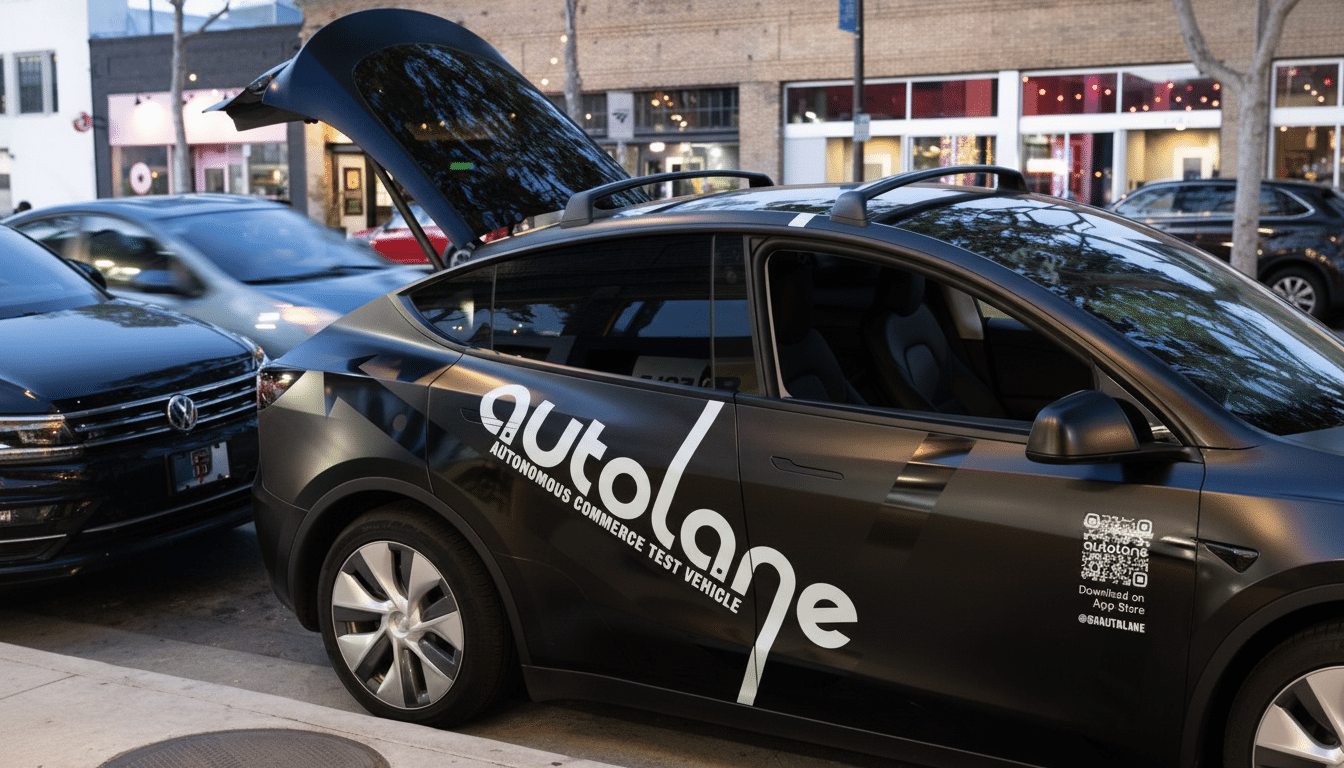
Getting multiple providers of autonomy to read off the same hymn sheet is the heavy lift. There is greater consensus within the AV industry around baseline definitions, such as SAE’s levels of driving automation, yet a base layer that includes the curb and property sectors still remains siloed. Autolane says it will provide a common API around property rules, and in concert with emerging frameworks from organizations like the Open Mobility Foundation (which just released data standards for curb management) and live U.S. DOT work on connected-vehicle interoperability.
The company also squares off with a neighboring ecosystem of curb-tech vendors that cater primarily to cities — names like Automotus, Populus and Passport. Autolane’s wager is that private sites need different tooling: tighter geospatial precision, building-level rules and direct integrations with fleet dispatch systems to avoid conflicts instead of resolving them.
Why Property Owners Care About Autonomy-Ready Curbs
Safety, throughput and sales all depend on predictable curb behavior. The National Safety Council has said tens of thousands of crashes happen in parking lots and garages every year, and transportation researchers have long circulated figures that a significant share of urban traffic results from drivers searching for parking. Autonomy could change that, by taking much of the friction out of transit — but only if vehicles know where they are going and what to do when they get there.
In retail and in hospitality, shaving off even just a few seconds from dwell times could lead to increased turn rates during peak hours. Logistics: No mis-parked vehicles and no blocked docks mean service levels are safe. And for security as well as facilities teams, a digital record of where and when vehicles entered your property is an operational visibility that clipboards never delivered.
Risks, Timelines and What to Watch in Early Pilots
Adoption will follow the pace of autonomy rollouts by players such as Waymo and Zoox, and retailers’ comfort in standardizing sites. Your integration depth will matter — the closer Autolane gets to the fleet dispatch and perception stacks, the more consistently their cars can honor site-wise rules. Data stewardship, cybersecurity and change management — keeping maps current as curb layouts evolve will be ongoing challenges.
The immediate signal will be pilot results: fewer conflicts at pick-up zones, lower double-parking, more consistent on-time performance and cleaner customer handoff. If Autolane can demonstrate those benefits and scale an API that several AV providers agree to use, “air traffic control” for ground robots could become as commonplace — and invisible — as the actual towers supporting planes in the sky above.
