


The Aurzen EAZZE D1R lands squarely in the sweet spot for first-time projector buyers: simple to set up, easy to live with, and good enough in the areas that matter for big-screen movie nights. By baking Roku TV into a compact 1080p unit that sells around the $200 mark, it avoids the clunky software and fiddly setup that sink many budget models, while still keeping costs low.
What Stands Out in the Box: Key Specs and Setup
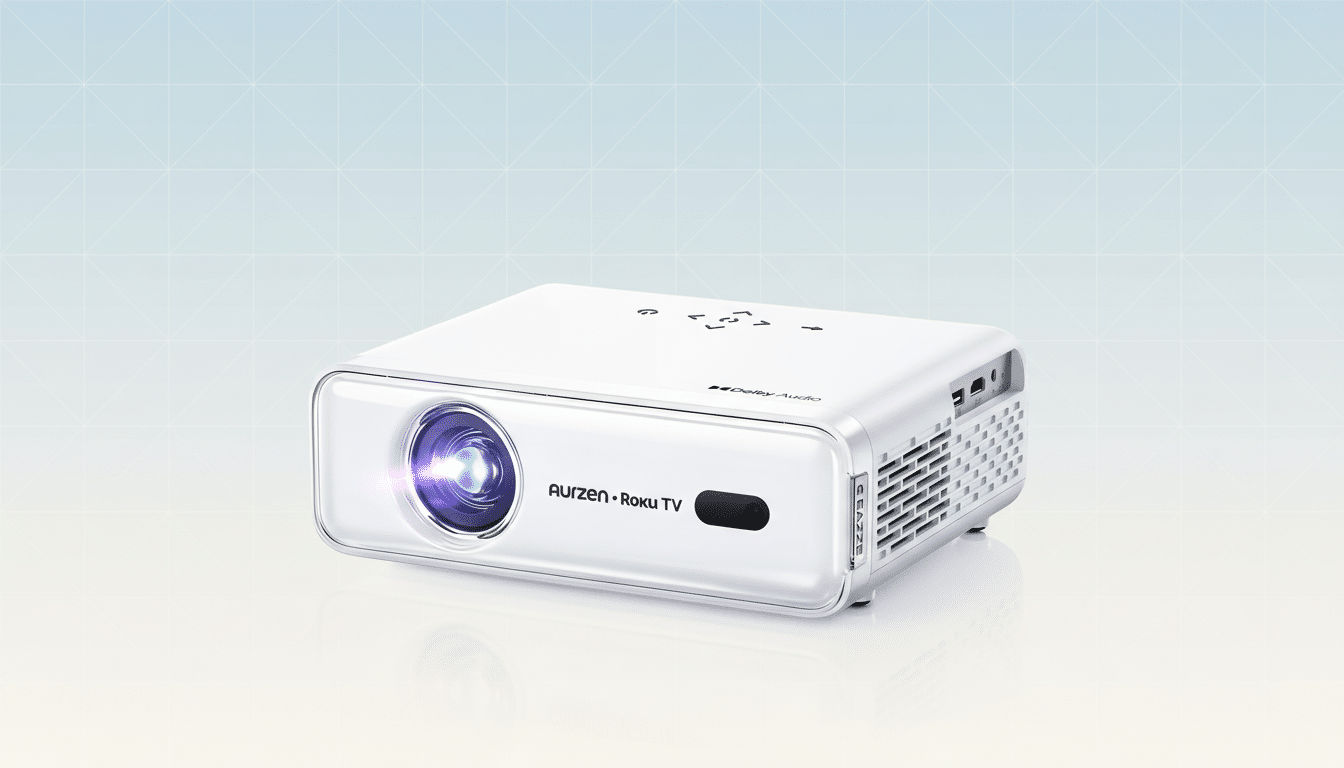
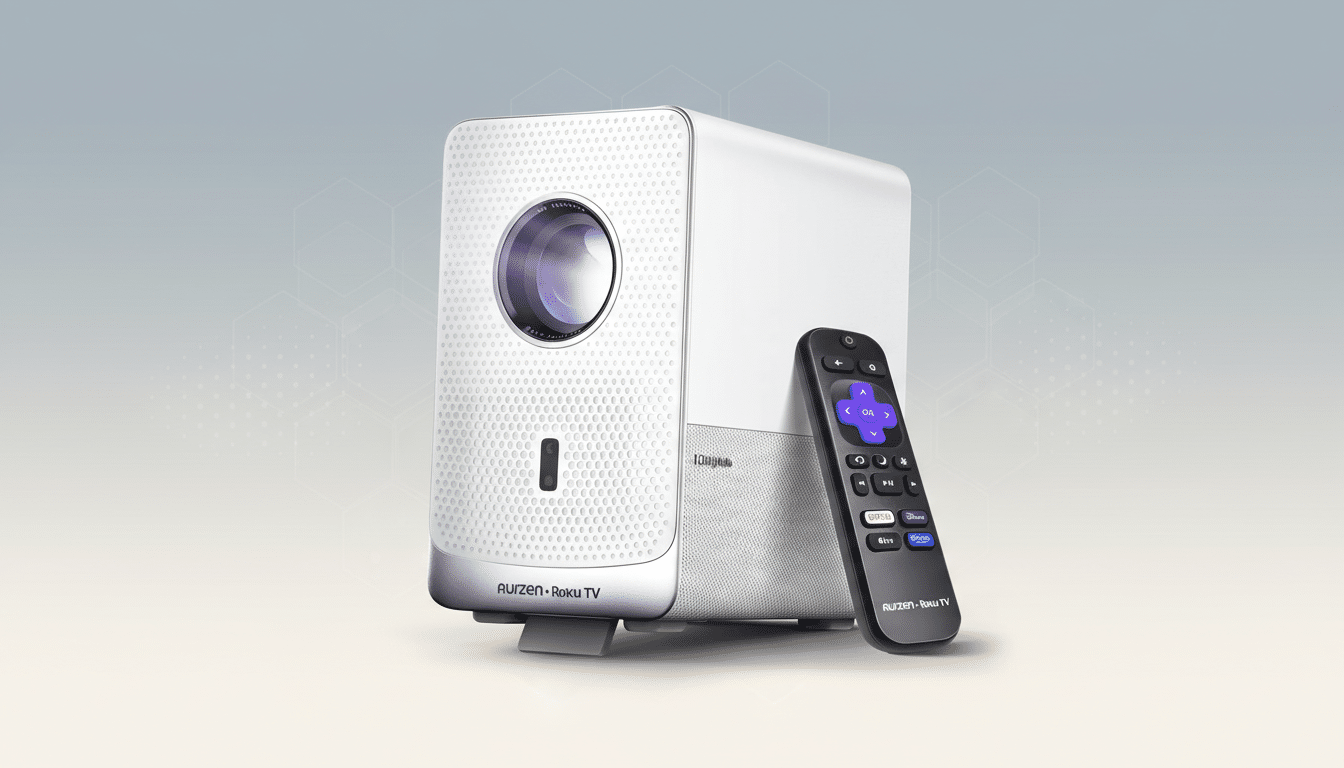
On paper, the EAZZE D1R keeps expectations realistic. It’s a 1080p DLP projector rated at roughly 280 ANSI lumens, with autofocus and auto keystone to get a straight, sharp image without a lot of tinkering. You get Wi-Fi and Bluetooth on board, a standard HDMI and USB for external sources, Apple AirPlay support, and Dolby Audio through built-in speakers. Crucially, Roku TV is native, and the included Roku remote means you can power up and start streaming without adding a dongle or juggling extra cables.
- What Stands Out in the Box: Key Specs and Setup
- Picture Quality in Real Rooms and Best Screen Sizes
- Sound and Connectivity for Everyday Viewing Setups
- Software Advantage with Roku TV and Why It Matters
- Where the Savings Show in Design and Performance Trade-Offs
- Value Verdict and Rivals for Budget-Friendly Projectors
Picture Quality in Real Rooms and Best Screen Sizes
Brightness is the most important context setter here. Around 280 ANSI lumens places the D1R in the “lights-down” category. In a darkened room, it produces a crisp 80–120-inch image with respectable sharpness and even focus across the frame. Aurzen quotes maximum sizes up to about 200 inches, but best results come well under that, especially if you don’t have blackout curtains. Industry guides from outlets like ProjectorCentral generally recommend several hundred lumens for dark environments and far more to tame ambient light, and the D1R behaves exactly like those charts suggest.
Color looks balanced and pleasing for the price, with skin tones and sports broadcasts popping more than you’d expect from an entry-level machine. Blacks are closer to dark gray than in pricier home theater projectors, so very shadowy scenes lose a touch of detail. There’s no deep calibration suite to chase perfection, but the trade-off is a setup that gets you from couch to content in minutes.
Sound and Connectivity for Everyday Viewing Setups
The integrated speakers are better than “just in case” drivers; dialogue comes through clearly and volume fills a small living room. Bass is limited and scale is modest, so for backyard screenings or blockbuster nights, a Bluetooth soundbar or portable speaker is a smart addition. The cooling fan is audible during quiet scenes—a common reality at this price—so place the unit a bit forward of the seating area if you can.
HDMI handles laptops, streaming sticks, or consoles, and the projector will display slower-paced games just fine. Input lag is noticeable enough that competitive titles and rhythm games are not its forte. For casual play or turn-based genres, it’s serviceable.
Software Advantage with Roku TV and Why It Matters
Budget projectors often stumble on software, shipping with bare-bones interfaces or lightly skinned Android builds that feel half finished. The D1R’s native Roku TV changes that calculus. Boot times are quick, app support is broad, and navigation is muscle memory for anyone who has used a Roku streamer or TV. Roku reports more than 80 million active accounts globally, and that scale shows up in reliable app availability and predictable updates.
This matters because streaming dominates viewing habits. Nielsen’s tracking has shown streaming taking over one-third of total TV usage in the U.S., and a projector that behaves like a familiar TV—no dongles, no new ecosystem to learn—gets used more often. The D1R nails that convenience-first mandate.
Where the Savings Show in Design and Performance Trade-Offs
The hardware design is intentionally plain. There’s no built-in tilt or swivel stand, and you’ll likely want a tripod mount or a simple riser to fine-tune height. Manual image controls are lean, and brightness keeps daytime viewing off the table unless blinds are drawn. None of this is unusual in the category, but it’s worth planning around—pair it with a 1.1–1.3 gain screen or a clean, light-neutral wall, and aim for evening sessions for the best results.
Value Verdict and Rivals for Budget-Friendly Projectors
The EAZZE D1R is built for renters, families, dorms, and anyone curious about a projector without committing to an expensive home theater. It sidesteps the biggest budget-projector pain point with Roku TV baked in, delivers a clean 1080p image in dark rooms, and keeps setup almost frictionless. You’ll want external audio for larger spaces and you’ll live with fan noise, but the overall package is easy to recommend for movie nights and sports.
Within the brand’s own lineup, the EAZZE D1R Cube offers a similar Roku-first experience at a slightly higher price, while Aurzen’s Google TV models like the BOOM Air and BOOM Mini cater to those who prefer Google’s recommendations and voice integrations. If you need true daytime brightness or cinematic black levels, you’ll be shopping in a pricier tier from established home theater names. For everyone else, the D1R proves you don’t need to spend much to get a big, enjoyable picture—and that convenience can be the most important spec of all.
