


Audible has introduced Read & Listen, a hybrid reading feature that syncs on-screen ebook text with audiobook narration in real time. The update brings a lyrics-style, word-by-word highlight to the Audible app, aiming to keep distracted minds engaged by letting users read and listen simultaneously without switching apps.
How Read & Listen’s Immersive, Synchronized Reading Works
Read & Listen blends two formats into a single, synchronized view. Open a supported title and the text scrolls and highlights in lockstep with the narrator’s voice, much like a karaoke-style feed for novels and nonfiction. Unlike older Whispersync for Voice—which let people jump between Kindle and Audible—this mode keeps everything inside Audible, reducing friction that often breaks focus.
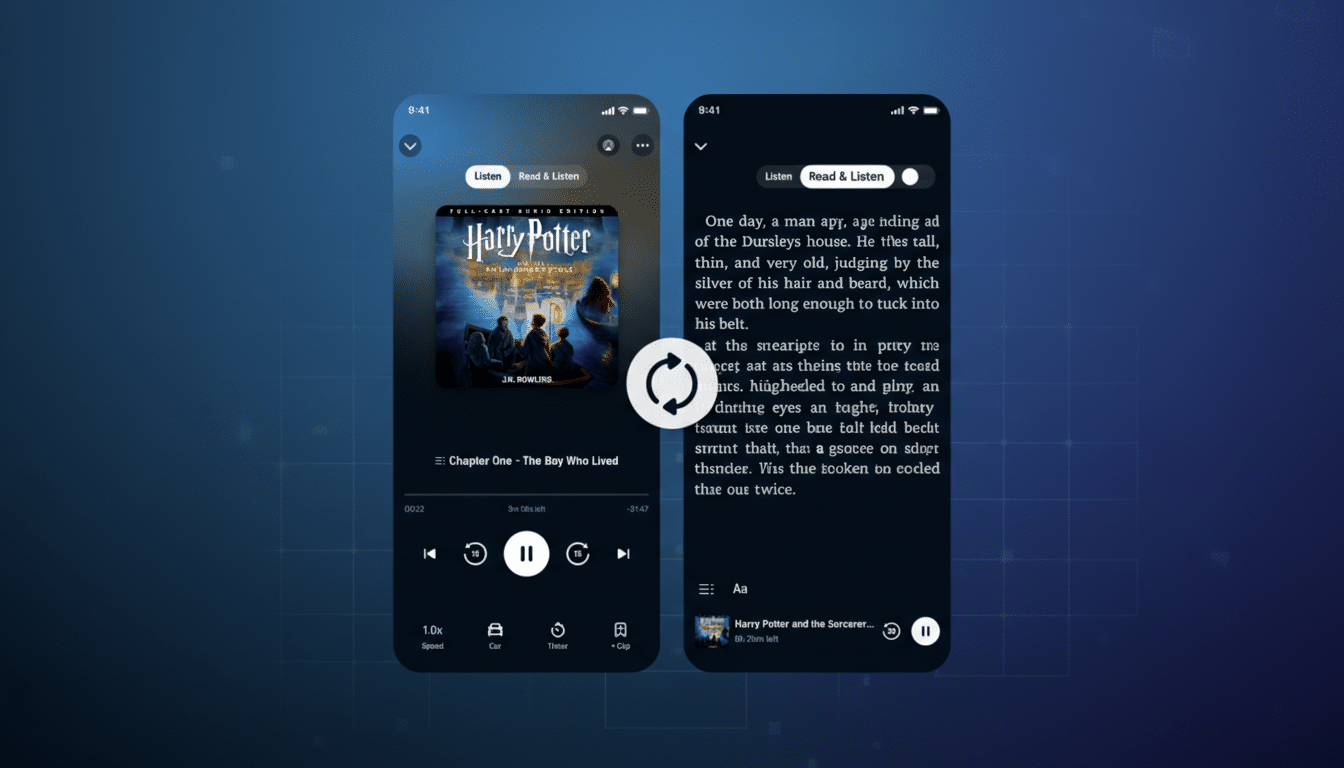
The app flags compatible books, can filter your library to show supported titles, and requires that you own both the audiobook and the matching ebook. Audible says hundreds of thousands of titles across multiple languages already work with the feature.
Why Synchronized Reading and Listening Could Boost Focus
Reading while listening taps into well-studied principles of multimodal learning. Dual Coding Theory and research from cognitive psychologist Richard Mayer suggest that pairing complementary channels—here, visual text and auditory narration—can reinforce comprehension and recall by reducing the need to mentally “fill in” missing context from a single mode.
Neuroscience offers a parallel: UC Berkeley researchers have shown that the brain maps narrative meaning in similar ways whether we read or listen, indicating strong overlap in how stories are processed across modalities. For everyday readers, that overlap means synchronized input can steady attention and anchor the eye on the page, especially in sections that might otherwise invite mind-wandering.
Audible’s internal data aligns with this picture. The company reports that people who combine reading and listening tend to finish more books per month, and a large share say the dual-format experience improves focus and retention. It’s not a cure for distraction, but it is a practical nudge to stay present with the text.
Real-World Use Cases for Audible’s Read & Listen Feature
For commuters, syncing text to narration can turn a few unfocused minutes into steady progress—switching from reading on the train to eyes-free listening on the walk without losing context. For language learners, hearing pronunciation while seeing spelling can accelerate vocabulary acquisition and reinforce syntax in a way that one format alone struggles to match.
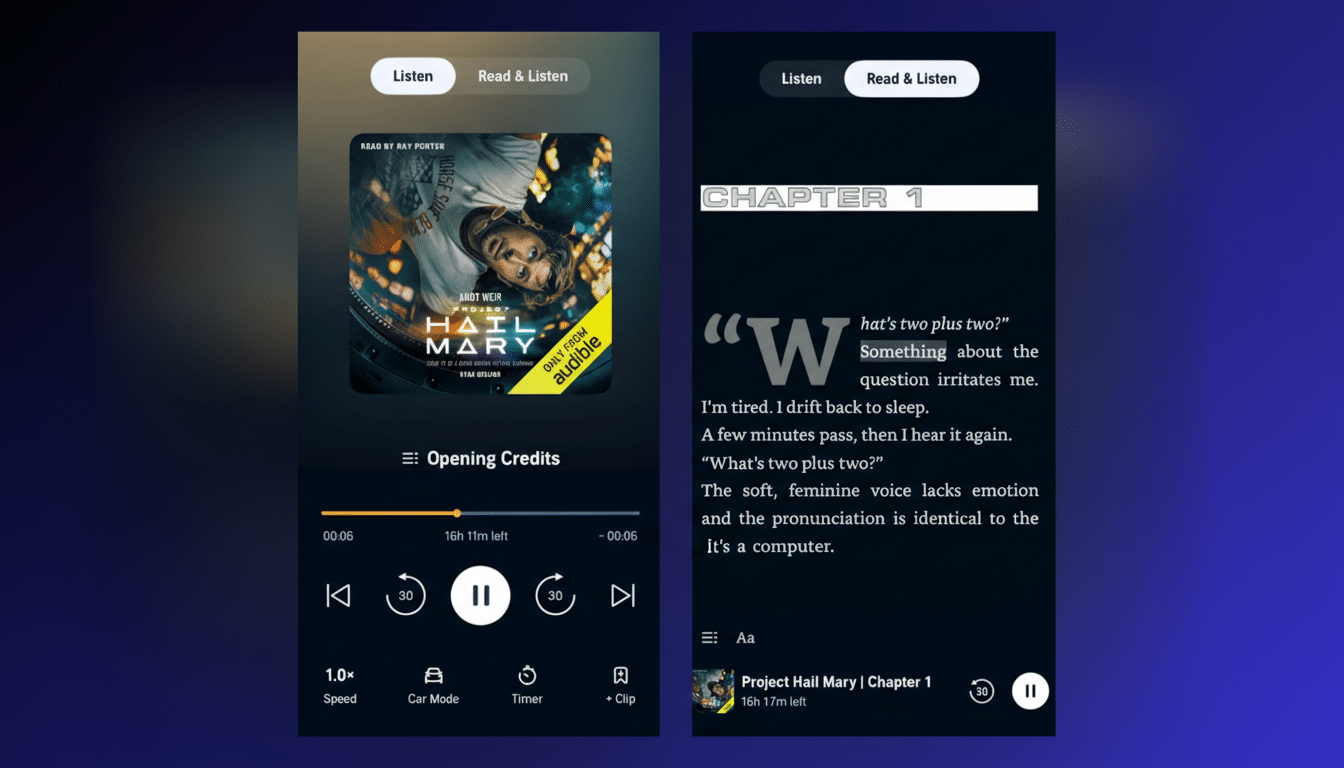
Students and professionals who skim by default may also benefit. The highlight trail slows skimming into guided pacing, encouraging full-sentence processing. And for readers who experience attention variability, the dual stream can serve as a gentle metronome, helping the mind rejoin the sentence if it drifts mid-paragraph.
Availability and How Read & Listen Works in the Audible App
Read & Listen is rolling out in the US now, with additional regions to follow, including the UK, Australia, and Germany. Within the Audible app, eligible titles display an option to activate the synchronized text view. You can filter your library to surface books that support the feature, minimizing guesswork about compatibility.
There is a catch: you need access to both formats. Many popular titles are sold in paired bundles or offer discounted pricing to add the companion ebook or audiobook. Once matched, the app keeps your place in real time, so you can alternate between modes or use both together without manual syncing.
Why This Read & Listen Launch Matters for Publishing’s Future
The move reflects a broader trend: audio’s rapid rise has redrawn reading habits. The Audio Publishers Association reports more than a decade of double-digit growth in US audiobook revenue through 2022, surpassing $1.8 billion. As audiences shift fluidly between formats, the future of “reading” looks increasingly multimodal.
Earlier solutions made switching possible; Read & Listen makes it feel native. For anyone who has ever replayed a chapter because their attention slipped, the feature reframes books as participatory rather than passive—an assistive layer that steadies attention, deepens comprehension, and helps more stories actually get finished.
