


Asus is pushing ultralight laptops into unwieldy territory with the Zenbook A16, a 16-inch OLED machine that feels impossibly light but unmistakably high octane. The big fish here is Qualcomm’s new 18-core Snapdragon X2 Elite Extreme chip, the top-of-the-line-iest Arm processor you can get, and it comes attached to some marathon battery life claims as well as some serious on-device AI muscle. With time and an early unit, it’s evident that Asus wants a big-screen crowd-pleaser here that can hound traditional 16-inch heavies — maybe even poke at Apple’s 15-inch MacBook Air.
Design and materials: ultralight build and Ceraluminum
The chassis is the story. The Zenbook A16 feels more like a 13-inch ultrabook slapping around on a scale, not a 16-inch laptop, thanks to its thickness of only 0.65 inch and weight of 2.65 pounds. It falls into the gram-class weight class of laptop, yet there’s more screen than almost all mainstream workhorses and it undercuts the 15-inch MacBook Air on mass.
- Design and materials: ultralight build and Ceraluminum
- Display and media: 16-inch 1800p 120Hz OLED with HDR
- Snapdragon X2 Elite Extreme performance targets and AI
- Memory, storage and connectivity specifications
- Ports, keyboard and usability for creators and travel
- What to watch for in real-world testing and uptime
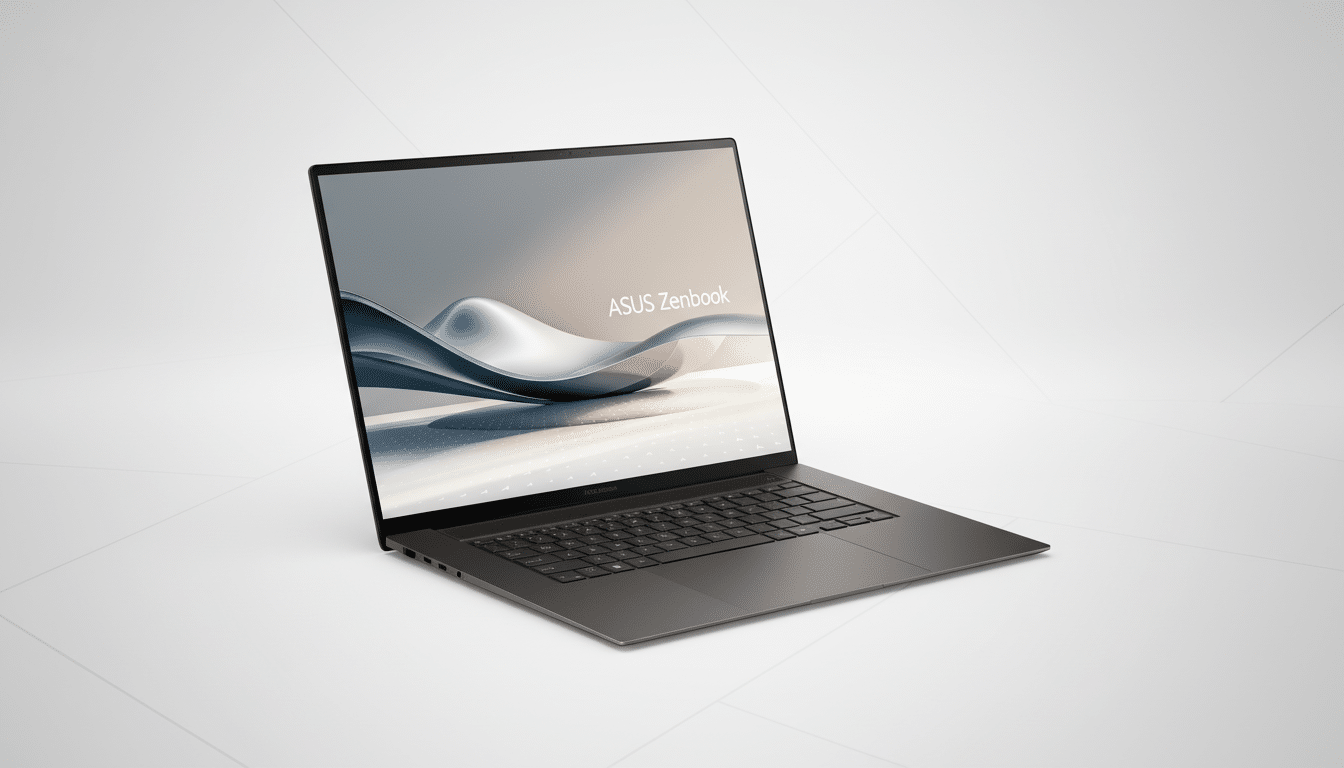
Asus’ secret sauce is the Ceraluminum finish, a high-voltage, high-heat process that converts a magnesium-aluminum surface into a ceramic-like layer. The result is less density but without the flimsiness. In the hand, the A16 is soft-touch but substantial, doing away with fingerprints and light scratches more resolutely than raw metal. It’s the unusual thin-and-light that doesn’t flex when you pick it up by a corner.
Display and media: 16-inch 1800p 120Hz OLED with HDR
It’s designed for the binge-spectacle and pseudo-jokey work scene: a sharp 1800p resolution at 120Hz, up to 500 nits of brightness, and a response time of just 0.2ms.
Blacks drop to inky depths thanks to a quoted 1,000,000:1 contrast ratio and HDR True Black 1000 support, a certification guided by VESA. Motion is clean, text is tack-sharp, and reflections are mercifully tame for an OLED.
Color ambitions are high, too. Asus’ Lumina panels sit a few points shy of full 100 percent coverage for cinema-focused gamuts like DCI-P3, and the bump up to a bigger canvas doesn’t mean color just peters out. For travelers and students, the company’s promise of up to 21 hours of video will mean long-haul flights turn into two-movie-and-a-nap journeys without needing to plug in or hunt for an outlet — though real-world mixed-use battery life is always a matter of workload and screen brightness.
Snapdragon X2 Elite Extreme performance targets and AI
Upgrade headline is the 18-core Snapdragon X2 Elite Extreme, press-releasing its clocks at up to 5 GHz and having more memory on a widened 192-bit bus providing up to 228 GB/s of bandwidth. The AI engine that does up to 80 TOPS (tera operations per second) powers local generative tasks, ranging from image upscaling to captioning to summarization. For reference, Microsoft’s Copilot+ PC baseline is 40+ TOPS, so the A16 clears that hurdle with a good margin upwards.
Arm-based Windows laptops rise and fall on both sustained performance (making a Core i9 more appealing) as well as app compatibility. Asus couples the chip with a dual-fan cooling system, and it felt zippy in hands-on use splitting our screen across productivity apps, watching a big-vista video clip, and editing photos. Native Arm builds of major tools have accelerated ever since the first X Elite wave, and Qualcomm’s emulation layer did a perfectly fine job with legacy x64 apps in our short tests. In-depth benchmarks will tell us how it compares with the latest Intel, AMD, and Apple silicon under long workloads.

Memory, storage and connectivity specifications
Asus goes with no-nonsense hardware: 48GB of DDR5X memory hooked up to the Snapdragon SoC, paired with a 1TB PCIe 4.0 SSD.
That’s a rare amount of RAM in an ultralight, and it’ll be useful for big browser sets, 4K timelines with proxies, or running multiple AI workloads locally. Wireless is as modern as can be with tri-band Wi‑Fi 7 and Bluetooth 5.4 matching the throughput and low-latency enablers of the Wi‑Fi Alliance’s next-gen spec.
Ports, keyboard and usability for creators and travel
Despite the diet, the port layout doesn’t feel compromised:
- Two USB4 40 Gbps Type‑C (with DisplayPort and power delivery)
- One USB‑A 3.2 Gen 2
- HDMI 2.1 output
- Combined 3.5 mm headphone/microphone jack
- Full-size SD card reader
That’s creator-friendly vs. many of the premium 16-inch competitors who default to USB‑C-only.
The keyboard forgoes a numpad in favor of big ol’ keys and a properly separated arrow cluster, a deal you’ll consider fair game on mobile work rigs. The Smart Gesture touchpad is huge and glassy smooth, and the gesture tuning makes long spreadsheets or timelines slightly less of a slog. The entire deck stays moderately cool under light editing and streaming — always a good sign for continued loads in the future.
What to watch for in real-world testing and uptime
The Zenbook A16 is attractive for its balance: a truly light 16-inch body, a cinemascope OLED with a 120Hz refresh rate, and an Arm design that chases efficiency without feeling slow. If Qualcomm’s X2 Extreme offers the generational uplift that its specifications suggest, and if Windows on Arm app coverage maintains a similar degree of progress, this may be the big-screen ultralight to beat for commuters, students, and frequent fliers.
As ever, vendor numbers are in need of real-world verification. Video playback estimates don’t usually equate to mixed workloads, and we’ll be keeping an eye on sustained CPU/GPU clocks, thermals, and battery drain under creator tasks. But purely in design, connectivity, and platform ambition, Asus is swinging hard — downconverting a 16-inch laptop into something that feels like it belongs inside of a 14-inch bag.
