


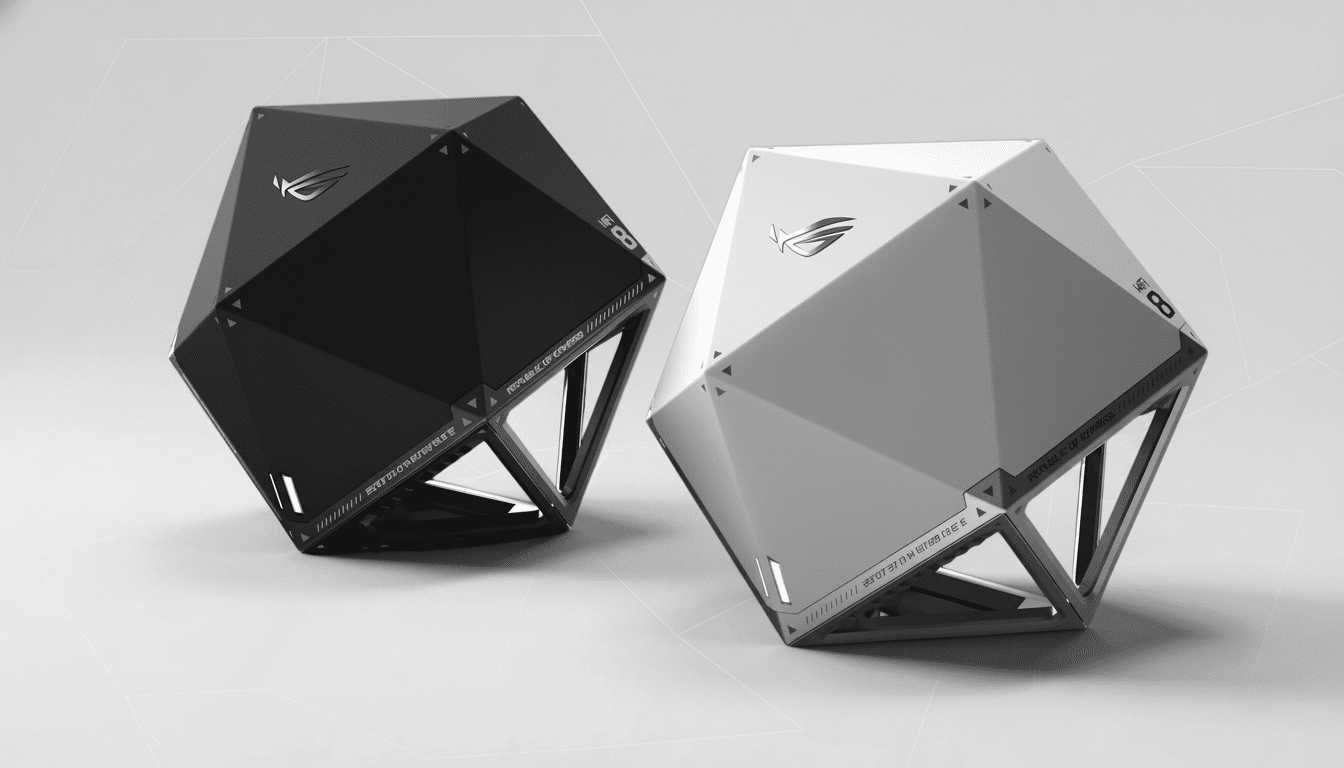
Asus used some CES limelight to tease (I recognise that) what could possibly be the first look at a Wi‑Fi 8 home router, with a ROG NeoCore concept design that looks nothing like the boring black cubes we shove behind TV stands.
It’s an early proof of concept, not a shipping product, but a sign of how the next generation of wireless will prioritize stability and responsiveness as much as raw speed.
A Concept That Flouts Conventional Router Design
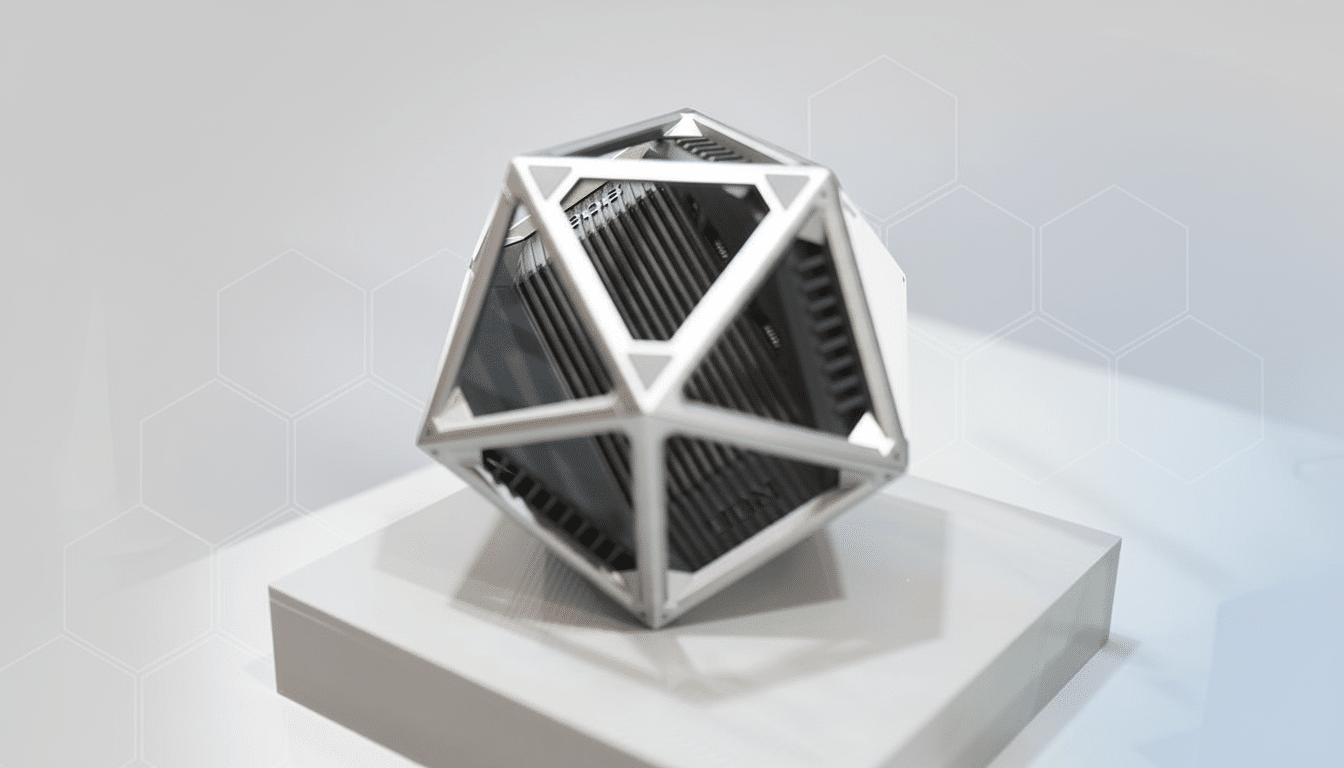
The icosahedron form factor of the NeoCore is pretty much the industrial design and finish I’d expect from a gaming PC, not a router. Edges and faces make up a geometric shell riddled with heat vents, plus a sneak peek at the prototype shows three Ethernet ports and a power input. Asus hasn’t announced the chipset, radio arrangement, or RF layout, but the faceted shape could give it more separation and direction options for internal antennas versus flat, slab‑style enclosures.
Asus is upfront that this is a tech demo, after all. Such concept hardware at CES often serves to solicit feedback, test theoretical thermal and RF assumptions, and see how far a brand can push design before function is lost. Look for aspects of the NeoCore to change before anything lands on store shelves.
What Wi‑Fi 8 Promises for Home Networking Performance
Whereas Wi‑Fi 7 pushed up peak speeds with 320 MHz channels and multi‑link operation, Wi‑Fi 8 is presented as the generation that delivers more consistent performance. The 802.11ax designs Asus has developed aim to tackle three main problems, as described by the company: more consistent throughput at typical ranges, wider coverage for IoT devices with low output power levels, and much‑reduced latency at each edge of the network.
Compared to Wi‑Fi 7, Asus is promising up to 2x midrange throughput, 2x IoT coverage, and as much as 6x less P99 latency—the worst‑case end‑to‑end delay that makes a video call stutter or a cloud gaming session feel laggy even if average latency appears fine. Reducing P99 is a true prize for AR/VR, competitive gaming, remote production, and industrial sensor applications where worst‑case behavior trumps headline speeds.
Underneath the hood, industry roadmaps suggest smarter multi‑link scheduling, better coordination of access points, denser client environments, and more deterministic airtime sharing. Wi‑Fi 8 can be expected to heavily favor 6 GHz spectrum wherever that is possible, following on from Wi‑Fi 6E and Wi‑Fi 7’s interference‑light channels that made those technologies so compelling.
Why Announce Before the Standard Is Final
The last public report by the IEEE 802.11 working group suggests that Wi‑Fi 8 won’t be fully standardized until approximately 2028. The Wi‑Fi Alliance doesn’t typically start certifying until after the base spec has cooled, and that means commercial “Wi‑Fi 8 Certified” stickers lag behind standardization.
So why show hardware now? Early prototyping—by both chipmakers and router brands—is often done to help shape features, validate silicon, and develop firmware paths. Pre‑standard devices can start in the market with partial functionality and be updated as the spec and certifications solidify. Regulatory dynamics are also relevant: with the FCC and numerous worldwide regulators having opened up 6 GHz, vendors can build radios and antennas now while protocol features continue to firm up.
What It Means for Buyers and Early Adopters This Year
Asus says it will ship its first Wi‑Fi 8 home routers later this year, but the NeoCore itself might not actually go to market in its current state. Early adopters should expect rapidly maturing firmware, constantly changing feature support, and paying a premium price—standard fare when it comes to first‑wave gear.
If you’re buying, watch fundamentals that won’t be undone over marketing cycles:
- Multi‑gig Ethernet (2.5GbE or 10GbE) on WAN and LAN
- Robust mesh backhaul options
- Automated channel management for 6 GHz
- Strong security suites with long‑term update commitments
The three Ethernet ports of the concept unit indicate that production design may couple advanced radios with a minimal integrated switch, making uplink speeds and port count critical.
It’s also worth remembering that Wi‑Fi 7 is barely getting out of the gate and is already awesome for multi‑gig broadband and latency‑sensitive use. Analysts and the Wi‑Fi Alliance say manufacturers ship billions of Wi‑Fi devices annually, while upgrade cycles for home routers favour years. The better value would be likely to come for most homes from waiting for Wi‑Fi 8 kit and second‑wave silicon, they added.
Bottom Line: What Asus’s ROG NeoCore Signals for Wi‑Fi 8
The ROG NeoCore is less an announcement of product and more a waypoint on the road to Wi‑Fi 8: bolder design, smarter radios, and a focus not just on top‑of‑the‑line speed but consistent performance as well. Watch for hard specifics—chipset partners like Broadcom, Qualcomm, or MediaTek; band counts; and certified feature sets—before you start making upgrade plans. The shocker, though, isn’t just how the NeoCore looks; it’s how much it foretells where home networking is going.
