


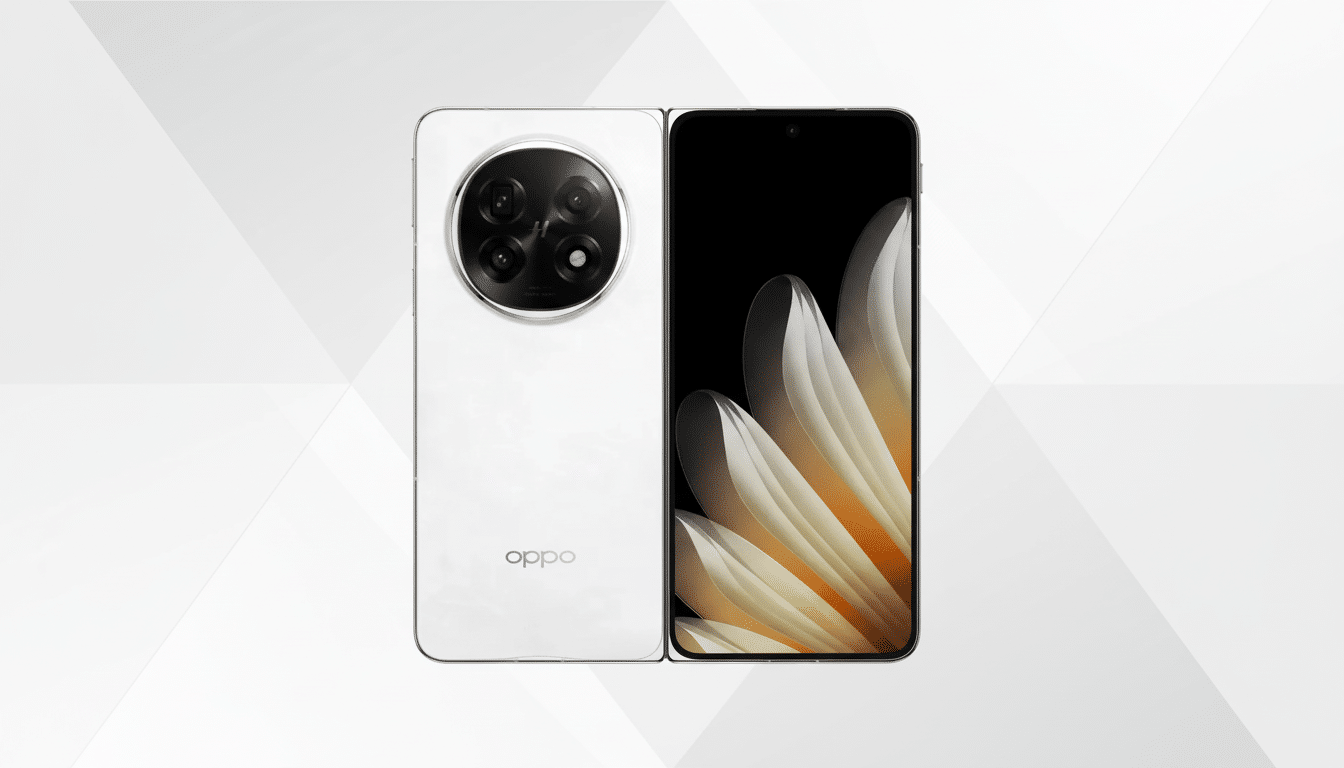
Apple is said to be dissecting an Oppo foldable in order to solve one of the category’s most challenging engineering problems: the visible crease. And Apple itself didn’t beat the minimum crease of the Oppo Find N5 with its own display prototypes, according to rumors from sources on Weibo — another sign of how determined Cupertino is to get everything just so for its first-generation foldable iPhone.
The scuttlebutt also indicates Apple will rely on Samsung Display for the inner panel and include next-gen “creaseless” tech that gained notice at CES. That would represent a significant deviation from the in-house testing-to-best-of-industry supply chain model that is an Apple hallmark when it wants to ship polish on day one.
- Why This Oppo Foldable Matters for Apple’s Design Goals
- Inside the Search for a Crease-Free Panel
- Samsung Display’s Quiet Leverage in Foldable Screens
- What a Near-Invisible Crease Would Mean for Users
- Rivals Aren’t Going to Stand Still in the Foldable Race
- The Teardown Takeaway for Apple’s First Foldable iPhone
Why This Oppo Foldable Matters for Apple’s Design Goals
Book-style foldables, including the Find N series, have received credit for a less prominent central valley than competitors. The key to Oppo’s approach is a teardrop hinge geometry and tight materials stack that allow the inside of the device to fold with a larger radius. The effect is less stress concentration on UTG and adhesive in the vicinity of the fold, which visually minimizes the visibility of the crease.
That level of accomplishment is a strategic asset for Apple. Consumers are regularly voting “the crease” they get as a “pain in the ass” that is their top roadblock to moving back to a slab phone. If Apple’s looking to attract mainstream buyers to foldables, the crease isn’t a cosmetic thing — it’s mission-critical to perceived quality, longevity, and premium feel.
Inside the Search for a Crease-Free Panel
It makes sense to tear down one of your top competitors. Engineers are able to map out the entire display stack: thickness of UTG, composition of protective layers, OCA, type of polarization, and even check where the hinge’s linkages or bearings might be. The teardrop hinge, which newer foldables have adopted, increases the radius of curvature as the screen closes, distributing strain over more surface. Small differences — like, perhaps, moving UTG by a few micrometers in a slightly different gauge, changing the OCA recipe — are enough to change how that fold behaves after thousands of cycles.
Apple’s industrial design imperatives only complicate matters.
There are also reports that the Z Flip has a wider aspect ratio than traditional book-style foldables to provide a more tablet-like canvas closer to an iPad mini when it’s unfolded. That geometry has an effect on hinge torque, the fold radius, and how each panel is layered, so reverse-engineering competitors is a shortcut to test what’s going to work in the wild before you commit to cutting your tooling.
Samsung Display’s Quiet Leverage in Foldable Screens
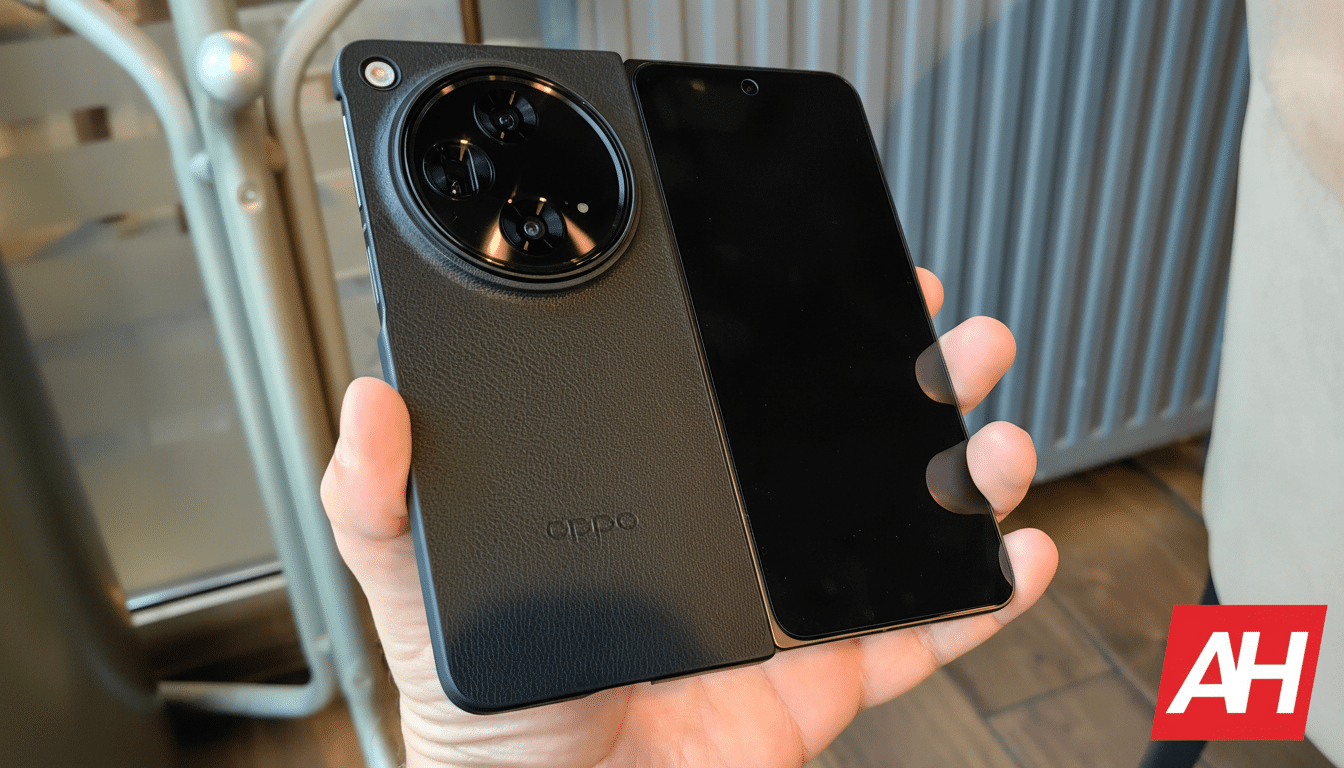
The twist: the inner panel of the Oppo Find N5 is provided by Samsung Display — the same firm now tied to Apple’s foldable screen efforts. At CES, Samsung Display showed samples of ways to minimize the crease: modified hinge interfaces and panel stacks that minimize the visual groove when viewed off-axis. To date, supply chain reports from the Korean trade press and analysis by the likes of Display Supply Chain Consultants have pegged Samsung Display as the next-gen foldable panel supplier to a number of brands.
If Apple introduces a creaseless-looking display made by Samsung Display before Samsung’s own next foldable becomes widely available with one, that would be uncommon but not unprecedented. The display arm and the phone division have different priorities, and Apple has long gotten first dibs on leading-edge screens by reserving volume capacity and tolerances. It’s the same playbook Apple used to bring high-refresh OLED and advanced LTPO tech to iPhones when it was good and ready.
What a Near-Invisible Crease Would Mean for Users
Removing the crease as a daily irritant would remove a significant barrier to transforming consumer behavior. Foldables are already topping spec sheets when it comes to hinge life; some devices tout hundreds of thousands of folds, while a recent flagship promised up to 1,000,000 in stress demos. But long-term durability statistics count for less in the minds of buyers than what they see and feel. A smoother inside surface helps reading, sketching, and video — exactly the kind of thing Apple will surely want to show off with its broader, tablet-style aspect ratio and optimized apps.
Market narrative also favors producing a premium push. IDC anticipates global foldable volumes will cross 20 million for the first time this year, with more than a few years of double-digit expansion in front of us. Slipping Apple’s ecosystem — and its accessories, services, and optimization for apps — into that recipe might expedite the category’s shift from enthusiast niche to mainstream premium.
Rivals Aren’t Going to Stand Still in the Foldable Race
And where Apple is apparently taking cues from Oppo, there’s smoke on the fire that Oppo itself has been evaluating several form factors, including a wider “notebook-style” option not dissimilar to what Apple is looking into. Samsung, meanwhile, has been exploring new aspect ratios and hinge designs as creases and external display ergonomics are the new battlefields. It’s not so much that the race is to who folds first as it is to who folds best.
The Teardown Takeaway for Apple’s First Foldable iPhone
Reverse-engineering competitors is par for the championship R&D course, and the whispery Find N5 teardown would have us believe that Apple is currently benchmarking the gold standard of crease control. Combine the can-I-fold-this teaching from Oppo’s hinge geometry with Samsung Display’s newest panel stack and Apple has a credible shot at a close-to-invisible fold — without betting the farm on unproven in-house screens.
As with all supply chain whispers, plans can change. But if Apple appears with a roomier canvas, barely a crease, and software that uses the inner display as though it were a tiny tablet, the first iPhone foldable won’t merely enter the category — it might reset expectations for how a foldable should feel.
