


Apple has shortened the runway for creatives who want to test its pro apps. The company is ending the long-standing 90-day standalone trials for Final Cut Pro and Logic Pro, replacing them with a 30-day trial available only through the new Apple Creator Studio subscription bundle. The shift tightens the try-before-you-buy window for two of the most widely used Mac production tools.
What Changed and Why the Shorter Trials Matter for Creators
Previously, Mac users could download fully featured trials of Final Cut Pro and Logic Pro and use them for 90 days—enough time to complete a project cycle, test plug-ins, and explore workflows at a realistic pace. Now, newcomers must enroll in Apple Creator Studio to get a trial, and that trial lasts 30 days. The change, first noted by Apple-focused outlets including Cult of Mac, reduces hands-on evaluation time by two-thirds.
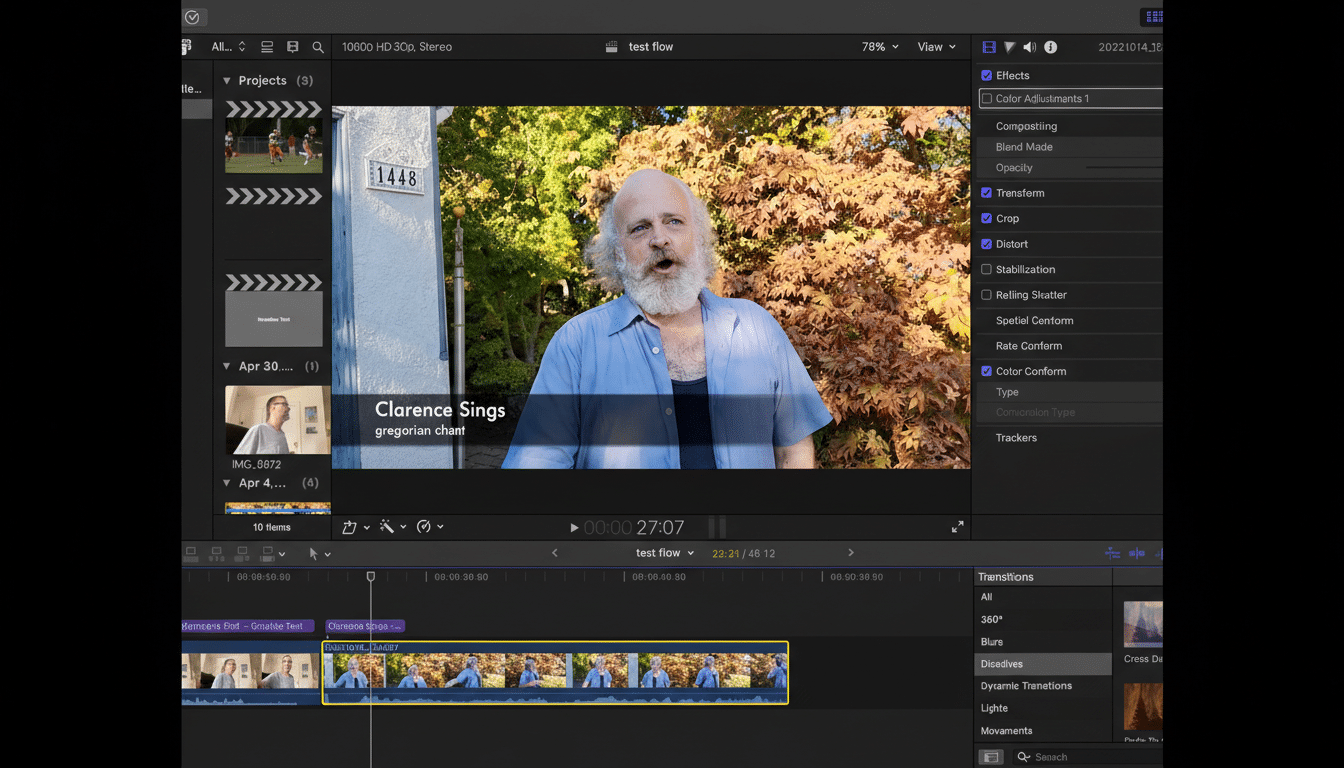
For students, indie editors, and musicians without budget flexibility, 30 days can be tight. Modern post-production and music workflows often involve multiple projects, media formats, and collaborative back-and-forth. A month may not cover a full edit or album cycle, especially for part-time creators testing new hardware, codecs, or plug-in chains.
Subscription Math for Creators Considering Apple’s Bundle
Apple Creator Studio costs $13 per month or $129 per year, with education pricing at $2.99 per month or $29.99 per year. The bundle includes Final Cut Pro, Logic Pro, Motion, Compressor, MainStage, and Pixelmator Pro. That lineup will suit many production pipelines, but the economics vary depending on what you need and how long you plan to use it.
If you only need one app long term, the one-time purchases—$299.99 for Final Cut Pro or $199.99 for Logic Pro on the Mac App Store—can be cheaper over time. At $129 per year, Final Cut Pro breaks even in a little over two years; at $13 per month, the break-even lands around 23 months. For creators who need both Final Cut Pro and Logic Pro, buying both outright (about $500 total) becomes cheaper than the subscription after roughly 47 months, assuming the annual rate.
Education pricing complicates the calculus. At $29.99 per year for students and educators, the subscription is hard to beat in the short to medium term, particularly for those who leverage multiple apps in the bundle. For professionals outside education, however, the shorter trial and recurring fees increase the pressure to decide quickly.
How Apple’s Approach Compares Across Pro Software Options
In context, Apple’s new 30-day trial aligns with much of the pro software market—even if it feels like a step back from Apple’s unusually generous 90-day window introduced in recent years. Adobe’s Creative Cloud typically offers 7-day trials, nudging users straight into subscriptions. Avid offers Pro Tools Intro as a free tier and paid trials for higher tiers. Blackmagic Design’s DaVinci Resolve remains the outlier with a robust free version and an affordable Studio license; that free tier has helped build massive adoption among new editors and colorists.
For music creators, several DAWs provide 30 to 60-day evaluations, and some offer feature-limited free tiers. Apple once distinguished itself by giving producers ample time to test Logic Pro in real projects. Rolling back to 30 days puts Apple closer to the industry’s median and may push some evaluators to sample competing tools first, where no-cost options exist indefinitely.
New Features Arrive with the Bundle for Editors and Musicians
The Creator Studio launch isn’t just a pricing change. Apple is introducing AI-assisted features across its suite to justify the bundle. Logic Pro adds Chord ID, which analyzes audio to surface chord progressions—a practical aid for remixers, educators, and session musicians. Final Cut Pro gains Beat Detection, using machine learning to align cuts to musical transients for faster performance edits and social clips.
The bundle also folds in Motion for graphics, Compressor for encoding and delivery, MainStage for live performance rigs, and Pixelmator Pro—now available on iPad as part of the lineup. Final Cut Pro and Logic Pro themselves remain Mac-only. For multidisciplinary creators, these additions increase the value proposition, especially when combined with the education discount.
Who Gains and Who Loses from Apple’s Trial Changes
Apple benefits by consolidating trials inside a single subscription funnel and by reducing the time users can evaluate without paying. Power users who plan to stay in the Apple ecosystem and want multiple apps may welcome the all-in-one approach, particularly in education. But newcomers who need longer than 30 days to test workflows—think documentary editors validating proxy pipelines or producers evaluating large sample libraries—lose flexibility.
If you need more time, consider this pragmatic approach: start projects in tools with generous free options, then import into Final Cut or Logic during the 30-day window to focus testing on performance, export reliability, and key plug-ins. And if your work revolves around just one Apple app for the long haul, run the break-even math before committing to a subscription.
The headline is simple for creators weighing the change: there’s still a free test drive, but it’s shorter and gated by a bundle. That makes every day of the trial count—plan your evaluation like a production schedule, not a casual demo.
