


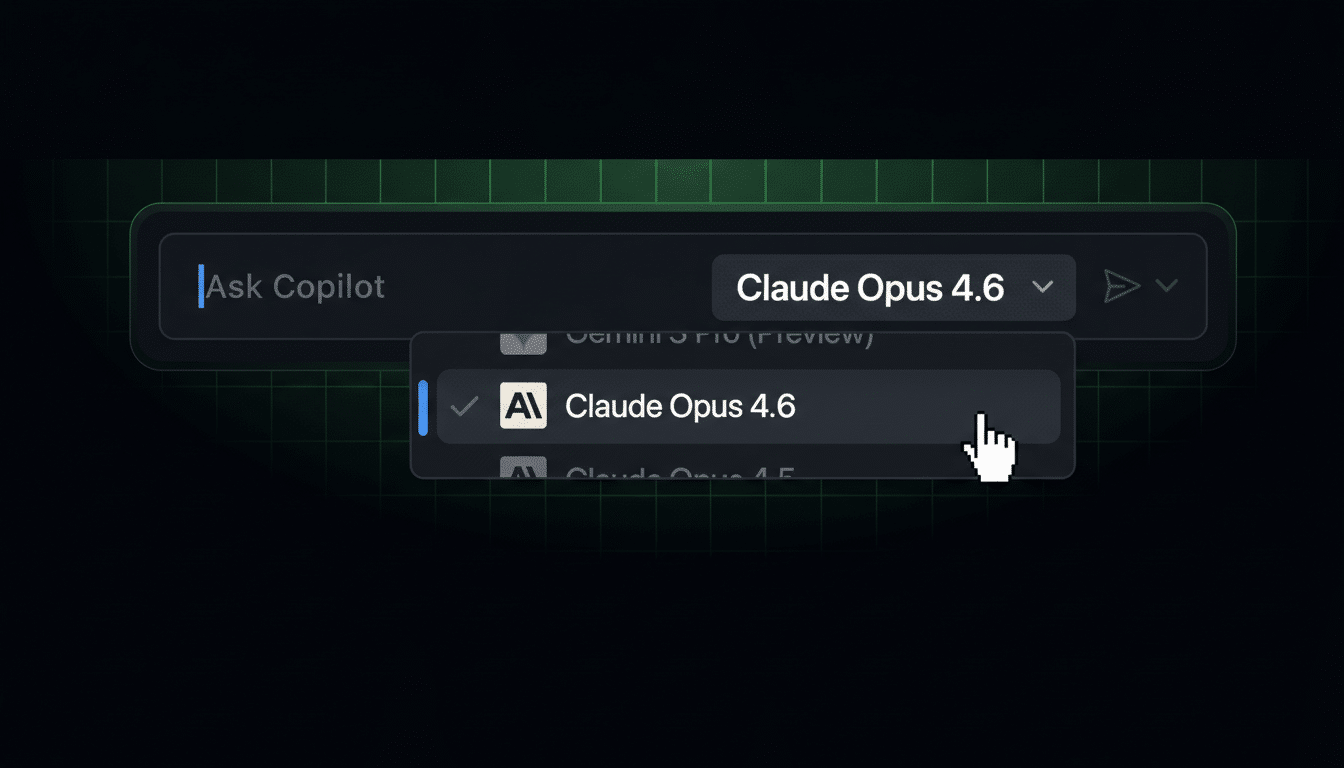
Anthropic has introduced Claude Opus 4.6, a frontier AI model aimed squarely at enterprise and knowledge work, with a bold promise: deliverables that land on target the first time. The company says Opus 4.6 expands autonomy, reduces back-and-forth edits, and executes complex, end-to-end workflows rather than just isolated tasks. It’s available via the Claude app, API, and major cloud platforms, with API pricing unchanged from the prior release.
What First-Try Delivery Actually Means in Practice
Anthropic frames “first-try” success around three pillars of enterprise work: finding the right information, analyzing it, and producing a usable artifact. In practice, that means the model must locate authoritative sources, synthesize them with nuanced context, and output content that aligns with a team’s standards—often in one pass. For organizations, that’s not a marketing flourish; it maps directly to fewer review cycles, lower coordination costs, and faster time to approval.
- What First-Try Delivery Actually Means in Practice
- Early Signals From Enterprise Evaluations
- Long Context And Multi-Agent Execution Capabilities
- Deeper App Integrations Start With PowerPoint
- Coding And Autonomy For Complex Workflows
- Compliance And Governance Still Matter for AI
- Bottom Line on Opus 4.6 and Enterprise AI Readiness
Think of a compliance-ready investor memo or a client-ready proposal. Historically, AI drafts might get you halfway, then require multiple rewrites. Opus 4.6’s bet is that agentic planning—breaking the project into subgoals, validating intermediate steps, and checking constraints—raises the odds that the first version is good enough to ship, or at least near-final with minimal edits.
Early Signals From Enterprise Evaluations
Early enterprise tests point to gains in reasoning-heavy work. Box reported that internal evaluations showed a 10% lift in performance with Opus 4.6, reaching 68% versus a 58% baseline, and near-perfect outcomes on technical tasks. In legal domains, the model posted a 90.2% score on the BigLaw Bench used by legal AI provider Harvey, with 40% perfect scores and 84% above 0.8 on its scale—strong indicators for contract analysis, research memos, and motion drafting.
These are not universal guarantees, but they’re meaningful directional data: workflows that demand careful sourcing and multi-document synthesis appear to benefit most. For teams, the practical takeaway is to pilot Opus 4.6 on high-value tasks with clear quality bars and measurable acceptance criteria.
Long Context And Multi-Agent Execution Capabilities
A headline capability is long-context reasoning. Opus 4.6 launches with a 1M-token context (in beta), enabling the model to ingest sprawling repositories, policy handbooks, or multi-year financials without aggressive trimming. For developers, that can mean fewer interruptions from context compaction and more continuity when navigating large codebases.
Anthropic is also previewing “agent teams,” a multi-agent coordination layer that splits work into parallel subtasks—closer to how real engineering squads operate. When it works well, parallelization cuts cycle time and helps the system identify blockers earlier. The key to reliability will be oversight: transparent task graphs, agent-to-agent messaging you can audit, and graceful recovery when a subagent stalls. Expect observability and governance features to matter as much as raw model IQ here.
Deeper App Integrations Start With PowerPoint
Another notable move is Opus 4.6’s upcoming integration with PowerPoint. Anthropic says the model can read slide masters, fonts, and brand layouts, then revise or generate decks without breaking templates. That matters because off-brand formatting is a hidden tax on productivity. If the model can convert bullet points to on-brand diagrams, restructure storylines, and build decks from a brief while preserving design rules, teams get “first-try” not just on content but on presentation.
The integration, like long context and agent teams, is slated as a research preview or beta at launch, signaling rapid iteration but also the need for real-world testing before wide rollout.
Coding And Autonomy For Complex Workflows
Opus 4.6 extends Claude’s reputation in agentic coding with better planning over long horizons and more resilient tool use. That’s especially useful when tasks span multiple services, CI pipelines, and dependency graphs. Paired with long context, developers should see fewer context resets and more durable state across large refactors or cross-repo changes.
Industry leaders highlight the planning jump: executives at Replit, for example, point to improved task decomposition, parallel tool use, and blocker detection as the features that separate toy demos from production-ready automation. The open question is operational: how well does Opus 4.6 coordinate with existing dev stacks, permission models, and code owners without creating new review burdens?
Compliance And Governance Still Matter for AI
Anthropic positions Opus 4.6 as adept at “compliance-sensitive output,” a timely claim for finance, healthcare, and legal teams. Long context helps preserve nuance across regulatory filings and policy documents, while constitutional guardrails aim to keep outputs within acceptable bounds. Still, enterprises should validate claims with domain-specific red teams, define escalation paths for ambiguous requests, and measure outcomes with concrete metrics like edit distance to acceptance, cycle time to approval, and error severity.
Bottom Line on Opus 4.6 and Enterprise AI Readiness
Opus 4.6 is a consequential step toward reliable, autonomous enterprise AI: longer memory, multi-agent coordination, and app-native execution aimed at fewer iterations and faster delivery. The strongest early proof points land in legal, technical, and multi-source analysis work, with encouraging scores from Box and Harvey. With some marquee features in beta, now is the moment to pilot on high-impact workflows, quantify first-try rates, and harden governance. If those numbers hold, “first-try” could move from marketing line to measurable operating advantage.
